
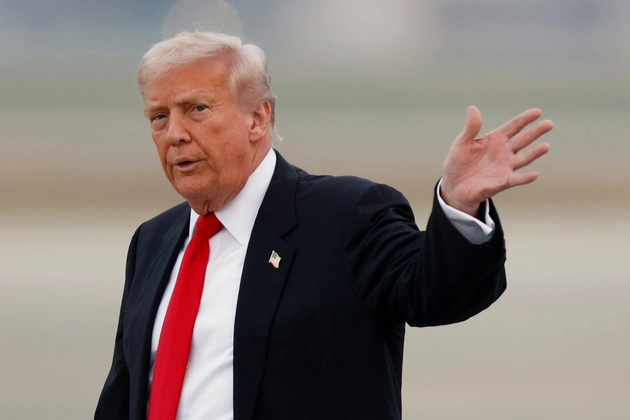
President Donald Trump has issued sweeping pardons to several key figures involved in efforts to overturn the 2020 election, including Rudy Giuliani, Sidney Powell, and Mark Meadows. The controversial move, announced via a proclamation from the Department of Justice’s Pardon Attorney, Ed Martin, claims to mark a “process of national reconciliation.” However, legal experts note that presidential pardons apply only to federal offenses, leaving state charges, like those in Georgia, untouched.
What Happened?
In a move that has reignited debate over presidential powers, Donald Trump granted full pardons to dozens of political allies accused of helping him challenge the 2020 election results.
The Department of Justice’s Pardon Attorney, Ed Martin, shared the proclamation late Sunday on X (formerly Twitter). The document—bearing a November 7 date and what appears to be Trump’s signature—offers a “full, complete, and unconditional pardon” to several prominent names, including:
- Rudy Giuliani, Trump’s personal attorney and former New York City mayor.
- Sidney Powell, a former Trump campaign lawyer known for promoting conspiracy theories about election fraud.
- Mark Meadows, Trump’s former White House chief of staff.
The list extends to others who were federally charged or under investigation for their roles in post-election maneuvers.
“This proclamation ends a grave national injustice perpetrated upon the American people following the 2020 Presidential Election,” the document reads. “It continues the process of national reconciliation.”
What Does the Pardon Actually Cover?
A key point: presidential pardons apply only to federal offenses.
That means the proclamation does not affect state-level cases, including the high-profile Georgia election interference case, where several of Trump’s associates face charges. Trump himself, notably, is not included in the pardon.
“The president cannot use a pardon to erase state prosecutions,” explains a former federal prosecutor.
So, while Giuliani and Powell may find relief from potential federal exposure, they could still face legal consequences at the state level.
Why This Move Matters
The pardons underscore Trump’s ongoing narrative that the 2020 election was “stolen,” despite courts, state officials, and his own Justice Department finding no evidence of widespread fraud.
By framing the pardons as an act of “reconciliation,” Trump appears to be appealing to his base while attempting to rewrite the political legacy of his post-election battles.
However, critics argue the move undermines accountability for those who sought to overturn legitimate election results.
Legal scholars point out that while presidential pardons are constitutionally broad, this use of them—to shield allies connected to election interference—pushes ethical and political boundaries.
“This isn’t just about mercy; it’s about rewriting history,” said a constitutional law expert.
A Pattern of Controversial Clemency
This is not Trump’s first use of pardons to benefit loyalists or politically aligned figures.
Last week, he also granted clemency to a retired New York City police officer convicted of stalking a New Jersey family on behalf of the Chinese government. That decision drew bipartisan criticism, with some lawmakers calling it “reckless” and “deeply troubling.”
Throughout his presidency and afterward, Trump has repeatedly used his pardon power to reward loyalty, from former campaign advisers to political allies ensnared in federal investigations.
What Comes Next?
Legal analysts expect a wave of court challenges and political fallout.
- For prosecutors: Federal cases against pardoned individuals will effectively end, but state prosecutors in Georgia and elsewhere may move forward independently.
- For Trump: The move could strengthen his standing among supporters who view his allies as victims of political persecution.
- For Congress: Lawmakers may renew calls to revisit pardon reform, especially around potential conflicts of interest when a president pardons co-conspirators or associates.
Consider adding a chart comparing:
- Trump’s pardons versus those of previous presidents (Obama, Bush, and Clinton).
- The number of pardons issued for political vs. non-political reasons.
The Larger Constitutional Question
The U.S. Constitution gives presidents nearly unlimited power to grant pardons for federal crimes. Yet this event raises a recurring question: Should that power have limits when used to protect political allies?
Legal experts note that while impeachment is one theoretical check, in practice, political will often dictates accountability—not legal boundaries.
“The pardon power is one of the least constrained tools in the executive arsenal,” says a Georgetown law professor (suggest citing: Georgetown Law Journal). “But history judges how it’s used.”
The Bottom Line
Trump’s latest wave of pardons blurs the line between justice and political loyalty, reigniting national debate over the balance of power between the executive branch and the rule of law.
As legal battles continue, and 2024’s electoral implications linger—this proclamation may prove less about “reconciliation” and more about reasserting political control over the narrative of 2020.