
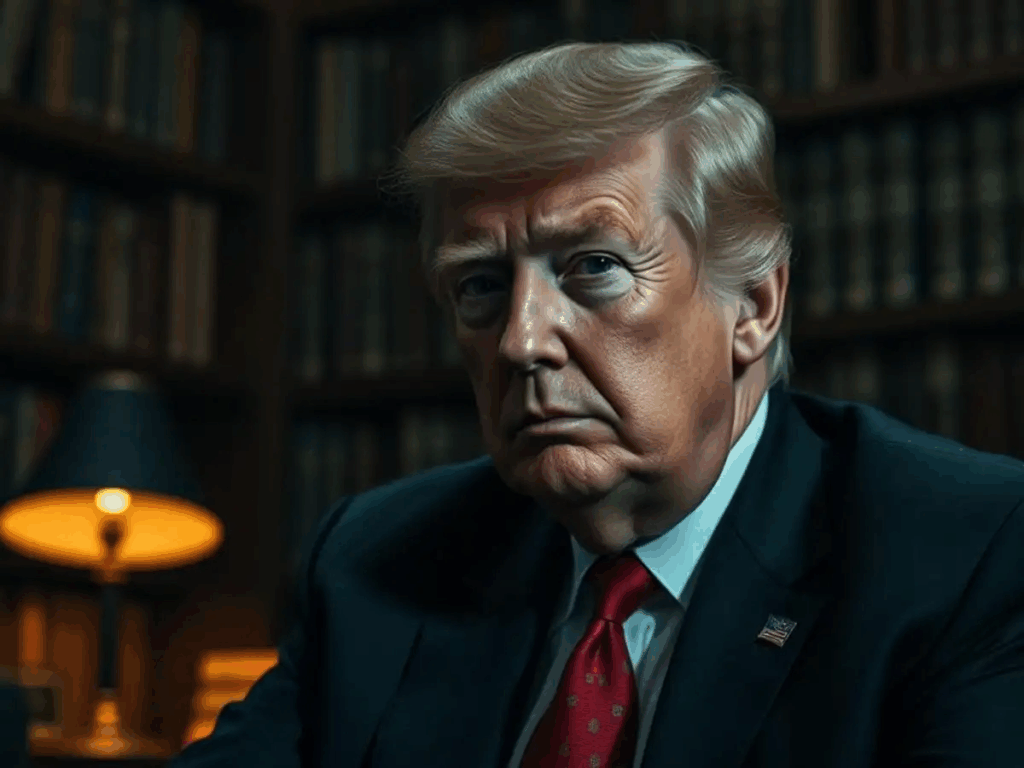
Quick Summary
The rumor that “Trump is Dead” is an online hoax driven by memes, The Simpsons jokes, and Vice President JD Vance’s comments on succession. While Trump does have a vascular condition (CVI), there’s no credible evidence that he has died. Search interest spiked globally, especially in India, but the claim is misinformation that has been amplified by social media algorithms.
On August 30, the phrase “Trump is Dead” exploded across social media feeds, joined by variations like “Trump Died” and “Donald Trump death.” Clips of ambulances near the White House circulated, hashtags trended globally, and speculation grew, despite the absence of any official confirmation.
Here’s what really happened, why it spread so quickly, and what we know about Donald Trump’s actual health.
What sparked the “Trump is Dead” trend?
The frenzy began as a viral social media rumor, amplified by memes, parody accounts, and satirical posts. Within hours, it turned into a trending topic on X (formerly Twitter), TikTok, and YouTube.
Adding fuel to the fire:
- Fake visuals. Videos of ambulances parked near the White House circulated without context. Many were old or unrelated clips repurposed to fit the rumor.
- Trump’s absence from events. In recent weeks, the president has kept a lower public profile, sparking curiosity about his condition.
- Vice President JD Vance’s comments. In an interview with USA Today, Vance said his 200 days in office had been “on-the-job training” for the presidency. His phrasing—“If, God forbid, there’s a terrible tragedy…”—was widely misinterpreted as a hint at Trump’s health.
Despite the chatter, no credible evidence supports the claim that Trump has died. Neither the White House nor Trump’s representatives have issued any statement confirming it.
Did The Simpsons predict Trump’s death?
Whenever a major Trump rumor surfaces, The Simpsons is never far behind.
- At San Diego Comic-Con this summer, show creator Matt Groening joked that the series might only end after Trump’s death: “When you-know-who dies, The Simpsons predicts that there will be dancing in the streets. Except President Vance will ban dancing.”
- The series did famously “predict” Trump’s presidency back in a 2000 episode and his re-election in 2015.
- But contrary to viral TikTok videos, The Simpsons never predicted Trump’s death in 2025. The so-called “proof” circulating online is AI-generated fake footage.
This crossover between meme culture and long-running jokes explains why the rumor gained such velocity.
What do we actually know about Trump’s health?
Trump’s April health report declared him “fully fit,” with doctors citing good cardiovascular health and no cognitive concerns.
But photos released later in the year showed:
- Bruising on his hands
- Swelling around his ankles
Doctors attributed this to chronic venous insufficiency (CVI)—a condition where leg or arm veins don’t circulate blood back to the heart effectively.
What is CVI?
- Common condition. Affects about 1 in 3 U.S. adults, especially older adults and women.
- Symptoms. Swelling, pain, and in advanced cases, skin wounds.
- Not immediately life-threatening. It can be managed with lifestyle adjustments, compression therapy, and medical monitoring.
While CVI is not trivial, it is far from a death sentence. Trump’s diagnosis may explain his reduced public appearances, but it doesn’t justify the wild speculation.
Why do “celebrity death hoaxes” spread so fast?
The Trump case follows a familiar online playbook. When public figures trend with rumors of death, the cycle is often the same:
- Ambiguous trigger. A stray comment, old footage, or out-of-context health update.
- Memes & satire. Parody accounts accelerate the spread, often blurring the line between humor and misinformation.
- Algorithmic amplification. Platforms reward engagement, and “Trump is Dead” is a clickable phrase.
- Confirmation bias. Trump’s polarizing status makes people more likely to believe—or share—rumors about him.
Past examples include premature online “obituaries” for celebrities like Morgan Freeman, Cher, and Sylvester Stallone.
The search spike in India
Interestingly, Google Trends shows a huge spike in searches for “Trump is Dead” in India between August 29 and 30.
Why India? Several factors may explain it:
- Trump-related trade disputes and tariffs have made him a highly searched political figure there.
- Indian meme culture, heavily active on Instagram and WhatsApp, often drives trends that then spill into Western platforms.
- Major Indian news outlets picked up the speculation, inadvertently amplifying it further.
Bottom line: Trump is not dead
- No official statement confirms Donald Trump’s death.
- Viral claims are fueled by memes, satire, and out-of-context speculation.
- Trump has a manageable medical condition but remains “fit for duty,” according to recent health assessments.
As with any viral trend, the best defense is media literacy: check the source, verify with trusted outlets, and remember that ambulance clips on TikTok are not proof of anything.