
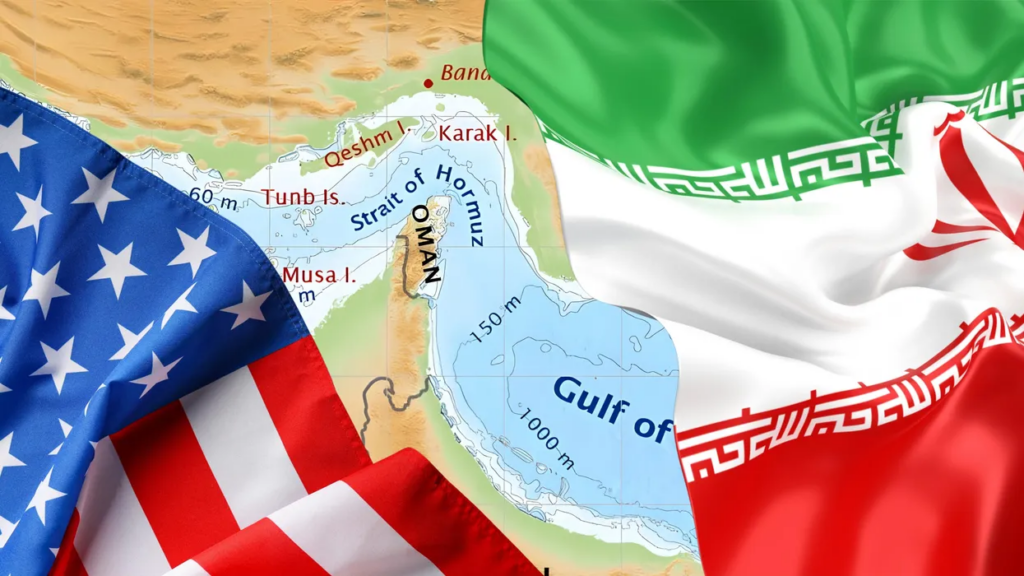
The United States has sharply escalated its confrontation with Iran, with President announcing a naval blockade targeting Iranian ports. The move has triggered an immediate and forceful response from Tehran, which warned that if its ports are threatened, “no port in the Gulf will be safe.”
The standoff marks one of the most serious maritime escalations in the region in years—raising concerns not just about military conflict, but also global energy security and trade disruption.
What exactly did Trump announce?
In a series of statements, Trump declared that the U.S. would begin:
- A blockade of ships entering or exiting Iranian ports
- Naval enforcement operations around key maritime routes
- Expanded pressure following failed diplomatic talks
The announcement followed earlier remarks about restricting access through the , one of the most strategically vital waterways in the world.
A key clarification
The later clarified that:
- Ships traveling to non-Iranian ports would not be blocked
- Freedom of navigation would remain intact for other vessels
This narrows the scope of what initially appeared to be a broader maritime shutdown.
Why the Strait of Hormuz matters
The is often described as the world’s most important oil transit corridor.
Key facts
- Roughly 20% of global oil supply passes through it
- Connects the Persian Gulf to international waters
- Essential for exports from countries like Saudi Arabia, UAE, and Iraq
Any disruption here can ripple instantly across:
- Oil prices
- Shipping costs
- Global inflation
Why did the US escalate now?
The blockade comes after a breakdown in high-level negotiations.
What led to this point
- Talks mediated in Islamabad failed after extended discussions
- The U.S. accused Iran of resisting key demands
- Iran accused Washington of acting in bad faith
The collapse of diplomacy appears to have triggered a shift toward coercive maritime strategy.
How has Iran responded?
Iran’s response was swift—and deliberately broad. Iran issued a swift and stern response. Quoting the spokesperson for its Khatam al-Anbiya Central Headquarters, state broadcaster IRIB stated that maritime security in the Persian Gulf and Sea of Oman requires collective responsibility. It warned that any threat to Iranian ports would endanger the entire region.
Key warning from Tehran
Officials linked to Iran’s military command structure stated:
- Maritime security is “collective”
- If Iranian ports are threatened, all regional ports could be at risk
This signals a willingness to expand the conflict beyond bilateral confrontation.
What Iran could do next
While not officially confirmed, analysts suggest Iran could:
- Restrict or disrupt shipping through the Strait
- Target vessels linked to U.S. or allied interests
- Increase naval patrols and enforcement actions
Iran has also emphasized it will continue regulating passage through its waters.
Is this a full naval blockade?
Not quite—at least not yet.
What defines a blockade
Under international norms, a blockade typically involves:
- Preventing all maritime access to a country
- Enforcing restrictions through military presence
- Potentially intercepting or detaining vessels
What’s happening here
- The U.S. appears to be targeting Iran-linked shipping specifically
- Other vessels may still pass freely
This makes it a limited or conditional blockade, though it still carries significant risks.
What are the risks of escalation?
The situation is volatile, with multiple pathways to further conflict.
Immediate risks
- Naval confrontations between U.S. and Iranian forces
- Accidental clashes involving commercial vessels
- Disruption of global shipping lanes
Broader risks
- Regional involvement from Gulf nations
- Energy supply shocks
- Expansion into a wider military conflict
Even a single incident in such a narrow waterway could escalate rapidly.
How are global markets reacting?
While full impacts are still unfolding, historically:
- Oil prices spike quickly during Hormuz tensions
- Shipping insurance costs rise
- Markets react to uncertainty rather than confirmed disruption
If the blockade tightens, the economic consequences could be immediate and global.
What does this mean for international law?
Naval blockades exist in a legal gray area.
Key considerations
- Blockades are generally considered acts of war
- They must comply with international humanitarian law
- Freedom of navigation is a widely recognized principle
Any enforcement action that affects neutral vessels could trigger legal challenges or diplomatic backlash.
What happens next?
The next phase depends on how both sides act in the coming days.
Possible scenarios
1. Controlled standoff
Limited enforcement without major incidents
2. Maritime escalation
Clashes or seizures of vessels
3. Diplomatic reset
Renewed talks under pressure
At this stage, the situation remains fluid—and highly sensitive.
TL;DR
- Trump announced a blockade targeting Iranian ports
- The U.S. clarified it won’t block all ships in the Strait of Hormuz
- Iran warned that no Gulf port would be safe if its ports are threatened
- The Strait is critical for global oil supply
- The situation carries serious risks of military and economic escalation