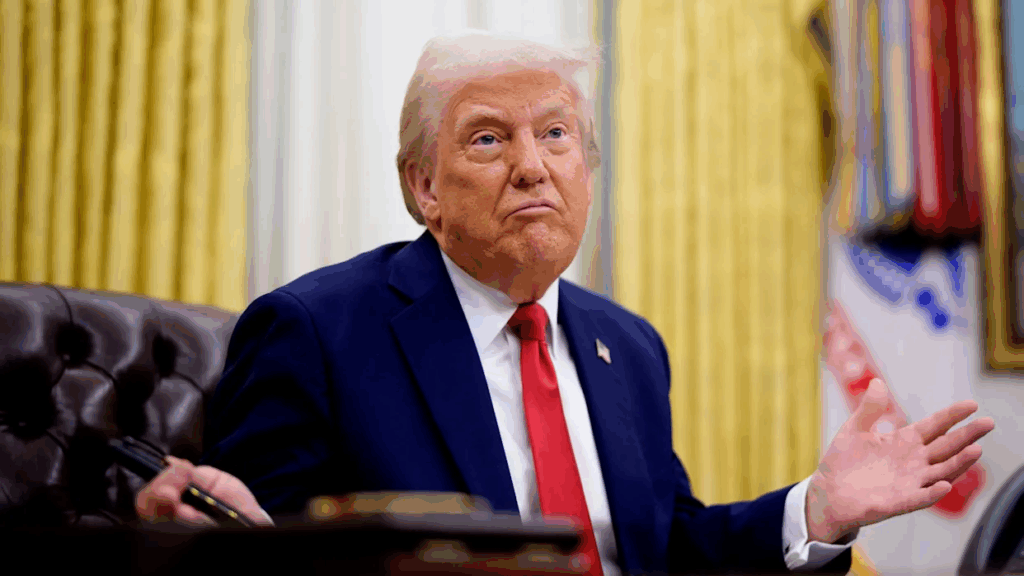
When asked on September 1 whether the government should reopen mental institutions for people with “serious mental illness,” President Donald Trump said, “Yeah, I would.” His offhand remark quickly spiraled into one of his trademark rants—this time about New York and California allegedly unleashing waves of mentally ill patients onto the streets.
But how much of Trump’s claim is rooted in fact? And what would it actually mean if the U.S. tried to bring back large-scale mental asylums that resemble something out of Arkham Asylum in a Batman comic?
What Did Trump Actually Say?
Trump framed the idea of reopening “insane asylums” as part of his ongoing crime crackdown. In the interview, he claimed that states like New York and California used to operate numerous mental hospitals before “a certain governor” shut them down because of costs. According to Trump, patients were simply “released into society,” fueling homelessness and crime.
He cited facilities like Creedmoor Psychiatric Center and Bellevue Hospital in New York as examples of shuttered institutions—except both are still operating today.
The picture Trump painted of governors emptying wards and dumping patients into the streets oversimplifies and misrepresents decades of policy changes.
The History Behind Deinstitutionalisation
So, was there any truth in Trump’s rant? Yes, but with caveats.
- Since the 1950s, federal and state governments began cutting funding for mental health services.
- Deinstitutionalization accelerated in the 1970s, partly due to budget crises, but also because of shifting treatment philosophies. The idea was to move patients out of large hospitals and into community-based care.
- In practice, however, community resources never kept pace with demand. Many patients who left psychiatric facilities ended up in prisons, jails, or homeless shelters, not in the kind of robust outpatient networks reformers envisioned.
So while Trump is wrong that hospitals like Bellevue shut down, he isn’t entirely wrong that the U.S. moved away from institutionalization, with lasting consequences.
Why Trump Is Linking Mental Illness to Crime
Trump has repeatedly tied crime and homelessness to untreated mental illness. Recently, he ordered homeless people in Washington, D.C., to “move out immediately” or face eviction, even suggesting they be relocated “far from the Capital.”
This framing plays into a law-and-order narrative that has long been part of his political brand. By invoking “insane asylums,” Trump signals a return to tough, centralized control rather than the decentralized, underfunded patchwork of community care.
Critics argue that this approach risks criminalizing mental illness rather than treating it, reviving the stigma and abuses once rampant in asylums.
Would Reopening Asylums Solve the Problem?
Experts say it’s complicated.
The Arguments For
- More psychiatric beds are needed. A shortage of inpatient facilities often leaves people in crisis with nowhere to go.
- Relieves pressure on prisons. Many jails function as de facto mental health institutions, despite being ill-equipped.
The Arguments Against
- History of abuse. Old asylums were notorious for overcrowding, neglect, and inhumane conditions.
- Costly and outdated. Building massive new facilities could run into billions, without addressing root causes like poverty, addiction, or lack of outpatient care.
- Civil rights concerns. Broadly defining who is “mentally ill” enough to be institutionalized opens the door to political misuse—especially under a president who has already sought to punish perceived enemies.
What’s Really Needed?
Mental health experts often stress a middle ground:
- Expand crisis stabilization centers where patients can receive short-term care.
- Invest in supportive housing that combines shelter with medical and social services.
- Strengthen outpatient networks so fewer people reach the point of institutionalization.
These solutions are far less headline-grabbing than “reopen asylums,” but research shows they are more effective at reducing homelessness, crime, and hospital overcrowding.
The Political Subtext
Trump’s asylum talk isn’t really about healthcare. It’s about optics. By invoking a dramatic fix, he can signal toughness on crime and position himself against liberal states he often criticizes.
The problem? It risks reviving outdated solutions without confronting why the U.S. mental health system remains broken.
If anything, the renewed debate underscores the decades-old failure to invest in comprehensive mental health care—a failure that every administration, Republican and Democrat alike, has shared.
TL;DR
- Trump said he would support reopening “insane asylums” to deal with crime and homelessness.
- His claims about New York facilities being shut down were inaccurate.
- Deinstitutionalization did happen, starting in the 1950s, but patients were often transferred to prisons, not simply “released.”
- Experts agree more psychiatric beds are needed—but warn against reviving large-scale asylums that echo past abuses.
- Effective solutions lie in modernized community care, housing, and crisis services—not in Trump’s Arkham Asylum vision.