A public feud erupts between Trump and Elon Musk
In an extraordinary clash between two of the world’s most influential figures, President Donald Trump has accused billionaire entrepreneur Elon Musk of suffering from “Trump derangement syndrome.” The remark comes amid escalating tensions following Musk’s sharp criticism of Trump’s economic policies.
The dispute reached new heights on Thursday when Trump expressed disappointment in Musk’s opposition to the “Big Beautiful Bill,” a sweeping tax and spending package. Elon Musk, who previously led the Trump administration’s Department of Government Efficiency (DOGE), went as far as suggesting Trump should face impeachment.
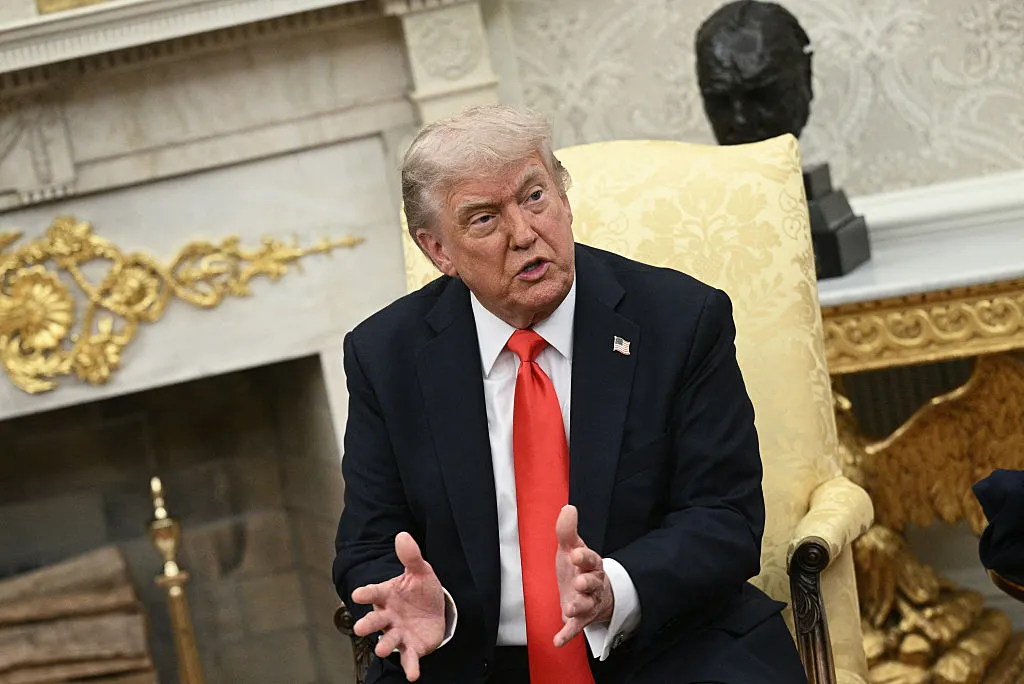
“He hasn’t said bad things about me personally, but I’m sure that will be next,” Trump said during a press briefing at the Oval Office.
Trump questions Elon Musk’s loyalty despite past support
Trump acknowledged their once-strong alliance, stating, “I helped him a lot. We had a great relationship.” However, he cast doubt on whether that bond could be restored.
The president also downplayed Elon Musk’s financial backing during the 2024 election, asserting he could have won the pivotal state of Pennsylvania without the tech mogul’s assistance. This followed Musk’s scathing remarks about Trump’s fiscal policies, which he labeled a “disgusting abomination” that would balloon the federal deficit.
Musk stepped down from his role in the Trump administration on May 31 to refocus on his business ventures.
What is Trump derangement syndrome?
The term, popularized during Trump’s presidency, describes a perceived irrational hostility toward the president. The Urban Dictionary defines it as a “mental condition” where disdain for Trump drives individuals to “abandon all logic and reason.”
The concept traces back to the early 2000s, when Trump’s political ambitions were often treated as a joke. Some historians link it to “Bush Derangement Syndrome,” a phrase coined by late conservative columnist Charles Krauthammer in 2003 to describe extreme opposition to President George W. Bush.
Critics argue the label is used to dismiss legitimate policy disagreements. As CNN noted in 2018, Trump’s defenders often frame opposition as “blind hatred” rather than substantive critique.
Minnesota bill sought to classify syndrome as mental illness
Earlier this year, Republican lawmakers in Minnesota introduced legislation that would classify Trump derangement syndrome as a mental health condition. The bill, backed by five GOP state senators, defined it as:
“The acute onset of paranoia in otherwise normal persons that is in reaction to the policies and presidencies of President Donald J. Trump.”
It further described symptoms including “Trump-induced general hysteria” and an inability to distinguish between policy differences and perceived psychological flaws in Trump’s behavior.
While the bill did not advance, it underscored the polarizing nature of Trump’s legacy in American politics.