
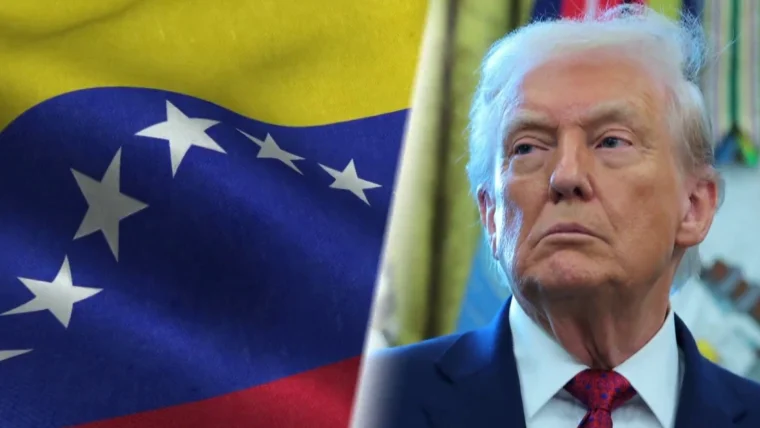
The United States has quietly completed its first sale of Venezuelan oil worth $500 million, a move that signals a dramatic shift in Washington’s approach to Venezuela’s energy sector just days after the capture of Nicolás Maduro.
The sale, confirmed by senior officials speaking to Semafor, comes amid a broader strategy outlined by Donald Trump to place Venezuela’s vast oil wealth under US control during what the administration describes as a transitional period.
This is not just a financial transaction. It is a geopolitical signal, one that could reshape energy markets, US–Latin America relations, and the future of Venezuela’s oil industry.
What exactly did the US sell—and where is the money going?
According to administration officials, the oil sale, valued at roughly $500 million—represents the first direct monetization of Venezuelan crude by Washington since Maduro’s arrest 11 days earlier.
How the revenue is being handled
- Proceeds from the oil sale are not going to Caracas
- Funds are being held in US government–controlled accounts
- One of the primary accounts is reportedly located in Qatar
- The arrangement was formalized through an executive order signed on January 9
Why this matters: This setup gives the US unprecedented leverage—not only over Venezuela’s oil exports, but also over how and when the country’s economic recovery might begin.
Why is this happening now?
Timing is central to the move. The oil sale comes days after Maduro’s capture by US forces, a development that abruptly reshaped Venezuela’s political leadership.
After the arrest, Trump said Washington would effectively “run” Venezuela during the transition, citing the need for total access to oil resources and other strategic assets. The oil sale appears to be the first concrete step in that plan.
White House spokeswoman Taylor Rogers described the development as mutually beneficial, saying Trump brokered a historic energy deal that would benefit both Americans and Venezuelans.
Who is leading Venezuela now—and what does Washington say?
Following Maduro’s capture, Delcy Rodríguez assumed the role of interim president.
Trump confirmed he had a long call with Rodríguez, later writing on Truth Social that the partnership between the United States and Venezuela would be spectacular for all.
Rodríguez, in her own social media posts, described the conversation as long, productive, and courteous. She said both sides discussed a bilateral agenda focused on economic recovery and unresolved issues between the two governments.
Why Venezuela’s oil matters so much
Venezuela is not just another oil producer. It is a global heavyweight in terms of reserves.
According to the US Energy Information Administration, Venezuela holds 303 billion barrels of proven crude oil, roughly one-fifth of the world’s total reserves.
Yet years of sanctions, mismanagement, and underinvestment have left the country’s oil sector in disrepair. Refineries are outdated, pipelines are deteriorating, production is far below capacity, and much of the skilled workforce has left the country.
This gap between potential and reality is what the Trump administration appears intent on exploiting.
How US oil companies fit into the plan
Trump has repeatedly said he wants major US oil companies to play a central role in rebuilding Venezuela’s energy sector.
He has argued that American firms would invest billions of dollars to repair infrastructure, restart production, and generate revenue for the country under US oversight.
Energy Secretary Chris Wright confirmed that the US government would oversee the sale of Venezuelan oil and that proceeds would continue to be deposited into accounts controlled by Washington.
According to Fox News, additional oil sales are expected in the coming days and weeks.
Why this oil sale is geopolitically explosive
The implications extend far beyond energy markets.
A foreign government selling another country’s oil is virtually unprecedented and raises fundamental questions about sovereignty, international law, and the future use of sanctions as a policy tool.
Supporters see the move as a pragmatic way to stabilize a failed oil economy and prevent revenue from being misused. Critics argue it sets a dangerous precedent and blurs the line between economic assistance and external control.
Either way, the decision is being closely watched across Latin America, within OPEC, and by major oil-producing rivals.
What happens next?
Several critical questions remain unresolved. How long will Washington control Venezuelan oil revenues? When, and how, will Venezuelans see direct economic benefits? What legal or diplomatic challenges could emerge internationally?
What is clear is that the $500 million oil sale is not a one-off. It marks the beginning of a far more assertive US role in Venezuela’s energy sector, with consequences that could shape the region for years.
TL;DR
- The US has quietly sold $500 million worth of Venezuelan oil
- The sale follows the capture of Nicolás Maduro
- Oil revenues are being held in US-controlled accounts, reportedly including one in Qatar
- Washington plans to involve major US oil companies in rebuilding Venezuela’s oil industry
- Venezuela holds 303 billion barrels of crude, making the stakes exceptionally high