
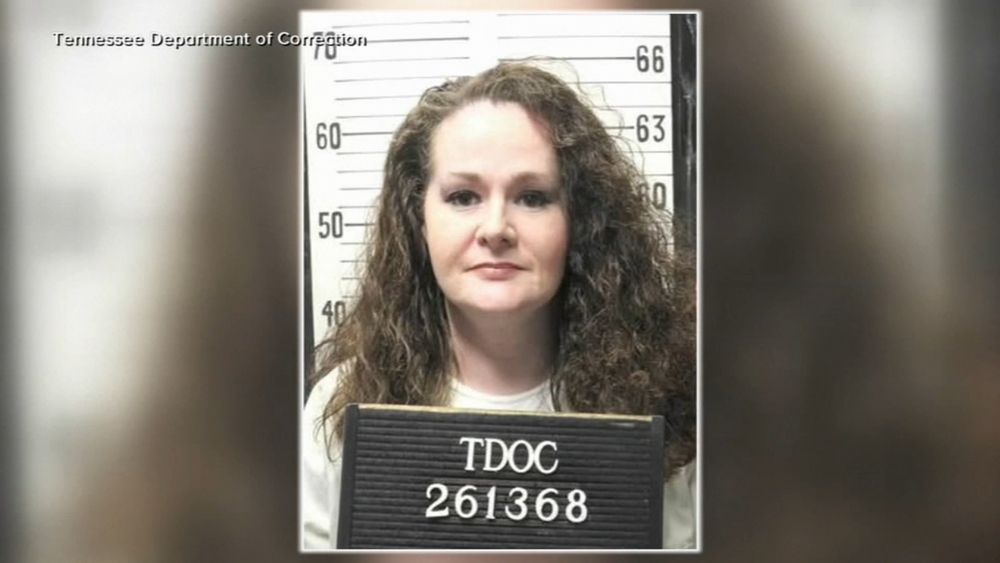
Calls to pause executions in the United States have intensified after Tennessee’s failed attempt to execute Christa Pike left the 50-year-old death row prisoner alive and in critical condition.
Christa Pike was administered two doses of pentobarbital during the September 30 execution attempt, but the procedure did not result in her death. Her attorneys said she remained alive for more than an hour afterward and was showing signs of breathing and a heartbeat. She was later taken to a hospital for medical treatment.
The incident prompted Tennessee Gov. Bill Lee to suspend the state’s remaining executions for 2026 and order a comprehensive third-party review of the execution process. Gary Wayne Sutton had been scheduled to be executed in December.
The case has renewed questions about the reliability of lethal injection, the safeguards surrounding execution procedures and what states should do when an execution does not proceed as planned.
What happened during Christa Pike’s execution?
Christa Pike was convicted of the 1995 murder of 19-year-old Colleen Slemmer, whom she killed when she was 18. Her execution would have made her the first woman put to death by Tennessee in more than 200 years.
The execution began after the U.S. Supreme Court allowed Tennessee to proceed following last-minute legal challenges.
Witnesses reported that Pike remained responsive for an extended period after the lethal-injection process began. According to media reports, she continued making breathing and snoring sounds for more than an hour.
Her attorneys subsequently sought emergency medical intervention, saying she was still alive after two doses of pentobarbital had been administered.
The Tennessee Department of Correction said officials followed the state’s approved execution protocol. The department has not publicly explained why the drugs failed to produce the intended result.
Why has the execution been described as ‘botched’?
An execution can be described as botched when a procedure fails or develops serious complications that prevent authorities from carrying out the intended execution as planned.
Pike’s case is particularly unusual because the state administered two doses of the execution drug and she survived the procedure.
The Death Penalty Information Center described the episode as an unprecedented failure in modern Tennessee execution history because Pike remained alive well after the process began.
Her attorney Randy Spivey described the experience as “cruel and torturous” after witnessing the procedure.
Those descriptions are statements from Pike’s legal representatives and death penalty advocates. The state’s independent review will be important in establishing exactly what went wrong.
What is pentobarbital and why is it used?
Pentobarbital is a barbiturate that depresses the central nervous system and can produce profound sedation and unconsciousness.
Tennessee uses pentobarbital as part of a single-drug lethal-injection protocol. The state adopted the current protocol after a previous review of its execution procedures.
The underlying premise of a single-drug protocol is that a sufficiently large dose will cause deep unconsciousness followed by respiratory and cardiovascular failure.
The Christa Pike case has raised questions about how reliably that process works in practice, particularly when there are problems with intravenous access, drug administration or the prisoner’s medical condition.
Why can lethal injections fail?
Lethal-injection procedures depend on several steps working correctly.
One challenge is establishing reliable intravenous access. Prisoners who have difficult-to-access veins can require multiple attempts, potentially prolonging the procedure.
Drug-related problems can also arise, including questions about supply, storage, quality and the physiological response to the medication.
Tennessee experienced another execution failure in May 2026 when officials stopped Tony Carruthers’ execution after they were unable to establish an intravenous line. Carruthers has since been assigned another execution date.
Pike’s case is different because officials successfully administered two doses of pentobarbital but still did not achieve the intended outcome.
Her legal team has also raised concerns about her medical condition and the possibility that the execution procedure was especially difficult. Those claims remain part of the ongoing legal and investigative dispute.
How often do executions go wrong?
There is no single modern statistic that captures every execution failure because researchers use different definitions of a “botched” execution.
Legal scholar Austin Sarat examined 8,776 U.S. executions between 1890 and 2010 for his 2014 book “Gruesome Spectacles: Botched Executions and America’s Death Penalty.”
His research identified 276 executions that went wrong in some way, or roughly 3.15 percent of the executions examined.
Sarat’s historical data found that lethal injection had a botched-execution rate of about 7.2 percent during the period studied.
That figure should not be presented as the current failure rate for lethal injection. The research covers more than a century of executions and includes older procedures, drugs and protocols that are different from those used today.
Has Tennessee experienced other failed executions?
Yes.
Carruthers’ aborted execution in May 2026 was followed only months later by Pike’s failed execution attempt.
The state has also faced scrutiny over its execution procedures in previous years. In 2022, Gov. Bill Lee ordered a review after Tennessee identified problems with its preparations for carrying out executions.
That review eventually contributed to the adoption of Tennessee’s current one-drug pentobarbital protocol.
Pike’s case has now prompted another review, this time with outside investigators examining the circumstances surrounding the failure.
Have other US states experienced botched executions?
Tennessee is not the only state to encounter serious problems.
Alabama has experienced difficulties establishing intravenous access during executions, including in the cases of Alan Miller and Kenneth Smith. Both men were subsequently executed using nitrogen hypoxia, another method of execution.
Other states have turned to alternative methods, including firing squads, as access to conventional lethal-injection drugs has become more difficult.
The growing number of methods available in different states reflects the fact that execution practices vary considerably across the United States.
Why are states struggling to obtain lethal-injection drugs?
Pharmaceutical companies have increasingly resisted having their medicines used in executions.
Some manufacturers have imposed restrictions on the distribution of drugs that could be used for capital punishment. As supplies have become harder to obtain, states have adopted different drugs, combinations and procurement arrangements.
The changes have created additional questions about the consistency and transparency of execution protocols.
Pentobarbital remains widely used, but its use has also faced legal and scientific scrutiny. Researchers and medical professionals disagree over how reliably it produces unconsciousness and whether its physiological effects can involve significant distress.
That debate has gained additional attention after Pike’s failed execution.
What have religious leaders said?
The incident has drawn condemnation from several religious figures who oppose the death penalty.
Catholic nun Helen Prejean, a prominent American abolition advocate, described the failed execution as an extreme form of cruelty and argued that Pike’s experience should prompt wider public discussion about capital punishment.
Catholic and Episcopal bishops in Tennessee have also called for Pike’s death sentence to be commuted following the failed execution attempt. Their statements reflect established opposition to capital punishment within those religious organizations.
Other faith leaders and human-rights advocates have likewise renewed calls for Tennessee to reconsider carrying out further executions.
Why are doctors part of the debate?
The involvement of medical personnel in executions has long been controversial because professional medical organizations generally distinguish executions from legitimate medical care.
Joel Zivot, an anesthesiologist who has studied autopsies of executed prisoners, has argued that lethal injection should not be treated as a medical procedure.
His position reflects a broader ethical debate over whether medical knowledge and drugs should be used to carry out state executions.
At the same time, states rely on medical concepts such as anesthesia and intravenous drug delivery when designing lethal-injection protocols, creating an ongoing tension between execution procedures and conventional medical practice.
Has the US ever stopped executions nationwide?
There was an effective nationwide halt after the Supreme Court’s 1972 decision in Furman v. Georgia.
The Court found existing death-penalty procedures unconstitutional because they were being applied arbitrarily. States subsequently rewrote their death-penalty laws, and the Supreme Court upheld revised statutes in 1976.
Executions resumed later that decade.
Since then, there has not been another nationwide suspension comparable to the period following Furman, although individual states and governors have imposed their own moratoriums or pauses.
Tennessee’s current suspension applies to executions scheduled in the state for the remainder of 2026, not to executions nationwide.
What do Americans think about the death penalty?
Public opinion has changed substantially over the past several decades.
Gallup’s 2025 polling found that 52 percent of Americans supported the death penalty for a person convicted of murder, while 44 percent opposed it. The 52 percent figure was the lowest level of support recorded in Gallup’s long-running trend at that time.
At the same time, executions themselves increased sharply in 2025.
The United States carried out 47 executions in 11 states during 2025, compared with 25 executions in 2024. Florida accounted for 19 of those executions.
Those figures illustrate that public opinion and the number of executions do not necessarily move in the same direction.
Why has Pike’s case reignited the national debate?
Pike’s failed execution brings several longstanding questions into the same case.
There are questions about whether the drugs were administered correctly, whether the state’s protocol adequately anticipated complications and whether medical conditions should alter how an execution is carried out.
There are also broader legal questions. Pike’s attorneys have argued that surviving the procedure after receiving the state’s intended execution drugs amounted to unconstitutional cruel and unusual punishment.
The courts will ultimately determine the legal consequences of the failed execution. Tennessee’s third-party review is expected to focus on the operational and procedural questions.
What happens to Christa Pike now?
Christa Pike is receiving medical treatment after being taken to a hospital following the failed execution.
Her attorneys have said she was in critical condition, with concerns about possible neurological damage resulting from oxygen deprivation. Those medical questions remain under evaluation.
Her legal team has also called for her death sentence to be commuted to life imprisonment.
The failed execution does not automatically resolve her underlying death sentence. Any decision about whether Tennessee can attempt another execution would involve further legal proceedings and could depend on the findings of the state’s review.
What happens next in Tennessee?
Gov. Bill Lee has suspended the state’s remaining executions for 2026 and ordered an independent review of what happened during Pike’s execution attempt.
The review will need to address why two doses of pentobarbital failed to produce death, whether the drug was administered as intended, whether Pike’s medical condition created additional complications and whether Tennessee’s protocol adequately addressed the possibility of failure.
The outcome could influence how Tennessee handles future executions.
For the wider United States, however, Pike’s case is likely to remain part of a much larger debate over the reliability, transparency and legality of different execution methods.
For now, the central fact is stark: Tennessee attempted to execute Christa Pike, administered two doses of its lethal-injection drug and did not kill her. She survived and required emergency medical treatment, while the state has paused its remaining executions for the year pending an independent review.