
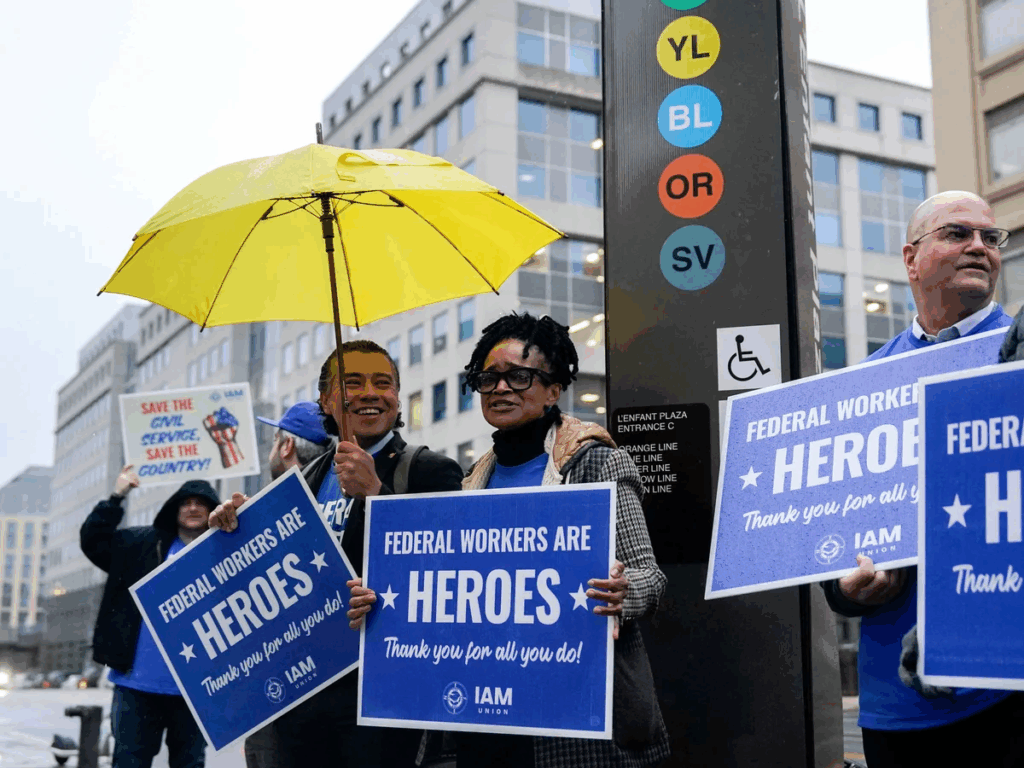
On September 30, the United States will see what experts are calling the largest mass resignation in federal government history. Nearly 100,000 federal workers are set to exit on a single day, with the number projected to rise to 300,000 by the end of 2025. This unprecedented exodus is not the result of economic downturns or natural attrition—it is a direct outcome of President Donald Trump’s aggressive restructuring of the civil service. The implications extend far beyond Washington, D.C., raising urgent questions about national stability, essential services, and the balance of power in government.
What makes this resignation wave historic?
The scale of departures dwarfs past federal cutbacks:
- Post-World War II (1945–46): Around 100,000 civilian jobs cut.
- Clinton-era “reinventing government” (1990s): 250,000 jobs trimmed over five years.
- Trump’s 2025 wave: 300,000 exits compressed into one year.
The result: The civilian federal workforce, roughly 2.3 million strong in 2024, could shrink to just over 2 million by early 2026.
How did the Trump administration make this possible?
The cornerstone of this downsizing is the Deferred Resignation Programme (DRP), rolled out in January 2025 after an executive order eliminated key civil service protections.
- Employees could resign by February 6 and still receive full pay and benefits until September 30, without reporting for duty.
- Over 154,000 federal workers accepted by July. Another 100,000 finalize their exit this week.
- The program will cost $14.8 billion in 2025, but the administration claims $28 billion in annual savings from a slimmer workforce.
This was paired with:
- Hiring freeze across government.
- Agency closures and downsizing, notably at USAID.
- The creation of the Department of Government Efficiency (DOGE), headed by Elon Musk, to enforce sweeping reductions.
Why are employees leaving in such numbers?
While labeled “voluntary,” resignations were driven by pressure:
- Fear of layoffs: Over 24,000 probationary staff were dismissed in February.
- Workplace stress: Surveys show burnout, forced reassignments, and anxiety widespread.
- Policy changes: Ending remote work and dismantling diversity initiatives disproportionately affected women and minority employees.
The DRP’s offer of eight months’ paid leave arrived when the national unemployment rate was 4.3%, making the deal hard to refuse.
Union leaders argue many departures were resignations “under duress.” The Supreme Court upheld the programme in July, cementing its legality despite labor challenges.
Which government services are already affected?
Federal agencies are feeling the strain:
- IRS: Lost 25% of staff, raising fears of delays in the 2026 tax season.
- Veterans Affairs: Reassigning patients due to fewer social workers.
- FEMA & EPA: Struggling to respond to natural disasters and public health emergencies.
- Department of Agriculture: Forced to rehire laid-off federal workers to maintain farm programs.
- Health and Human Services: Significant cuts have slowed public health surveillance.
The Washington, D.C. metro economy faces billions in losses from reduced local spending. Cities like Kansas City and northern Virginia, federal employment hubs, are also bracing for ripple effects.
Which agencies are hit hardest?
- Department of Agriculture: 15,000 lost (15%).
- Health and Human Services: 20,000 lost so far (24%), with up to 62,000 more expected.
- State Department: 12,000 cut (16%), weakening diplomacy.
- General Services Administration: 25% reduction.
- Environmental Protection Agency: 27% cut.
- Education Department: Nearly a quarter of staff gone.
- Internal Revenue Service: 20,000 lost (25%).
By contrast, Defense and Homeland Security were largely spared, seeing only 5–7% cuts due to their classification as essential.
What happens if a government shutdown coincides with this?
The mass exits already stretch agencies thin. If Congress fails to pass a funding bill by September 30, a government shutdown could furlough another 700,000 “non-essential” employees.
- Social Security payments would continue, but processing times could lag.
- Federal courts, air traffic, and food inspections could see delays.
- The combination of mass resignations plus furloughs risks crippling public trust in government functions.
Why does this matter for ordinary Americans?
This isn’t just a bureaucratic shuffle—it affects daily life:
- Taxes may be delayed.
- Veterans could face longer waits for care.
- Public health risks may go unchecked.
- Disaster responses could falter.
- Local economies tied to federal paychecks may shrink.
Beyond logistics, the shake-up reshapes the very nature of the American state. A leaner federal government may appeal to those who favor smaller bureaucracy. But critics warn that dismantling experienced civil servants in bulk risks hollowing out expertise, weakening oversight, and politicizing basic services.
TL;DR
- 300,000 federal workers expected to resign in 2025 under Trump’s policies.
- Driven by the Deferred Resignation Programme and a hiring freeze.
- Agencies like the IRS, EPA, HHS, and State Department are losing up to a quarter of their workforce.
- Essential services from tax collection to disaster response face major disruptions.
- A possible government shutdown on September 30 could deepen the crisis.