
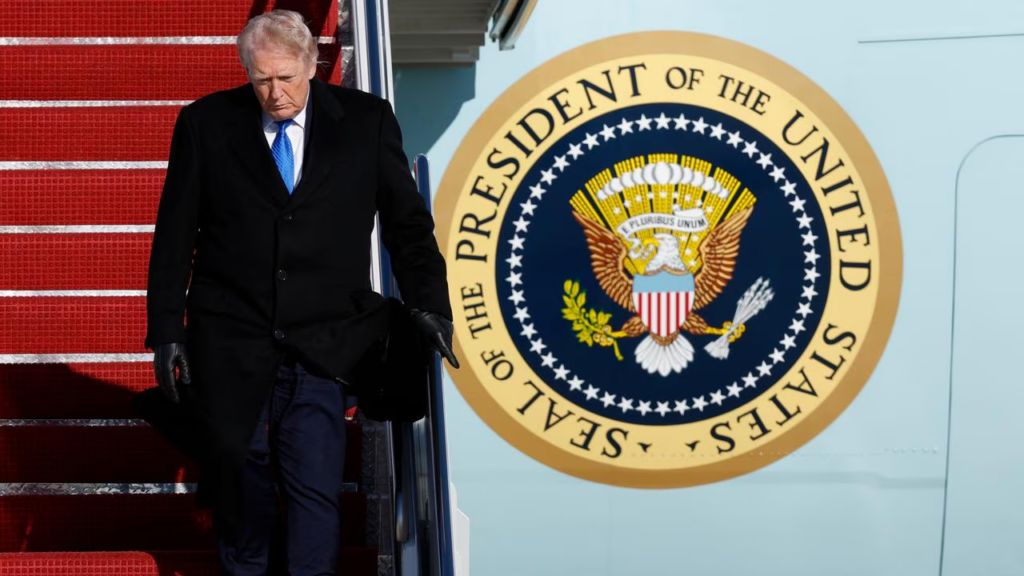
The White House is approaching a new decision point on Iran, and this time the conversation appears to be moving beyond warnings and economic sanctions. According to reports, President Donald Trump is set to receive a classified briefing outlining three possible military options against Iran, ranging from targeted strikes to operations involving nuclear material and strategic waterways.
The briefing, led by US Central Command chief Admiral Brad Cooper, signals something important: the Pentagon is no longer discussing abstract contingencies. These are reportedly executable plans, crafted for rapid deployment if diplomacy continues to stall and tensions in the Strait of Hormuz worsen.
At stake is far more than another flashpoint in the Middle East. Roughly one-fifth of the world’s oil passes through the Strait of Hormuz, making any military escalation there a potential global economic shockwave.
Why the Pentagon’s Iran briefing matters now
The timing of the briefing is critical.
The US and Iran remain trapped in a fragile standoff after weeks of military tension, interrupted ceasefires, and stalled negotiations over Tehran’s nuclear program. Washington has already leaned heavily on economic pressure and maritime restrictions, but officials now appear to be preparing for scenarios where sanctions alone fail to change Iranian behavior.
This latest development suggests the administration is trying to answer a difficult question: how do you increase pressure on Iran without triggering a full-scale regional war?
That question has haunted multiple US administrations across Republican and Democratic presidencies. The difference now is the narrowing room for compromise.
What are the three US military options on Iran?
According to officials familiar with the discussions, the Pentagon has developed three distinct operational frameworks.
Each carries different political, military, and economic consequences.
Option 1: A “short and powerful” strike campaign
The first proposal reportedly centers on a limited but high-impact military strike.
The goal would not be regime change or long-term occupation. Instead, the US would aim to:
- Hit selected Iranian infrastructure
- Damage operational military capabilities
- Re-establish deterrence
- Force Tehran back into negotiations from a weaker position
This strategy resembles previous US doctrines built around precision strikes and rapid control of escalation. Washington has used similar approaches in Iraq, Syria, and against Iranian-backed militias in the region.
The challenge is that “limited” military action rarely stays limited for long in the Middle East.
Iran has a wide network of regional allies and proxy groups capable of retaliatory attacks on the following:
- US bases in the Gulf
- Oil infrastructure
- Commercial shipping routes
- Israeli targets
- Cyber networks
A short strike campaign could therefore create a longer regional crisis.
Why the Strait of Hormuz remains central to the conflict
The second option reportedly focuses on securing parts of the Strait of Hormuz.
This would likely involve:
- Expanded US naval operations
- Maritime patrols
- Potential seizure or protection of strategic islands
- Ground deployments near critical shipping lanes
The Strait of Hormuz is one of the world’s most strategically important chokepoints. About 20 million barrels of oil pass through it daily, according to estimates from the US Energy Information Administration.
Any disruption there affects:
- Global oil prices
- Shipping insurance rates
- Asian energy imports
- Inflation pressures worldwide
A prolonged blockade or military confrontation could hit global markets almost immediately.
Why is this option especially risky
Unlike airstrikes, securing maritime corridors could require a sustained military presence.
That increases the likelihood of:
- Direct clashes between US and Iranian forces
- Drone and missile attacks
- Naval incidents are escalating unexpectedly
- Long-term operational costs
Military analysts have repeatedly warned that the geography of the Strait favors asymmetric warfare. Iran does not need to defeat the US Navy conventionally. It only needs to create enough instability to disrupt shipping and raise costs.
That makes the waterway strategically valuable even without a full naval confrontation.
The nuclear material operation: the highest-risk scenario
The third reported option is perhaps the most sensitive.
According to reports, US planners are considering a special operations mission aimed at securing Iran’s highly enriched uranium stockpile.
This would likely depend on:
- Highly accurate intelligence
- Rapid insertion capabilities
- Coordination between military and intelligence agencies
- Real-time surveillance
Operations involving nuclear material carry extraordinary risks.
If successful, such a mission could significantly weaken Iran’s nuclear leverage. If unsuccessful, it could:
- Trigger broader military retaliation
- Accelerate Iran’s nuclear ambitions
- Create diplomatic backlash internationally
- Raise fears of radioactive contamination or loose nuclear material
This type of mission would also carry major political implications, as it would involve direct action within Iranian territory.
Trump’s current strategy still centers on economic pressure
Despite the military planning, the administration’s public strategy remains focused on economic coercion.
Trump has reportedly instructed aides to prepare for an extended blockade strategy targeting Iran’s oil exports and maritime access.
Officials reportedly see this as the least dangerous option compared to:
- Sustained bombing campaigns
- Ground invasions
- Abrupt military disengagement
But sanctions and blockades have limits.
Iran has historically adapted through:
- Shadow shipping networks
- Alternative trade channels
- Partnerships with countries willing to bypass restrictions
- Regional pressure tactics
The longer the standoff continues, the more likely both sides are to test escalation boundaries.
Internal tensions inside Washington are becoming visible
The Iran debate is no longer happening only between Washington and Tehran. It is also unfolding inside the US government itself.
Reports suggest Vice President JD Vance has raised concerns about whether military assessments presented to the White House fully reflect battlefield realities.
One reported issue involves the format of presidential briefings. Officials reportedly worry that highly compressed visual summaries may oversimplify operational risks.
That matters because modern military decisions increasingly rely on fast-moving intelligence presentations rather than lengthy strategic reviews.
There are also growing logistical concerns.
According to reports, US missile stockpiles could come under strain if operations continue at their current pace. That introduces another layer of pressure on Pentagon planners already balancing commitments across multiple regions.
The cost of escalation is already climbing
The financial burden of the conflict is becoming harder to ignore.
A senior Pentagon official reportedly estimated the war-related cost at roughly $25 billion so far, with a significant share tied to munitions and operational deployments.
That figure could rise sharply if:
- Maritime operations expand
- Long-range strikes continue
- Regional troop deployments increase
- Oil market disruptions deepen
Historically, conflicts involving Iran have carried hidden economic consequences beyond direct military spending. Energy markets, shipping costs, insurance premiums, and inflation often absorb the broader shock.
For global markets, the real concern may not be whether a war begins, but whether uncertainty becomes permanent.
What happens next?
At the moment, none of the reported military options appear imminent.
But the existence of executable plans changes the diplomatic landscape. Iran now faces a United States that appears increasingly willing to shift from economic pressure toward operational action if negotiations remain frozen.
That does not guarantee war. In fact, military planning is often designed to strengthen diplomatic leverage rather than trigger conflict.
Still, history shows that once military options move from theory to deployment-ready status, the margin for miscalculation shrinks dramatically.
The coming days could determine whether this remains a pressure campaign or evolves into the most dangerous US-Iran confrontation in years.
TL;DR
- The Pentagon is reportedly preparing three military options for President Donald Trump regarding Iran.
- Options include targeted strikes, securing the Strait of Hormuz, and a special operation targeting enriched uranium stockpiles.
- The administration still favors economic pressure and maritime restrictions for now.
- Internal concerns reportedly exist over intelligence briefings and missile stockpile sustainability.
- Any escalation could impact global oil markets, shipping, and regional stability.