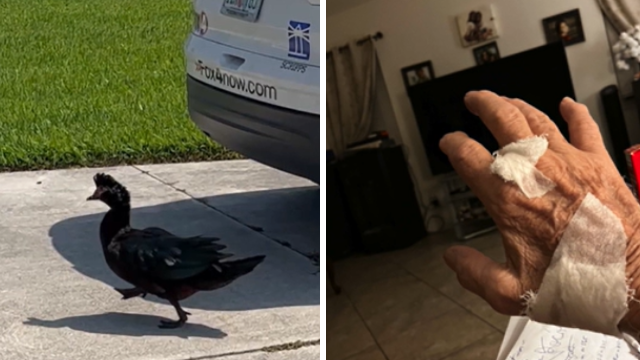
CAPE CORAL, Fla. – In a scene that sounds more like a comedy sketch than reality, residents of a Cape Coral neighborhood have found themselves under siege, not by a dog or raccoon, but by a particularly aggressive Muscovy duck. Over the past week, this duck has bitten, chased, and harassed locals, sending at least one person to the hospital and leaving the entire community on edge.
The “quack attack” that turned dangerous
The chaos began when neighbors noticed the Muscovy duck, an invasive species in Florida, becoming increasingly territorial. James Sepulveda, a resident since 1998, recounted his frightening encounter:
“I sit on my porch from 7 to 7:30 at this time of the year to catch a sunset, you know, some sun, and I had my eyes closed. All of a sudden, I felt a jab on my hand and it was bleeding,” Sepulveda said, showing reporters the wound that required medical attention
Another neighbor, Richard Guy, was also attacked:
“I stood up and I made some noises, thinking it would go away, you know. Next thing I know, its wings come out like it’s going to attack me,” Guy said.
The duck’s behavior has escalated to the point where residents are afraid to leave their homes without looking over their shoulders.
Why are Muscovy ducks a problem?
Muscovy ducks are not native to Florida; their natural range is Texas. However, they have proliferated in urban areas across the state, including Orlando and Cape Coral. The U.S. Fish and Wildlife Service notes that these ducks can be aggressive, damage property, and even transmit diseases.
- Fact: Thousands of Muscovy ducks now roam Florida’s cities, with Orlando hosting one of the largest populations.
Legal and humane solutions
Despite their nuisance, Muscovy ducks are protected under the Migratory Bird Treaty Act. However, the U.S. Fish and Wildlife Service allows for their humane removal or euthanasia in areas outside their natural range, like Florida. The Florida Fish and Wildlife Conservation Commission (FWC) advises that removal must be humane, and ducks can be donated to educational or scientific institutions.
Not just ducks: Other urban animal menaces
Florida isn’t alone in facing animal chaos:
- Miami: Roosters, hens, and wild chicks roam neighborhoods like Little Havana, causing noise and health concerns but also serving as cultural icons.
- Other U.S. Cities: Raccoons, squirrels, and even wild turkeys have been known to invade urban spaces, damage property, and occasionally attack residents.
What should you do If you encounter an aggressive animal?
1. Keep Your Distance:
Do not approach or try to feed aggressive wildlife.
2. Make Noise, But Don’t Corner:
Clap, shout, or use an umbrella to make yourself look bigger, but never corner the animal.
3. Protect Yourself:
If attacked, use any object available (bag, jacket) as a barrier.
4. Seek Medical Attention:
Animal bites can transmit diseases. Always get wounds checked by a doctor.
5. Report to Authorities:
Contact local animal control or wildlife officials immediately. In Florida, the FWC can provide guidance and may send professionals for humane removal.
6. Do Not Attempt DIY Removal:
Trapping or harming protected species can lead to legal trouble. Always use licensed professionals.
Community response and next steps
The Cape Coral incident has sparked everything from memes to serious calls for action on social media. While some see the duck as a quirky neighborhood mascot, others, like Sepulveda, say,
“They’re actually committing injury to individuals. They should get rid of [it],” highlighting the real risk to public safety.
Wildlife officials are monitoring the situation, reminding residents that while Florida is famous for its alligators and snakes, sometimes the most unexpected urban threats come with feathers.