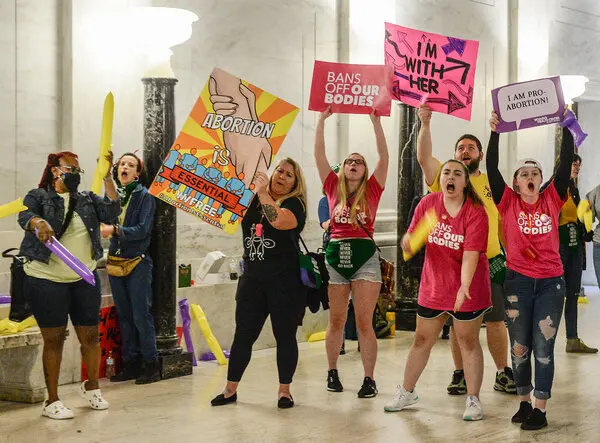
A controversial law in West Virginia has sparked fears that women who experience miscarriages could face legal consequences, particularly over how fetal remains are handled. The state’s Unborn Child Protection Act, passed in 2022, imposes near-total abortion bans with limited exceptions, but legal experts warn its vague language may inadvertently criminalize pregnancy loss.
Law allows exceptions but leaves room for legal risks
West Virginia’s abortion law permits termination only in cases of rape, incest, fatal fetal anomalies, or when the mother’s life is in danger. While the statute explicitly shields women from prosecution for seeking an abortion, legal analysts say its broad wording could still ensnare those who suffer miscarriages, especially in how they dispose of fetal remains.
Raleigh County Prosecuting Attorney Tom Truman told WVNS 59News that state law could theoretically allow felony charges against a woman who flushes, buries, or improperly disposes of fetal tissue after a miscarriage. However, Truman emphasized that he personally would not pursue such cases.
“The kind of criminal jeopardy you face is going to depend on a lot of factors. What was your intent? What did you do? How late were you in your pregnancy?” Truman said.
It remains unclear whether partners or others assisting a woman after a miscarriage could also face charges.
West Virginia joins a growing list of states with similar prosecutions
According to Metro, several states—including South Carolina, Georgia, Arkansas, Texas, Mississippi, and Ohio—have previously prosecuted women for miscarriages or stillbirths. West Virginia now appears to follow this trend.
California, which once jailed two women for stillbirths, has since passed laws explicitly banning criminal investigations into pregnancy loss. But in states with restrictive abortion laws, legal experts warn that similar prosecutions could rise.
Legal uncertainty may deter women from seeking medical care
Advocates argue that ambiguous laws like West Virginia’s could discourage women from seeking medical help after a miscarriage, fearing legal repercussions. The lack of clear guidelines leaves healthcare providers and law enforcement in a difficult position, potentially subjecting vulnerable women to unnecessary scrutiny.
As abortion restrictions tighten across the U.S., the intersection of reproductive rights and criminal law continues to evolve, with profound implications for women’s health and legal security.