
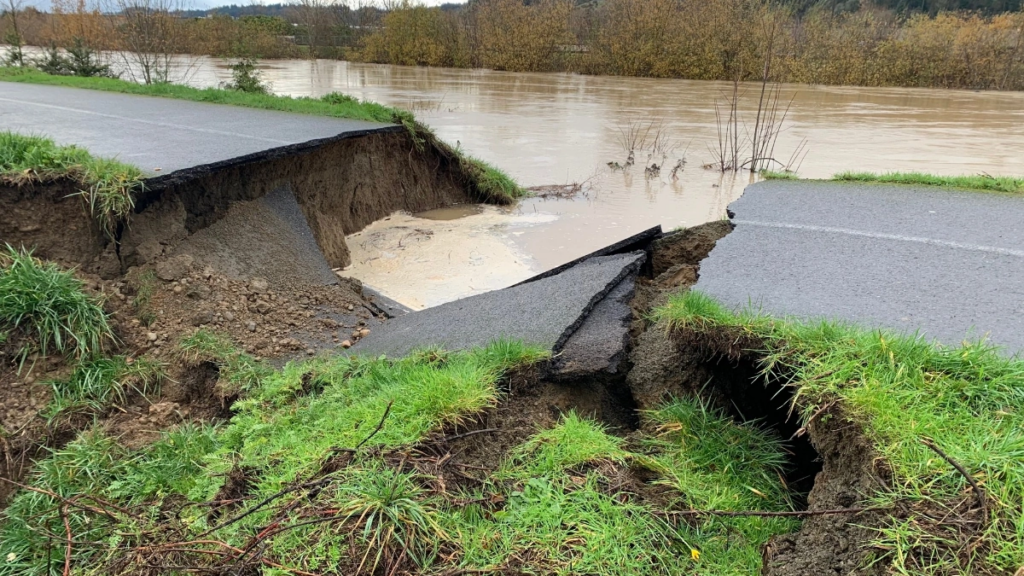
A rapidly unfolding emergency along Washington State’s Green River has forced evacuations across parts of King County and raised urgent questions about a term many people only hear during disasters: levee failure. After days of intense rain driven by powerful atmospheric river storms, a breach along the river sent floodwaters into nearby communities, prompting a rare “GO NOW” evacuation order for thousands of residents.
Officials warned that the flooding was life-threatening, with water moving toward major transportation corridors, including Interstate 405. While crews rushed to stabilize the damage, the incident offered a stark reminder of how quickly flood-control systems can be overwhelmed—and why levee failures are so dangerous.
What happened along the Green River in King County?
On Monday, emergency officials confirmed a failure of the Desimone Levee in Tukwila, about five miles south of downtown Seattle. The breach followed several days of heavy rainfall that had already swollen rivers across western Washington.
According to the National Weather Service in Seattle, floodwaters began spilling into areas that are normally protected by the levee system. As water levels rose, authorities issued flash flood warnings and ordered immediate evacuations in parts of:
- Tukwila
- Renton
- Kent
- Auburn
The evacuation zone included residential neighborhoods, industrial areas, and businesses east of the Green River—an area home to roughly 46,000 people.
Officials said about 1,100 residents were evacuated as a precaution, and shelters were opened to accommodate those forced to leave their homes.
What is a levee failure?
A levee is a raised embankment built along a river or coastline to prevent flooding. A levee failure occurs when the structure breaks, collapses, or becomes unstable enough to allow water to pass through or over it.
How levees usually work
Levees are designed to:
- Hold back rising river water during storms
- Protect nearby homes, businesses, and infrastructure
- Channel water safely downstream
They are typically built to withstand specific water levels and pressure thresholds based on historical data.
What went wrong in this case
In the Green River incident, prolonged rainfall caused water levels to rise steadily. Officials said water had been detected on the “wrong side” of the levee days before the breach, a warning sign that pressure was building and the structure was being compromised.
Once a levee gives way, flooding can spread rapidly into areas that may not be prepared for sudden inundation.
Why levee failures are especially dangerous
Unlike gradual river flooding, levee failures can be sudden and unpredictable.
Key risks include
- Rapid flooding: Water can rush into protected areas with little warning
- False sense of security: Communities behind levees may underestimate their flood risk
- Infrastructure damage: Roads, railways, and utilities are often located in levee-protected zones
- Limited escape time: Evacuation routes can quickly become impassable
Emergency officials stressed that conditions along the Green River were particularly dangerous because access roads risked being cut off as water levels rose.
Why was a “GO NOW” evacuation ordered?
The phrase “GO NOW” is used sparingly by emergency agencies. It signals an immediate threat to life.
In this case, authorities warned that:
- Floodwaters were moving north toward I-405
- Conditions could worsen rapidly with more rain forecast
- Delaying evacuation could trap residents
Officials urged people to leave immediately, move to higher ground, and avoid attempting to drive through floodwaters.
What role did the weather play?
The flooding was driven by a series of atmospheric river storms, a weather pattern that funnels large amounts of moisture from the Pacific Ocean into the Pacific Northwest.
Why atmospheric rivers matter
These systems can deliver:
- Days of sustained, heavy rainfall
- Rapid snowmelt in higher elevations
- Increased pressure on rivers and levees
In western Washington, repeated storms saturated the ground, leaving rivers with little capacity to absorb additional runoff. By the time the levee failed, conditions were already primed for flooding.
How are authorities responding?
Local, state, and federal agencies mobilized quickly after the breach.
Emergency response measures included
- Deployment of the Washington National Guard
- Aerial patrols by the King County Sheriff’s Office to inspect levees
- Ongoing repair efforts at the Desimone Levee
- Opening of emergency shelters
Officials said repairs were expected to take several hours, but warned that continued rainfall could complicate stabilization efforts.
As of the latest updates, no injuries had been reported.
Where are evacuees being sheltered?
King County officials opened multiple shelters to support displaced residents, including:
- Auburn Community and Event Center
- Ray of Hope Shelter
Residents were advised to bring essential medications and documents if possible and to monitor official updates before attempting to return home.
Could this happen again?
Experts say yes—especially as extreme weather becomes more frequent.
Why levee systems face growing pressure
Many levees across the US were built decades ago, based on historical climate patterns that may no longer apply. Factors increasing risk include:
- Aging infrastructure
- Increased urban development near rivers
- Heavier and more frequent rain events
Officials conducting aerial inspections along the Green River said they were looking for additional weak points to prevent further failures.
What should residents in flood-prone areas know?
Emergency managers emphasized that understanding flood risk is critical, even in areas protected by levees.
Safety tips during levee failures and floods
- Follow evacuation orders immediately
- Avoid walking or driving through floodwaters
- Stay informed through official alerts and weather updates
- Do not return until authorities declare the area safe
Officials also urged residents to take cell phone alerts seriously, noting that the warning system is designed to cut through normal phone settings during life-threatening situations.
Why this incident matters beyond King County
While the immediate danger is local, the Green River levee failure highlights a national issue.
Across the US, millions of people live behind levees. Many may not fully understand the risks—or how quickly those defenses can fail under extreme conditions.
Emergency planners say the lesson from King County is clear: levees reduce risk, but they do not eliminate it.
TL;DR
A levee failure along Washington’s Green River triggered dangerous flash flooding and forced evacuations across parts of King County. After days of heavy rain from atmospheric river storms, the Desimone Levee in Tukwila failed, sending water toward homes and major highways. Officials issued a rare “GO NOW” evacuation order, deployed the National Guard, and warned that conditions could worsen with more rain.