
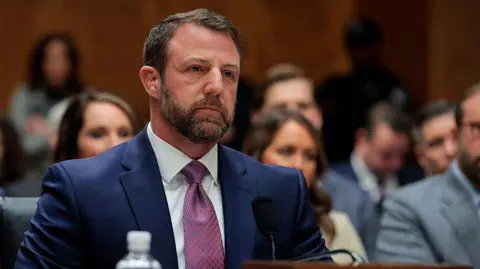
Markwayne Mullin’s rise to lead the Department of Homeland Security is anything but typical. A former mixed martial arts fighter turned businessman and politician, the Oklahoma Republican now finds himself in charge of one of the most complex and politically sensitive agencies in the U.S. government.
Confirmed by the Senate in a 54–45 vote, Mullin steps into the role at a time when DHS is under pressure, from immigration debates to internal morale issues and funding challenges.
Who Is Markwayne Mullin?
Markwayne Mullin is a U.S. senator from Oklahoma, a former House lawmaker, and a businessman with deep roots in the state.
A Non-Traditional Political Profile
Before politics, Mullin built a career that stands out in Washington:
- Former professional mixed martial arts (MMA) fighter
- Business owner and rancher
- Citizen of the Cherokee Nation
That combination has shaped both his public image and political brand—one that leans heavily on toughness, independence, and direct communication.
Political Career Path
- Served in the U.S. House of Representatives for about a decade
- Elected to the Senate in 2023
- Known as a strong ally of Donald Trump
His transition from the House to the Senate positioned him as a rising figure within Republican politics.
Why it matters: Mullin’s background sets him apart from traditional national security leaders, who often come from military, intelligence, or legal fields.
How Did Mullin Become DHS Secretary?
Mullin’s appointment follows a Senate confirmation that was largely along party lines—but not entirely.
The Confirmation Vote
- Final tally: 54–45
- Democrats John Fetterman and Martin Heinrich voted in favor
- Republican Rand Paul voted against
This split reflects both partisan dynamics and personal relationships within the Senate.
Why Trump Chose Mullin
Reports suggest that President Trump viewed Mullin as:
- Loyal
- Assertive
- Politically aligned with his administration’s priorities
He was selected to replace Kristi Noem after criticism of her leadership at DHS.
Why it matters: This appointment signals a preference for political alignment and leadership style over traditional bureaucratic experience.
What Makes Mullin’s Background Unique?
Few DHS leaders have entered the role with a résumé like Mullin’s.
From MMA to Capitol Hill
Mullin’s history as a fighter isn’t just trivia—it’s part of his political identity:
- Projects physical toughness
- Reinforces a confrontational style
- Appeals to a segment of voters drawn to outsider personas
Native American Identity
Mullin is a member of the Cherokee Nation, making him one of the more prominent Native American Republicans in Congress.
However, his political identity has been shaped more by:
- His alignment with Trump-era policies
- His outspoken and combative rhetoric
Why it matters: Mullin represents a blend of personal narrative and political positioning that resonates with a specific voter base.
Why Did His Confirmation Draw Attention?
Mullin’s path to DHS was not without controversy.
The Rand Paul Factor
Republican Senator Rand Paul opposed Mullin’s nomination, citing
- Concerns about temperament
- Past personal remarks and conflicts
The disagreement added a personal edge to what might otherwise have been a routine confirmation process.
Bipartisan Support—But Limited
Support from Democratic senators Fetterman and Heinrich stood out.
- Heinrich described Mullin as someone not easily pressured
- Fetterman had already supported him at the committee level
Still, broader Democratic skepticism remains.
Why it matters: The mixed support highlights how personal relationships in the Senate can influence outcomes—even in polarized times.
What Challenges Await Mullin at DHS?
The Department of Homeland Security is one of the most complex agencies in the federal government.
Immediate Issues
- Immigration enforcement policies
- Staffing and morale concerns
- A prolonged funding standoff affecting operations
Structural Complexity
DHS oversees:
- Border security
- Cybersecurity
- Disaster response (FEMA)
- Transportation security (TSA)
Managing these areas requires both operational expertise and political navigation.
Why it matters: Mullin’s leadership will be tested not just by policy decisions but by his ability to manage a sprawling bureaucracy.
Does Mullin Have Relevant Experience?
This is one of the key questions surrounding his appointment.
Strengths
- Legislative experience in Congress
- Strong political backing from the White House
- Familiarity with national policy debates
Limitations
- No direct experience running a major federal agency
- Limited background in homeland security operations
At his confirmation hearing, Mullin signaled a focus on:
- Empowering agency personnel
- Balancing enforcement with legal safeguards, such as warrants
Why it matters: Leadership style can matter as much as technical expertise—especially in politically sensitive roles.
What About Controversies Around His Financial Activity?
Recent reporting has also raised questions about Mullin’s stock trades.
Reported Concerns
- Trades in defense and energy companies before major geopolitical events
- Potential conflicts of interest given his government role
What’s Known
- No formal findings of wrongdoing have been confirmed
- Concerns center on timing and perception rather than proven violations
Why it matters: Even the appearance of conflicts can affect public trust, especially in national security roles.
What Does His Appointment Signal Politically?
Mullin’s rise reflects broader trends in American politics.
Key Signals
- Increasing overlap between politics and executive appointments
- Preference for loyal, high-profile figures over technocrats
- Continued influence of Trump-aligned leadership style
A Political, Not Technocratic, Pick
Mullin is not a traditional bureaucratic manager. He is:
- A political operator
- A public-facing figure
- A loyal ally to the president
Why it matters: His leadership could shape DHS not just operationally, but politically.
What Happens Next?
Mullin now takes charge at a critical moment.
Key Questions Ahead
- Can he stabilize DHS operations during a funding crisis?
- Will his leadership style improve or intensify internal tensions?
- How will he handle immigration policy under intense scrutiny?
His tenure will likely be closely watched by both allies and critics.
TL;DR
- Markwayne Mullin is a former MMA fighter, businessman, and U.S. senator from Oklahoma
- He has been confirmed as Secretary of Homeland Security in a 54–45 vote
- His appointment reflects strong political backing from Donald Trump
- He brings limited direct DHS experience but significant political influence
- His leadership style and background make him a closely watched figure