
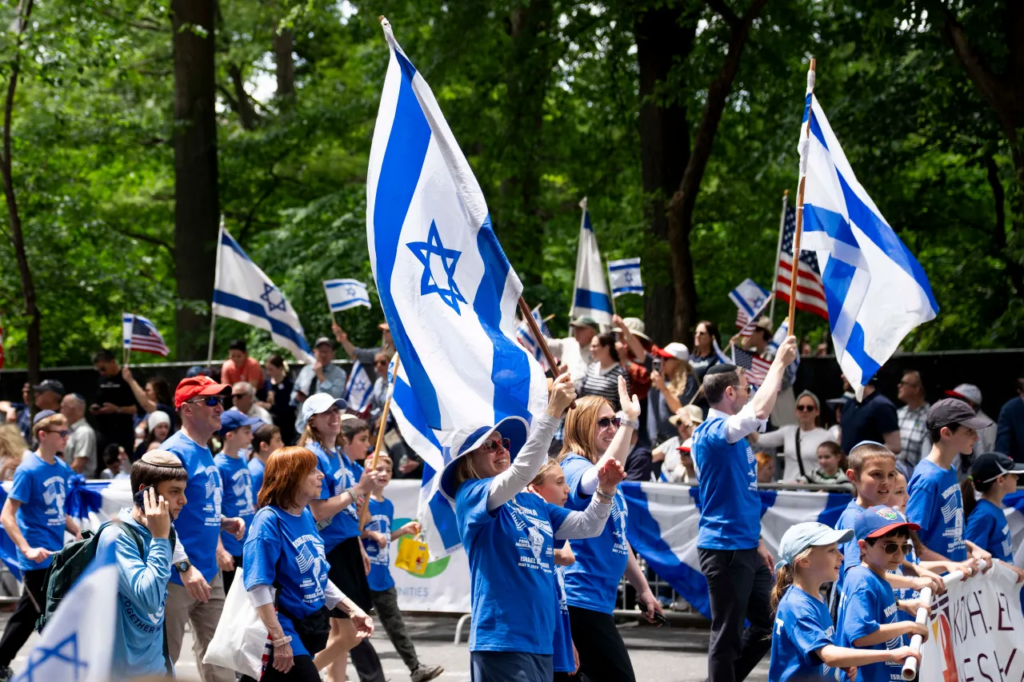
New York City Mayor Zohran Mamdani broke with decades of political tradition on Sunday by skipping the city’s annual Israel Day Parade, one of the most symbolic public events for New York’s Jewish community.
The decision immediately sparked backlash from Jewish leaders, political opponents, and pro-Israel groups — while supporters viewed it as consistent with Mamdani’s long-standing pro-Palestinian advocacy.
For generations, the parade has functioned as a near-obligatory appearance for New York mayors, governors, senators, and other public officials. Mamdani’s absence marks a sharp departure from that political norm and underscores the increasingly polarised debate around Israel and Palestine in American politics.
What Is the Israel Day Parade?
The Israel Day Parade — officially known in recent years as the Celebrate Israel Parade — is held annually along Fifth Avenue in Manhattan to commemorate the establishment of the state of Israel in 1948.
The event regularly draws:
- Jewish organizations
- Synagogues and schools
- Elected officials
- Pro-Israel advocacy groups
- Thousands of spectators
This year’s theme was “Proud Americans, Proud Zionists,” reflecting a broader effort to publicly affirm Jewish identity and support for Israel amid rising concerns about antisemitism in the United States.
In New York City — home to the largest Jewish population outside Israel — attendance by top political leaders has historically been viewed as politically and symbolically significant.
Why Did Zohran Mamdani Skip the Parade?
Mamdani said his decision was not new or unexpected.
“I said on the campaign trail that I wouldn’t be attending the parade, and I’ve made my views on the Israeli government abundantly clear,” he told reporters last week.
The mayor has long positioned himself as a vocal advocate for Palestinian rights and has criticized Israeli government policies, particularly regarding Gaza and Palestinian displacement.
His office recently released a video commemorating the Nakba — the Arabic term meaning “catastrophe” used to describe the displacement of roughly 700,000 Palestinians during the 1948 Arab-Israeli war following Israel’s creation.
The video featured personal testimony from a Palestinian woman reflecting on displacement and the feeling of being disconnected from home.
For supporters, the video represented recognition of Palestinian historical trauma. Critics argued it omitted the broader historical context surrounding Israel’s founding, including the Holocaust and the displacement of Jews from Arab countries.
Why are Critics Angry over Mamdani’s Decision?
Opponents say the mayor’s absence sends the wrong message to Jewish New Yorkers during a period of heightened tension and rising antisemitism.
Rabbi Marc Schneier sharply criticised Mamdani, calling the decision “a slap in the face to all Jewish New Yorkers.”
“We don’t need you. We don’t want you,” Schneier reportedly said.
Critics also accused Mamdani’s Nakba video of presenting a one-sided historical narrative that ignored Jewish suffering and displacement tied to the same period.
The backlash reflects broader anxieties within parts of the American Jewish community about growing criticism of Israel among progressive politicians.
How Did Other NYC Leaders Respond?
While Mamdani stayed away, several prominent New York figures attended the parade, including former mayors and city officials.
New York Police Commissioner Jessica Tisch, who is Jewish, publicly stated she would march in the parade.
“It is the mayor’s decision not to march, and I decide to march proudly,” Tisch said Thursday.
Despite his absence, Mamdani emphasised that the city would provide a strong police presence to ensure the event remained safe and peaceful.
That distinction appears politically intentional: separating support for public safety and religious freedom from endorsement of the event’s political symbolism.
Why This Decision Is Politically Significant
Mamdani’s absence matters because it breaks with a long-standing unwritten rule in New York politics.
For decades, New York politicians from both parties have treated visible support for Israel as politically essential, especially given the city’s large and influential Jewish population.
A Shift in Democratic Politics
Mamdani’s stance reflects a broader shift inside progressive politics, particularly among younger Democrats who are increasingly willing to publicly criticize Israeli government actions and advocate for Palestinian rights.
Issues that were once politically untouchable in mainstream American politics are now openly debated:
- Military aid to Israel
- Palestinian statehood
- Israeli settlements
- Civilian casualties in Gaza
- U.S. diplomatic support for Israel
Mamdani belongs to a newer generation of politicians less constrained by older bipartisan consensus around Israel.
The Identity Dimension
The moment also carries symbolic weight because Mamdani is New York City’s first Muslim mayor.
Supporters view his position as an example of political representation broadening in America’s largest city.
Critics argue that his approach risks alienating Jewish communities at a moment when antisemitism remains a major concern nationwide.
That tension is likely to shape New York politics well beyond this single parade.
What Is the Nakba — and Why Is It Controversial?
The Nakba refers to the mass displacement of Palestinians during the 1948 war surrounding Israel’s creation.
For Palestinians, it represents:
- Loss of homes and land
- Forced displacement
- Statelessness
- Historical trauma
For many Israelis and Jewish communities, discussions of the Nakba can become contentious when they are viewed as delegitimising Israel’s existence or ignoring the historical circumstances surrounding the country’s founding after the Holocaust.
That makes public acknowledgement of the Nakba politically sensitive in the United States, especially for elected officials.
Mamdani’s decision to release a Nakba-related video shortly before the Israel Day Parade intensified criticism from pro-Israel voices who viewed the timing as deliberate.
What Happens Next?
The controversy is unlikely to fade quickly.
Mamdani’s political opponents will almost certainly use the issue to question his relationship with Jewish voters and mainstream Democratic institutions.
At the same time, his supporters may see the backlash as proof that American politics is slowly becoming more open to criticism of Israeli policy.
The episode also highlights a broader reality: debates over Israel and Palestine are no longer confined to foreign policy circles. They increasingly shape local politics, identity debates, and coalition-building inside major American cities.
In New York — where Jewish, Muslim, Arab, immigrant, and progressive communities all hold political influence — those conversations are especially intense.
The Bigger Picture
The fight over one parade reveals how dramatically the politics surrounding Israel and Palestine have evolved in the United States.
For decades, support for Israel among major American politicians was largely bipartisan and publicly unquestioned.
That consensus is now changing.
Younger voters, progressive activists, and some elected officials are increasingly separating support for Jewish communities from support for Israeli government policies.
Mamdani’s absence from the Israel Day Parade may ultimately matter less as a local political controversy and more as a sign of where American political discourse is heading.
TL;DR
- NYC Mayor Zohran Mamdani skipped the annual Israel Day Parade.
- The event has traditionally been attended by New York political leaders.
- Mamdani cited his criticism of the Israeli government and support for Palestinian rights.
- His office recently released a Nakba commemoration video that drew backlash.
- Jewish leaders and political opponents accused him of alienating Jewish New Yorkers.
- Supporters say the move reflects changing attitudes toward Israel within progressive politics.