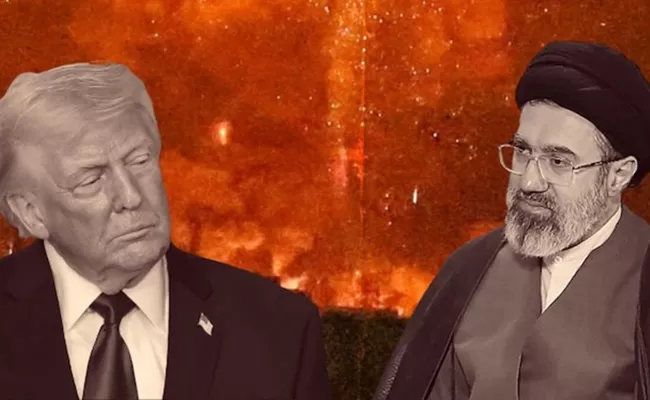
A fragile pause in one of the world’s most volatile regions is now underway. Donald Trump has announced a two-week ceasefire with Iran, backed by Israel and shaped through behind-the-scenes diplomacy involving Shehbaz Sharif and Pakistan’s military leadership.
The agreement isn’t just a temporary halt—it’s tied to critical conditions like reopening the Strait of Hormuz and advancing a broader 10-point peace proposal from Iran. Together, these elements could define whether this pause leads to lasting peace or renewed conflict.
What is the Trump Iran ceasefire deal?
The Trump Iran ceasefire marks a temporary suspension of hostilities between the United States, Israel, and Iran for a period of two weeks.
Announced just before a military deadline, the agreement is being described as a “double-sided ceasefire,” meaning:
- The US will pause planned attacks on Iran
- Iran will refrain from escalation
- Israel will halt its ongoing bombing campaign
This pause is not unconditional. It hinges on immediate steps that signal de-escalation—most importantly, reopening a critical global trade route.
Why is the Strait of Hormuz central to the ceasefire?
A global energy lifeline
The Strait of Hormuz is one of the most strategically important waterways in the world. Roughly:
- 20% of global oil supply passes through it
- It connects the Persian Gulf to international markets
- Any disruption impacts fuel prices worldwide
Why reopening it matters
The ceasefire requires Iran to ensure the “complete, immediate, and safe” reopening of the strait.
This condition serves multiple purposes:
- Signals Iran’s willingness to de-escalate
- Stabilizes global oil markets
- Builds trust for further negotiations
In short, it’s both a symbolic and economic confidence-building measure.
What is Iran’s 10-point peace proposal?
At the heart of longer-term negotiations is a reported 10-point proposal from Iran, which Trump described as “workable.”
Key elements of the plan
The proposal outlines a framework for lasting peace, including:
- Permanent end to hostilities (not just temporary ceasefires)
- Regional de-escalation across hotspots like Lebanon, Syria, and Iraq
- Security guarantees to prevent future attacks
- Sanctions relief from the US and international bodies
- Release of frozen Iranian assets
- War reparations and reconstruction support
- Recognition of Iran’s sovereignty
- Safe maritime framework for the Strait of Hormuz
- Structured negotiations and monitoring mechanisms
- Long-term stability commitments from all parties
Why this proposal matters
Unlike short-term ceasefires, this plan attempts to:
- Address root causes of conflict
- Create enforceable agreements
- Expand peace beyond just US-Iran relations
If accepted—even partially—it could reshape power dynamics across the Middle East.
What role did Pakistan play in the ceasefire?
Pakistan emerged as a key intermediary in this high-stakes diplomatic effort.
Behind-the-scenes mediation
- Shehbaz Sharif urged Trump to delay military action
- Pakistan’s military leadership facilitated communication channels
- Messages were relayed between Washington and Tehran
This mediation helped create the two-week window now being used for negotiations.
Why Pakistan’s role is significant
- It positions Pakistan as a regional diplomatic player
- It highlights the importance of third-party mediation
- It shows how indirect communication can prevent escalation
How has Israel responded to the ceasefire?
According to CNN, Israel has also agreed to join the ceasefire and agreed to:
- Pause its bombing campaign
- Participate in the two-week ceasefire
- Allow negotiations to proceed
This is a critical development because:
- Israel has been a direct military actor in the conflict
- Its participation signals alignment with US strategy
- It increases the chances of a broader agreement
However, Israel’s long-term commitment will likely depend on how negotiations evolve during the ceasefire window.
Is a long-term peace deal actually close?
Trump has suggested that negotiations are “very far along”, with most major issues addressed.
What supports this optimism
- A structured 10-point proposal already exists
- All key players have agreed to pause hostilities
- Diplomatic channels are active and ongoing
What could still go wrong
- Disagreements over sanctions relief
- Lack of trust between parties
- Regional actors outside the agreement disrupting progress
The next two weeks will be decisive.
Why this ceasefire matters globally
This isn’t just a regional issue—it has global consequences.
Economic impact
- Oil prices depend heavily on stability in the Strait of Hormuz
- Shipping and trade routes could normalize
- Energy markets may stabilize if tensions ease
Geopolitical impact
- A successful deal could reduce conflict across the Middle East
- It may redefine US-Iran relations
- It could elevate Pakistan’s diplomatic standing
Strategic takeaway
This ceasefire is less about stopping a war temporarily—and more about testing whether diplomacy can deliver a durable solution.
TL;DR
- Donald Trump announced a two-week ceasefire with Iran, supported by Israel
- The deal depends on reopening the Strait of Hormuz, a key global oil route
- A 10-point Iranian peace plan forms the basis for long-term negotiations
- Shehbaz Sharif and Pakistan played a crucial mediation role
- The next two weeks are critical for turning this pause into a lasting peace