

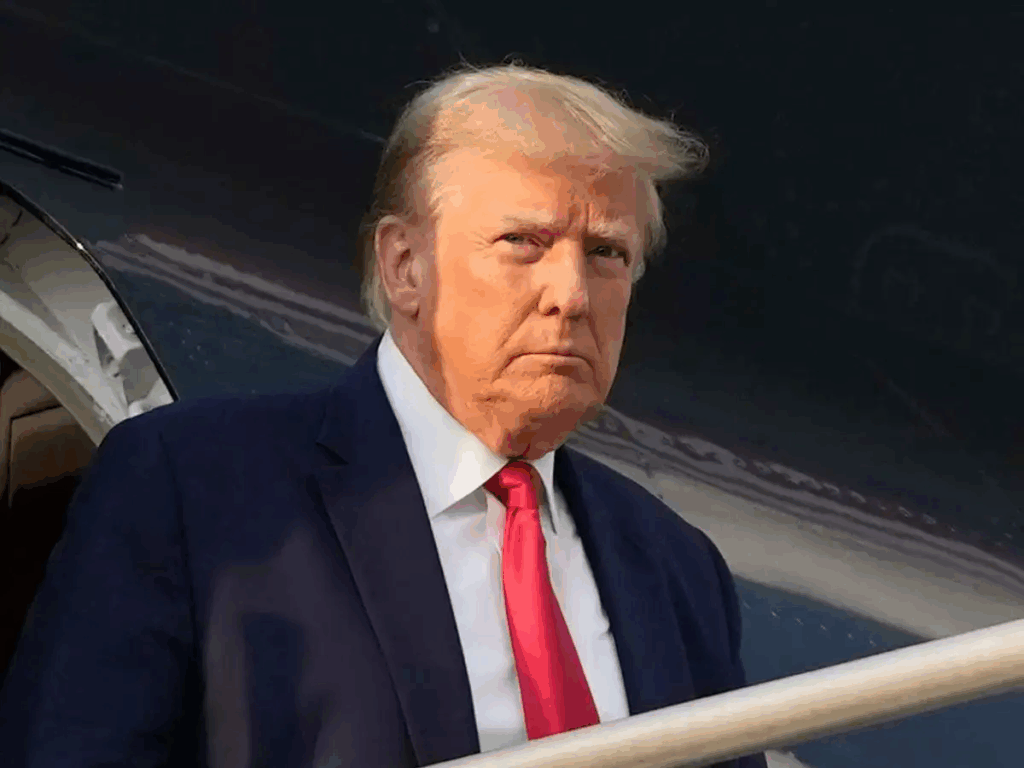
U.S. President Donald Trump has once again been nominated for the Nobel Peace Prize—his sixth nomination to date. The latest nod comes from an unexpected source: Pakistan, which credited Trump for his “decisive diplomatic intervention and pivotal leadership during the recent India-Pakistan crisis.”
While the nomination is notable, Trump remains pessimistic about ever receiving the prize. “They won’t give it to me, no matter what I do,” he remarked, echoing a long-running grievance that the prestigious award favors liberal leaders.
Why did Pakistan nominate Trump for Nobel Peace Prize?
Pakistan’s government praised Trump’s role in de-escalating tensions between India and Pakistan, claiming his leadership helped avert a larger crisis. Though specific incidents weren’t detailed in the nomination, this likely refers to back-channel diplomatic efforts during past cross-border skirmishes.
The nomination would be for the 2026 Nobel Peace Prize, as the deadline for 2025 submissions closed on January 31 this year.
Who decides the Nobel Peace Prize?
The Nobel Peace Prize is awarded by the Norwegian Nobel Committee, a five-member panel appointed by Norway’s parliament. While the other Nobel Prizes are decided in Sweden, the Peace Prize is exclusively a Norwegian responsibility.
Here’s how the process works:
- Who can nominate: National politicians, university professors in select fields, members of international courts, peace institute directors, and past Nobel laureates.
- Deadline: Nominations must be submitted by January 31 each year.
- Selection: The committee creates a shortlist, conducts deep evaluations with external experts, and then votes. A majority is required. If no candidate meets the standard, no prize is awarded.
- Announcement: Winners are revealed in early October in Oslo, Norway.
Why hasn’t Trump won the prize yet?
Despite multiple nominations—including for brokering the Abraham Accords between Israel and Arab nations—Trump has never been selected. Here’s why:
1. Incomplete or short-lived initiatives
While the Abraham Accords and early diplomacy with North Korea were significant, critics argue they lacked follow-through or broader resolution of underlying conflicts.
2. Human rights and foreign policy contradictions
Trump’s record includes:
- Family separation policies at the southern border.
- Travel bans targeting predominantly Muslim countries.
- Continued military operations, including drone strikes and assassinations.
These actions run counter to the Nobel Committee’s emphasis on humanitarian values, disarmament, and peaceful conflict resolution.
3. Polarizing leadership style
The Nobel Peace Prize often goes to figures seen as unifying and transformative. Trump’s confrontational style, both domestically and internationally, has likely worked against him in the eyes of the Committee.
4. Perceived politicisation of the process
Trump himself has claimed ideological bias in the Committee, noting its ties to Norway’s parliament and left-leaning political culture.
He has frequently criticized past awards—most notably Barack Obama’s Peace Prize in 2009. “They gave one to Obama immediately upon his ascent to the presidency, and he had no idea why he got it… That was the only thing I agreed with him on,” Trump said in 2019.
Trump’s fixation with the Nobel Peace Prize
From 2018 to now, Trump has been nominated six times for the Nobel Peace Prize by individuals across the globe. Yet, he remains openly bitter about being passed over.
“They should give me the Nobel Prize for Rwanda, Congo, Serbia… the big one is India-Pakistan. I should have gotten it 4-5 times. Abraham Accords would have been a good one.”
He added: “I deserve it, but they would never give me. They only give it to liberals.”
Will he ever win it?
That remains unlikely unless there’s a dramatic shift in how the Nobel Committee views his contributions to peace. While diplomatic deals and conflict mediation are part of the Nobel’s criteria, so are long-term humanitarian impact and global stability efforts—areas where Trump’s record remains contentious.
Until then, his pursuit of the prize will likely remain a recurring political subplot—one that’s equal parts aspiration and grievance.


