

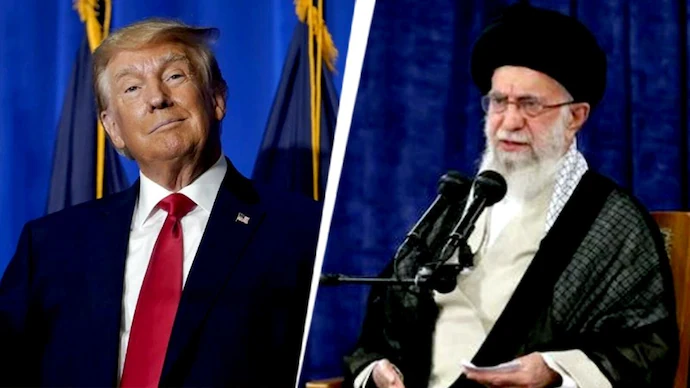
Israel had the green light, but Trump said “no” amid fears of all-out war, reports reveal
In a dramatic revelation that underscores the fragile geopolitics of the Middle East, multiple sources have confirmed that U.S. President Donald Trump halted an Israeli plan to assassinate Iran’s Supreme Leader Ayatollah Ali Khamenei. The plan, which reportedly had the backing of top Israeli officials, was ultimately blocked by Trump, who warned against targeting Iran’s political leadership, at least until an American was killed.
“Have the Iranians killed an American yet? No. Until they do, we’re not even talking about going after the political leadership,” a senior official told Reuters, reflecting Trump’s directive at the time.
Operation blocked despite Israeli readiness
According to sources who spoke with Reuters and Axios, Israeli intelligence services believed they had a rare opportunity to eliminate Khamenei—a move that could have fundamentally altered the balance of power in the region. But the Trump administration reportedly urged restraint.
Barak Ravid, a seasoned Middle East correspondent for Axios, corroborated the report, stating that his sources also confirmed the operation was vetoed by Trump himself. The president’s decision was reportedly driven by concerns about igniting a regional war and his broader strategic goal of avoiding large-scale U.S. military involvement in the Middle East.
Netanyahu dodges direct response
Israeli Prime Minister Benjamin Netanyahu, when asked about the alleged assassination plan during a Sunday interview on Fox News’ Special Report with Bret Baier, refused to confirm or deny the reports.
“There’s so many false reports of conversations that never happened, and I’m not going to get into that,” Netanyahu said. “But I can tell you, I think that we do what we need to do, we’ll do what we need to do. And I think the United States knows what is good for the United States.”
Tensions erupt into full-blown conflict
The revelation comes as Israel and Iran are locked in a rapidly escalating military confrontation that shows no signs of abating. What began as a series of covert operations and retaliatory strikes has now spiraled into open warfare.
Sunday saw Iran accuse Israel of orchestrating five car bomb attacks near key government buildings in Tehran. In swift retaliation, the Israeli Air Force launched its deepest strike yet, targeting an Iranian refueling tanker at Mashhad Airport—nearly 1,400 miles from Israeli territory.
Iran responded with a barrage of ballistic missiles. Two of them struck northern and southern Israel, injuring six civilians. A missile that hit Haifa sparked a massive blaze, wounding two people with shrapnel.
At least 13 Israelis have been killed in the ongoing strikes since the hostilities began, with the IDF confirming it is operating in a full combat mode.
Human toll mounts on both sides
While Israel’s advanced missile defense systems—backed by U.S. military support—have intercepted many incoming threats, the human cost continues to rise. Iranian human rights groups claim over 400 civilians have been killed in Israeli airstrikes, with more than 650 injured.
Unlike Israel, which has fortified public shelters, much of Iran’s civilian population remains exposed. On Sunday, large numbers of Iranians fled Tehran, clogging highways as panic spread in response to the IDF’s warning for civilians to avoid all military facilities.
Trump predicts peace, touts past diplomacy
Despite the violent escalation, Trump took to his social media platform Truth Social on Sunday, striking an optimistic tone about the conflict’s resolution.
“Iran and Israel should make a deal, and will make a deal, just like I got India and Pakistan to make, in that case by using TRADE with the United States to bring reason, cohesion, and sanity into the talks with two excellent leaders who were able to quickly make a decision and STOP!” Trump wrote.
“We will have PEACE, soon, between Israel and Iran! Many calls and meetings now taking place. I do a lot, and never get credit for anything, but that’s OK, the PEOPLE understand. MAKE THE MIDDLE EAST GREAT AGAIN!” he added.
A conflict at the crossroads
The current standoff appears to have reached what the Israeli military called a “point of no return.” With missile exchanges intensifying and civilian casualties mounting, the question now remains whether diplomatic pressure—perhaps led again by Trump or his successors—can rein in two nations hurtling toward a larger regional war.


