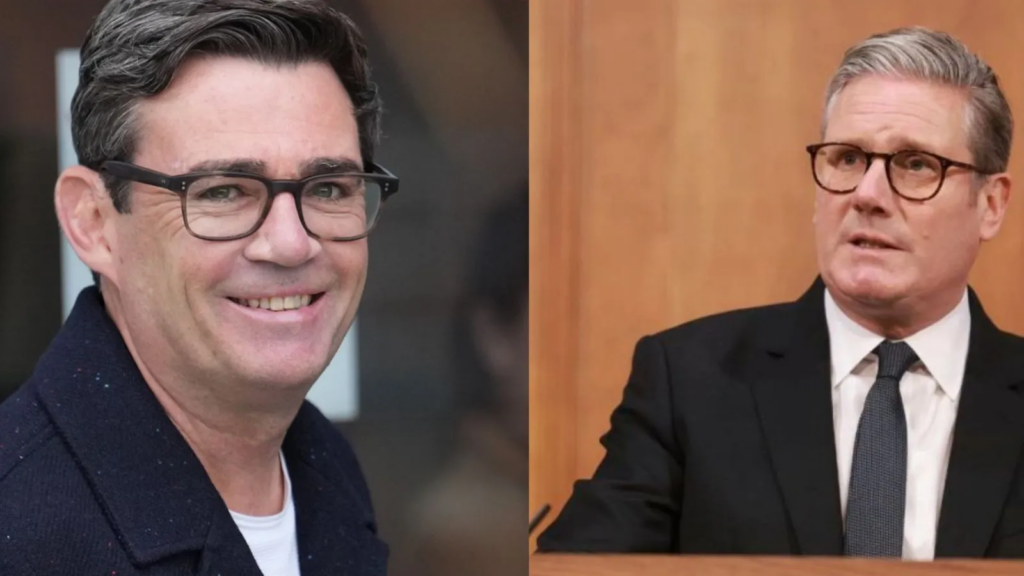
Andy Burnham is poised to become the United Kingdom’s next prime minister after securing overwhelming backing from Labour Party lawmakers in the race to replace Keir Starmer as party leader.
On the first day of the Labour leadership contest, Andy Burnham received nominations from 322 of the party’s 403 Members of Parliament, leaving potential rivals without enough support to enter the race. If no unexpected developments occur, Burnham is expected to become Labour leader on July 17 before being sworn in as prime minister on July 20.
Why is Andy Burnham expected to become the next UK prime minister?
Under the Labour Party’s leadership rules, candidates require nominations from at least 81 Labour MPs to qualify for the contest.
Burnham’s commanding total of 322 nominations effectively closed the door on any challenger.
With only 81 nominations available among the remaining MPs, no rival is expected to meet the threshold required to enter the race.
As a result, Burnham is set to become Labour leader unopposed once the nomination period officially concludes.
How many MPs supported Andy Burnham?
At the end of the first day of nominations:
- Labour MPs: 403
- Nominations received by Andy Burnham: 322
- Minimum nominations required: 81
The margin gives Burnham one of the strongest parliamentary endorsements seen in a Labour leadership contest in recent years.
Why is Labour choosing a new leader?
The leadership election follows Keir Starmer’s decision to step down as Labour leader.
By constitutional convention, the leader of the governing party serves as the UK’s prime minister.
Once Labour officially elects its new leader, Burnham is expected to be invited to form a government and assume the office of prime minister.
Outgoing leaders traditionally do not participate in the nomination process, which is why Starmer did not cast a nomination vote.
What has Andy Burnham said after securing support?
Following confirmation of the nomination results, Burnham thanked his parliamentary colleagues for their backing.
He said the support reflected a shared belief that Britain needs a different political approach focused on:
- Greater devolution of power from Westminster.
- Economic growth across all regions.
- Policies aimed at benefiting ordinary working families.
Andy Burnham described his agenda as a “circuit breaker” intended to reshape Britain’s political and economic landscape.
What happens next?
The remaining timeline is expected to unfold as follows:
- July 17: Labour leadership contest concludes.
- Burnham becomes Labour Party leader.
- July 20: Burnham is expected to formally become UK prime minister.
If no additional candidates qualify before nominations close, the leadership transition is expected to proceed without a contested vote.
Who is Andy Burnham?
Andy Burnham is one of Labour’s best-known political figures.
Over his political career, he has served in several senior government positions, including cabinet roles, before becoming Mayor of Greater Manchester.
He has built a national profile by advocating for:
- Greater regional investment.
- Expanded local decision-making powers.
- Public service reforms.
- Transport and housing initiatives.
His experience in both national and regional government has made him a prominent figure within the Labour Party.
Why does this leadership race matter?
The transition marks a significant moment for both Labour and British politics.
A new prime minister often brings:
- Cabinet reshuffles.
- New legislative priorities.
- Changes in domestic policy.
- Different approaches to economic management.
- Potential shifts in foreign policy emphasis.
Political analysts will closely watch Burnham’s first appointments and policy announcements after taking office.
What challenges will Andy Burnham inherit?
Should he officially become prime minister, Burnham will face several major priorities, including:
- Managing the UK economy.
- Addressing cost-of-living concerns.
- Strengthening public services.
- Delivering regional economic growth.
- Managing Britain’s international relationships.
How quickly his government moves on these issues is likely to shape the early months of his premiership.
TL;DR
- Andy Burnham has secured nominations from 322 of Labour’s 403 MPs.
- The total leaves no realistic path for another candidate to enter the leadership contest.
- Burnham is expected to become Labour leader on July 17.
- He is then expected to formally become the UK’s next prime minister on July 20.
- His leadership is expected to focus on regional growth, economic reform, and devolving power beyond Westminster.