

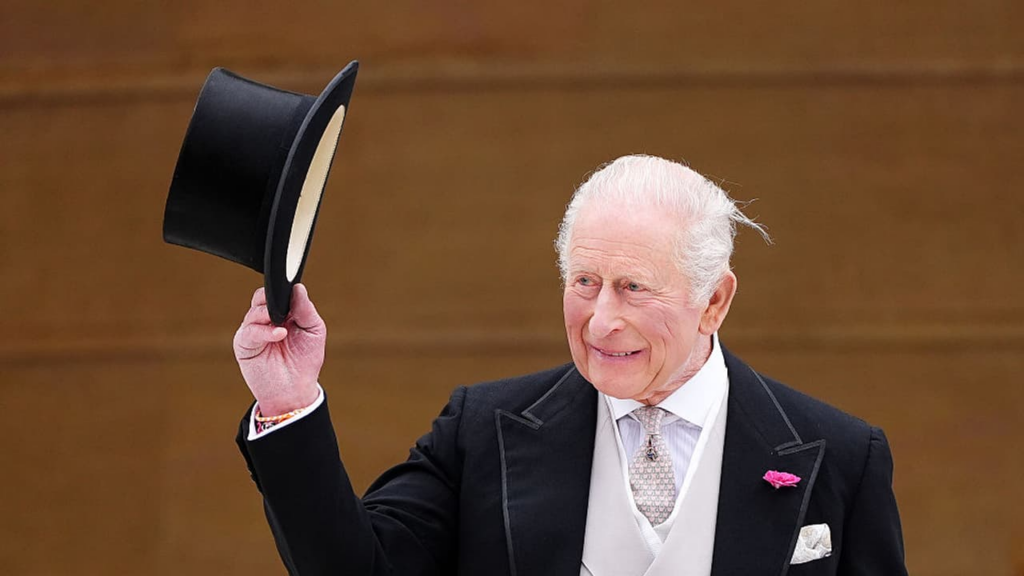
A British radio station accidentally announced the death of King Charles III this week after what it described as a “computer error” triggered the UK’s highly sensitive “Death of a Monarch” broadcast protocol.
The false announcement spread rapidly online, sparking confusion, screenshots, memes, and concern before the station issued a public apology clarifying that the King was alive and the alert had been sent in error.
The incident offered a rare glimpse into one of Britain’s most secretive media contingency systems, the carefully coordinated protocols prepared for the eventual death of a reigning monarch.
What exactly happened?
Radio Caroline accidentally activated an emergency royal protocol
The incident occurred on May 19 at Radio Caroline, a historic UK broadcaster based in Maldon, Essex.
According to station manager Peter Moore, a technical malfunction at the station’s main studio accidentally activated the emergency “Death of a Monarch” system used by British broadcasters.
That system is designed to immediately prepare stations for official royal death coverage.
Instead, listeners briefly received a shocking false message:
“His Majesty King Charles III has passed away.”
The station later explained that the alert was unintended and issued a formal apology to both the King and listeners.
Moore wrote on Facebook that:
“The Death of a Monarch procedure… was accidentally activated.”
The station reportedly went silent automatically afterward, another standard feature built into emergency broadcast systems.
What is the UK’s ‘Death of a Monarch’ protocol?
Britain has detailed plans for royal succession announcements
The United Kingdom maintains elaborate contingency procedures for the death of a reigning monarch.
These protocols coordinate:
- Broadcasters
- Government departments
- National media outlets
- Security agencies
- Royal communications teams
The most widely known version was “Operation London Bridge,” the codename used after the death of Queen Elizabeth II in 2022.
Under such plans, broadcasters receive immediate instructions regarding:
- Tone of coverage
- Music playlists
- Suspension of advertisements
- Breaking news formatting
- Special programming schedules
Many UK radio stations maintain preloaded emergency systems specifically for these scenarios.
That is why Radio Caroline’s accidental activation caused such alarm online. These systems are not casual newsroom templates. They are treated with near-state-level seriousness.
Why did the message spread so quickly online?
Royal death rumors move at internet speed
Few subjects spread faster online than rumors involving the British monarchy.
The phrase “King Charles III has passed away” immediately triggered:
- Panic posts
- Screenshot sharing
- Speculation
- Fact-check searches
- Meme reactions
Because the message came from a real broadcaster rather than an anonymous social account, many users initially assumed it was genuine.
The situation reflects a growing challenge in the digital era:
Even accidental alerts can travel globally before corrections catch up.
Within minutes, screenshots of the message circulated across X, TikTok, Reddit, and WhatsApp groups.
The monarchy remains one of the world’s most closely watched institutions, making any royal health rumor instantly viral fuel.
Why broadcasters prepare for royal deaths in advance
The BBC and UK media treat royal succession as a national event
For decades, British broadcasters have quietly rehearsed plans for royal deaths to avoid confusion during moments of national significance.
These preparations include:
- Prewritten obituaries
- Black-tie dress protocols for anchors
- Special studio graphics
- Emergency transmission systems
- Reserved music playlists
Some stations reportedly even maintain “mood music” libraries intended for immediate transition after a royal announcement.
The system may sound theatrical, but it reflects how deeply intertwined the monarchy remains with British national identity and constitutional tradition.
Radio Caroline’s history added another layer to the story
The station has longstanding royal broadcast ties
Radio Caroline noted in its apology that it has aired royal Christmas messages for years under both Queen Elizabeth II and King Charles III.
That history likely intensified the embarrassment surrounding the mistaken alert.
The station emphasized it hoped to continue broadcasting the King’s messages “for many years to come,” a line that quickly became widely quoted online.
Interestingly, The Guardian reported that archived playback from several hours of Tuesday’s broadcast was unavailable afterward, adding to online curiosity about exactly how long the mistaken message remained live.
Why false death reports keep becoming viral moments
Social media amplifies errors instantly
False celebrity and political death reports are hardly new, but social platforms have transformed them into global events within minutes.
In earlier decades, mistaken reports could often be corrected locally before spreading widely.
Now:
- Screenshots circulate instantly
- Posts outrun corrections
- Algorithms reward emotional reactions
- Confusion becomes content
Royal news is especially vulnerable because audiences expect secrecy around palace communications and sudden announcements.
That combination creates fertile ground for speculation whenever unusual messaging appears.
Is King Charles III currently healthy?
Buckingham Palace has issued no emergency announcement
Despite the viral confusion, there has been no indication from Buckingham Palace of any such emergency involving King Charles III.
The King has continued public duties following earlier health-related concerns disclosed in recent years.
The false announcement appears entirely tied to the station’s technical malfunction rather than any real royal event.
Still, the incident became a reminder of how sensitive royal communications remain in Britain and how quickly digital misinformation, even accidental misinformation, can spiral.
Why the story resonated globally
It combined monarchy, media failure, and internet culture
The story exploded online because it contained three ingredients the internet rarely ignores:
- Royal intrigue
- Technical chaos
- Institutional embarrassment
There is also something uniquely surreal about a nation maintaining elaborate royal death systems sophisticated enough to trigger automatically, only for one to misfire because of a computer glitch.
For many younger users online, the incident felt less like a constitutional protocol and more like a scene from a political satire series.
But beneath the humor sits a serious media lesson: In an era of instant communication, even backup systems designed for stability can accidentally create misinformation storms.
TL;DR
- UK radio station Radio Caroline accidentally announced King Charles III’s death due to a computer error.
- The mistake triggered Britain’s “Death of a Monarch” broadcast protocol.
- The station later apologized and confirmed the King is alive.
- The false alert quickly went viral across social media platforms.
- The incident highlighted the extensive emergency systems UK broadcasters maintain for royal succession events.


