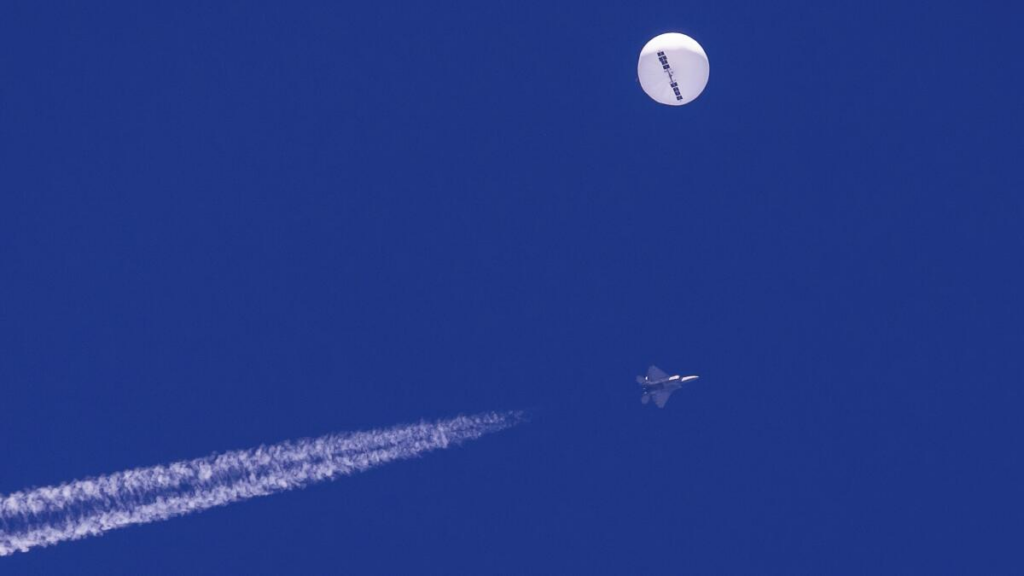
A group of Ukrainian astronomers has reignited debate over unidentified aerial phenomena (UAPs) after releasing a preprint claiming to have observed dozens of massive, fast-moving objects near the Moon. The researchers suggest the objects could be enormous spacecraft travelling at roughly 39,600 km/h (24,600 mph) and speculate they may be using the Moon as a base.
The extraordinary claims have drawn widespread attention, but they have also been met with equally strong scepticism. The study has not been peer-reviewed, and independent scientists say there is no compelling evidence that the observed objects are extraterrestrial. They argue the sightings are more likely explained by optical artifacts, Earth-orbiting satellites, or atmospheric effects.
Here’s what the researchers reported and why the findings remain highly controversial.
What did the Ukrainian astronomers claim?
The observations come from researchers at Ukraine’s Main Astronomical Observatory, who analysed footage captured using a high-speed camera operating at 20 frames per second.
According to the preprint, the team observed more than 20 unidentified objects near the Moon during observations conducted on August 16 and September 7, 2025, from Vinarivka, Ukraine.
The researchers estimated that the objects:
- Travelled at approximately 11 kilometres per second (about 39,600 km/h).
- Appeared stationary relative to the Moon’s surface while moving across it.
- Measured between 22 and 40 kilometres (14 to 25 miles) in apparent diameter.
- Produced repeating flashes lasting between 0.1 and 0.5 seconds.
They further speculated that the objects could travel from the Moon to Earth in roughly 20 minutes if moving at the reported speed.
Why do the researchers think the Moon could be a “base”?
One of the paper’s more speculative ideas is that the unidentified objects appear to remain associated with the lunar surface rather than moving independently through space.
The researchers described some objects as:
- Ring-shaped.
- Rotating approximately once every three minutes.
- Flashing in synchronised patterns despite being separated by hundreds of kilometres.
Based on those observations, they hypothesised that the Moon may serve as a staging area or base for the objects.
However, the study provides no direct evidence supporting that conclusion. The suggestion is presented as speculation rather than a verified finding.
How did the researchers estimate the objects’ size?
The reported sizes were not directly measured.
Instead, the researchers estimated the objects’ dimensions using mathematical models based on their apparent brightness, reflectivity, and assumptions about their distance and physical properties.
Because the objects appeared as only a few pixels in the recorded images, even small changes in those assumptions could produce dramatically different size estimates.
Astronomers generally require multiple observations from different telescopes or instruments to accurately determine an object’s distance, size, and speed.
Why are other scientists skeptical?
Independent researchers have raised several concerns about the study.
The paper has not been peer-reviewed
The findings currently exist as a preprint, meaning they have not undergone independent scientific review.
Peer review helps identify methodological errors, unsupported conclusions, and alternative explanations before research is accepted by the scientific community.
Alternative explanations are more likely
Astronomers say faint moving objects captured near the Moon can often be explained by:
- Earth-orbiting satellites.
- Space debris.
- Optical distortions.
- Camera sensor artifacts.
- Atmospheric turbulence.
- Image-processing effects.
Without simultaneous observations from multiple telescopes, determining an object’s true distance is extremely difficult.
Extraordinary claims require extraordinary evidence
Claiming the existence of spacecraft tens of kilometers wide would require exceptionally strong evidence, including:
- Independent observations.
- High-resolution imagery.
- Radar or other instrumental confirmation.
- Repeatable measurements.
The current study does not provide that level of evidence.
Is this the first time the team has made similar claims?
No.
In 2022, members of the same research group published another preprint describing numerous unidentified aerial phenomena (UAPs) observed over Ukraine.
That paper also generated significant media attention but was criticized by several astronomers.
Among them was Harvard astrophysicist Avi Loeb, who argued that objects moving through Earth’s atmosphere at the reported speeds would produce intense heating and become brilliantly visible due to air friction, making the observations difficult to reconcile with known physics.
Does this mean aliens have been found?
No.
The study does not provide evidence confirming extraterrestrial life or alien spacecraft.
The term UFO (or the more modern UAP, for Unidentified Anomalous Phenomena) simply refers to an object or event that has not yet been identified.
In many cases, later investigations determine that sightings were caused by natural phenomena, aircraft, satellites, or imaging artifacts.
Scientists emphasize that unidentified does not mean extraterrestrial.
What happens next?
For the claims to gain scientific credibility, researchers would need:
- Independent confirmation from other observatories.
- Higher-resolution observations.
- Multiple synchronized telescope measurements.
- Peer-reviewed publication.
- Evidence ruling out conventional explanations.
Until then, the reported lunar objects remain unverified observations rather than established scientific discoveries.
TL;DR
A team of Ukrainian astronomers has released a preprint claiming to have observed large, fast-moving unidentified objects near the Moon traveling at about 39,600 km/h. The researchers speculate that the Moon could serve as a base for these objects, but the study has not been peer-reviewed and provides no direct evidence of extraterrestrial spacecraft. Independent scientists say satellites, optical artifacts, or atmospheric effects more likely explain the observations.