
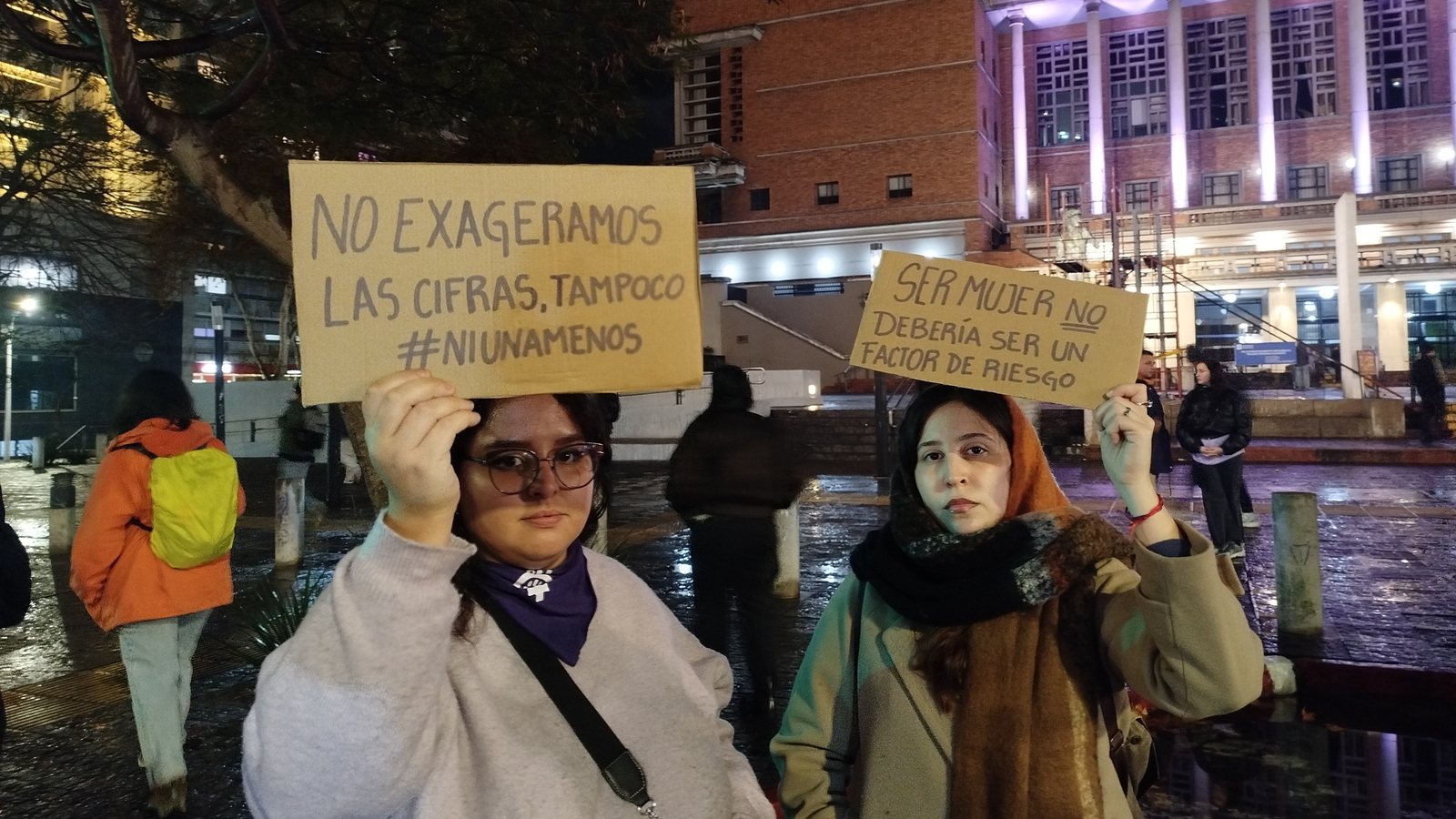

Intimate partners or other relatives killed about 47,000 women and girls in 2025, a UN femicide report released on Tuesday, Nov. 24, estimates. That is about 129 a day, or more than five every hour. The estimate comes from Femicides in 2025, a research brief by the UN Office on Drugs and Crime (UNODC) and UN Women.
Those killings were 60% of the roughly 78,000 women and girls killed intentionally worldwide last year. For men and boys, the figure was 11%. “The home remains the most dangerous place for women and girls in terms of the risk of homicide,” the brief says.
The report lands a day before the International Day for the Elimination of Violence against Women on Nov. 25. It opens the UN’s annual 16 Days of Activism campaign, which runs to Dec. 10.
The 47,000 figure is a range, not a count
The headline number is an estimate built partly on missing data. The brief puts the plausible range at 37,100 to 56,700. Most countries don’t report who killed each woman, so UNODC fills the gaps using each country’s earlier data or regional averages.
The gaps are widest where the toll looks highest. Africa leads with an estimated 22,100 victims, almost half the world total. It also has the highest rate, at 2.9 per 100,000 women and girls. Yet only 11 of Africa’s 58 countries and territories have reported this data even once since 2010, the brief’s methodology table shows. Worldwide, 122 of 239 have.
That is why the drop from last year’s estimate of 50,000 is not good news. The brief says the change “should not be interpreted as evidence of a decline.” It mostly reflects better country data. The 2025 range also easily contains the 2024 figure.
Where women face the highest risk
Here is the brief’s regional breakdown for 2025, with the uncertainty ranges.
| Region | Estimated victims | Range | Rate per 100,000 women and girls |
|---|---|---|---|
| Africa | 22,100 | 15,200–29,000 | 2.9 |
| Asia | 15,100 | 12,500–17,600 | 0.6 |
| Americas | 7,400 | 7,300–7,600 | 1.4 |
| Europe | 2,100 | 2,000–2,200 | 0.5 |
| Oceania | 300 | 200–400 | 1.1 |
| World | 47,000 | 37,100–56,700 | 1.1 |
The Americas and Europe are the only regions with enough data to say who did the killing. There, partners rather than other relatives were behind 70% and 63% of these femicides, respectively.
The share of all female homicides that happen inside the family also varies. It was 75% in Africa and 48% in the Americas.
Homicide is falling faster than femicide
Only the Americas and Europe have reliable trends back to 2010. In both, overall killings have dropped much faster than killings of women by partners and family.
From 2010 to 2025, the overall homicide rate in the Americas fell 23%. The femicide rate fell 12%, from 1.6 to 1.4 per 100,000. In Europe, homicide fell 43% and femicide 28%. The brief says this suggests the killings are “deeply rooted in social norms and gender stereotypes.”
UN Women Deputy Executive Director Nyaradzayi Gumbonzvanda put it more bluntly at a briefing at UN headquarters in New York. “Our data shows justice systems globally make silence the safest choice a woman can make,” she said, KBC reported. Even when cases reach court, they can take years: Russell Brand was sentenced this month for offenses against four women between 2004 and 2009.
What the US numbers show
The UN brief doesn’t publish a US figure, and US data are patchy too. Two government sources come closest.
The CDC counted 3,991 women killed by an intimate partner from 2018 through 2021, about 1,000 a year, in its National Violent Death Reporting System. That system covered every state except Florida. The rate held steady at about one per 100,000 women. Two in three of those killings involved a gun.
Black women made up 29.9% of victims but about 13.4% of the population, the CDC said. And in 2020 and 2021, 16.5% of suspects had contact with law enforcement in the year before the killing. The CDC authors called that a possible missed chance for prevention.
The FBI’s newer numbers point the same way. In 2024, men killed 2,381 women in incidents with one victim and one offender, according to the Violence Policy Center’s analysis of FBI data. Where the relationship was known, 1,040 of 2,079 victims were the killer’s wife, ex-wife or girlfriend. Men shot and killed 641 women who were their wives or partners.
These numbers aren’t directly comparable with the UN’s. The CDC counts only partners, not other relatives. And the Violence Policy Center says FBI data have been less complete since the bureau changed reporting systems in 2021.
Guns and protection orders are where policy bites
The brief names a perpetrator’s access to firearms as a key risk factor. It also points to research on US states. A 2017 study in the Annals of Internal Medicine looked at states that bar people under restraining orders from having guns and make them surrender those guns. Those states had intimate partner homicide rates 14% lower.
Enforcement depends on records. Protection orders are among the files in the FBI’s national crime database, the system at the center of a reported breach this month.
The brief’s other prescriptions are police risk assessments, coordinated services and case-by-case reviews of killings to find where institutions failed. UNODC and UN Women say they will report on how countries are measuring femicide to the UN Statistical Commission in 2027. The next marker is sooner: Dec. 10, when the 16 Days campaign closes on Human Rights Day.