
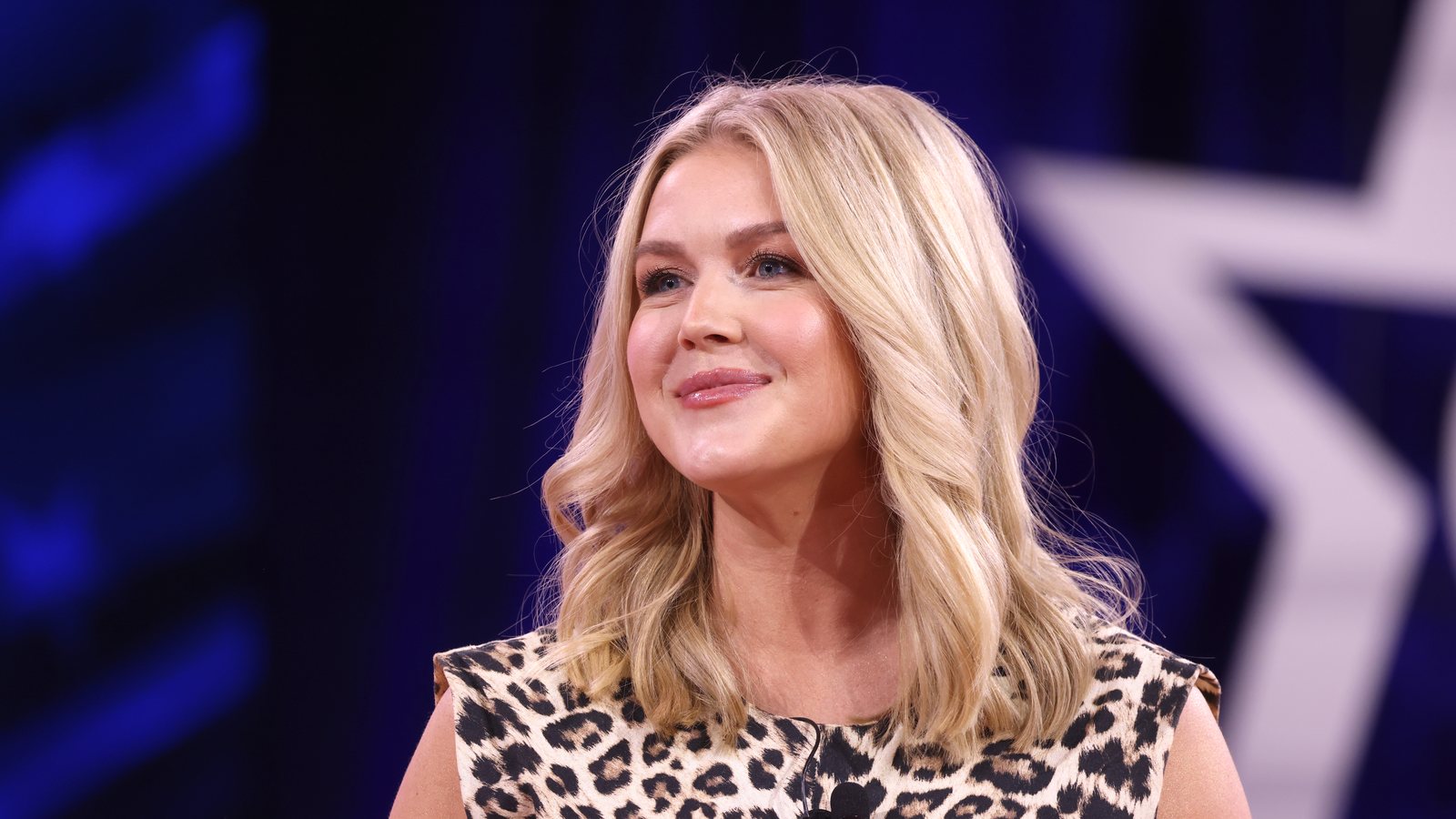

Karoline Leavitt posted a four-part instruction on X on the evening of Nov. 19: “Get married, have more babies, raise them in the church, and teach them to love America.” She attached a screenshot of a Washington Post headline, “Muslims to outnumber Christians worldwide by 2035, study finds.” Leavitt, the former White House press secretary, now works as a Fox News contributor. By Tuesday her post had passed 2.5 million views.
The study behind that headline is real, and its central finding is global. Pew Research Center’s own numbers for the United States point somewhere else. Here, Muslim and Christian women have almost the same birth rates. The decline in Christians’ share comes mainly from Americans leaving religion.
What Leavitt posted, and what she left unsaid
The post is 16 words long and does not mention Muslims, Islam or Pew. The link to the study comes entirely from the screenshot. It shows the Post’s Nov. 18 headline and a subhead saying Christianity’s center will move to Africa and “America will no longer be majority-Christian.”
Leavitt left the press secretary’s job at the end of August, saying she wanted more time with her two young children. Fox News announced on Oct. 5 that she would join as an on-air contributor on Nov. 1. We found no follow-up post from her explaining what she meant by pairing the two.
The post drew more than 5,000 replies. Coverage of them, including IBTimes UK’s, describes a split. Some readers welcomed the call for marriage and churchgoing. Others pointed to the cost of raising children, or objected to treating religion as a population race.
Pew’s global finding is about babies and geography
Pew published “The Future of World Religions: Population Growth Projections, 2020-2070” on Nov. 18. Its lead authors are Conrad Hackett and Marcin Stonawski, and it covers 201 countries and territories. Pew counted 2.27 billion Christians and 2.02 billion Muslims in 2020. It projects 2.57 billion Muslims and 2.52 billion Christians by 2035, the Associated Press reported.
Both groups keep growing. Pew projects Christians will grow by 30% between 2020 and 2070, in line with world population, while Muslims grow by 80%. The gap comes from two things. Muslim women had 3.1 children on average in 2020-2025, against 2.0 for everyone else. And the median Muslim in 2020 was 24 years old, against 33 for non-Muslims.
“It’s the babies,” Hackett told the AP. But most of those babies arrive in countries that already have Muslim or Christian majorities. Pew ran a test in which every religious group had its own country’s average birth rate. Muslims still passed Christians, in 2040 instead of 2035. Most of the shift reflects where population growth is happening, chiefly sub-Saharan Africa. By 2070 that region will hold more than half the world’s Christians.
Alan Cooperman, Pew’s director of religion research, warned against the reading Leavitt’s screenshot invites. “I don’t think this is a situation in which the growth of Muslims is coming at the expense of Christians,” he told the AP. “I do worry about mischief being made with headlines or narratives that take this finding and portray it as sort of a clash where Christians are losing to Muslims.”
In the US, people leaving church drive the change
The report has a separate section on the United States. Christians made up 64.0% of the US population in 2020, and Pew projects 47.8% by 2070. That is still the largest group, but no longer a majority. The AP, citing Pew, put the crossing point at about 2065.
Pew expects religiously unaffiliated Americans to rise from 29.7% to 41.3% over the same period. It projects Muslims will go from 1.2% of US residents to 3.7%. Pew says the Christian decline “will largely be driven by religious switching,” meaning people raised Christian who stop identifying as anything.
Birth rates barely enter into it. Pew estimates the US fertility rate at 1.6 children per woman, with Muslim Americans at 1.9 and Christian Americans at 1.8. When Pew gave every US religious group the same birth rate, the 2070 shares came out about the same.
Read against that data, the second half of Leavitt’s post fits the US numbers better than the first. More babies would raise the population, but Pew’s model says it would not change America’s religious mix by much. What does change it, on Pew’s evidence, is whether children raised in a church stay in one as adults.
Projections, not predictions
Pew stresses that these figures assume recent trends continue. Its earlier projections, published in 2015, underestimated how fast the unaffiliated would grow. Pew also notes that US disaffiliation has leveled off in recent years. By some measures, the youngest American adults are more religious than the generation before them.
Population forecasts can go badly wrong, as a 1960 paper that set doomsday for Nov. 13, 2026 showed. Pew’s model is far more careful, and it is also not the last word on American religion. Pew’s 3.7% Muslim projection for 2070 lands in the month Michigan elected Abdul El-Sayed, the first Muslim voted into the Senate.
The number to watch is the one Pew flags itself. If the plateau in Americans leaving religion holds, the 2070 projection of a Christian minority is the figure most likely to move.