A diplomatic dispute between the United States and France spilled into the United Nations Security Council after the U.S. delegation walked out of a meeting in protest over remarks made by France regarding Washington’s recent vote on a key human rights appointment.
The disagreement centers on the U.S. decision to vote against extending the mandate of UN High Commissioner for Human Rights Volker Türk during a recent UN General Assembly vote. France publicly criticized the U.S. position, prompting American officials to accuse Paris of using disrespectful rhetoric.
The episode underscores growing tensions between the Trump administration and the United Nations over human rights, multilateral institutions, and U.S. engagement with the organization.
Why Did the U.S. Walk Out?
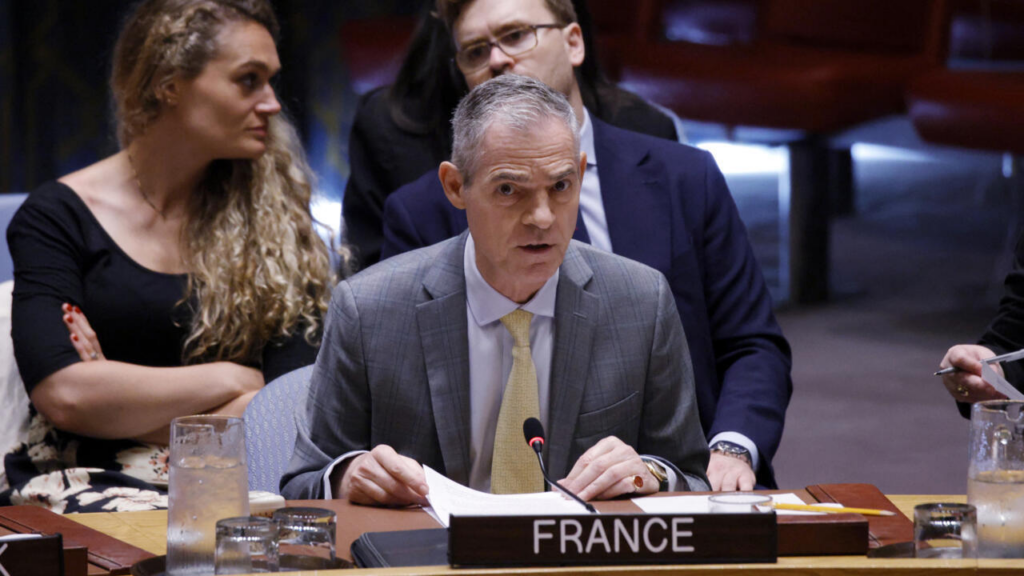
The American delegation left the Security Council chamber while French Ambassador Jérôme Bonnafont was speaking during an emergency meeting on Russia’s war in Ukraine.
According to U.S. Ambassador Dan Negrea, the walkout was an intentional protest against what he described as France’s “condescending and disrespectful rhetoric.”
Negrea said similar actions could occur in the future if France continued making comparable public statements.
What Sparked the Dispute?
The disagreement stems from a recent UN General Assembly vote on extending the mandate of Volker Türk, the UN High Commissioner for Human Rights.
The United States voted against extending Türk’s term.
According to reports, Russia and North Korea also voted against the extension, although each country’s vote reflects its own stated reasons and should not be interpreted as indicating a shared policy position with the United States.
Following the vote, France’s UN mission posted on social media criticizing Washington’s decision.
The French mission wrote that the United States had once been “a beacon of human rights” but argued that its latest vote represented a departure from that role.
Why Did the U.S. Oppose Volker Türk’s Reappointment?
U.S. officials defended their position by arguing that Türk had not applied human rights standards consistently.
According to U.S. Ambassador Mike Waltz, the administration believes the UN human rights office has been more critical of democratic countries while being insufficiently critical of authoritarian governments.
Waltz did not publicly provide specific examples in connection with the vote.
During his tenure, Türk has publicly addressed human rights concerns involving numerous countries, including criticism of Russia’s invasion of Ukraine and concerns about Israel’s military operations in Gaza, among many other issues.
France Defends the UN Human Rights Chief
France strongly supported Türk’s reappointment.
Ambassador Bonnafont described him as “a voice of conscience” and praised his work as impartial during his first term.
France has argued that maintaining an independent UN human rights office is essential for monitoring abuses worldwide.
Trump Administration Signals Broader UN Review
The dispute comes amid broader tensions between the Trump administration and the United Nations.
Following the General Assembly vote, U.S. Ambassador Jeff Bartos said Washington would reassess:
- Its engagement with UN institutions.
- Participation in certain UN activities.
- Financial contributions to the organization.
The administration has previously reduced funding for several UN agencies and withdrawn from multiple UN bodies, citing concerns over accountability, effectiveness, and U.S. national interests.
UN Response
The United Nations declined to comment directly on the diplomatic disagreement between the United States and France.
Deputy spokesperson Farhan Haq instead reiterated that the organization expects member states to respect decisions made through the General Assembly process.
The UN has not publicly responded to the political criticisms exchanged between the two governments.
Why This Matters
Although the United States and France remain close allies on many international issues, disagreements over multilateral institutions occasionally create diplomatic friction.
The dispute highlights broader debates over:
- The role of UN human rights institutions.
- Standards for evaluating human rights records.
- Funding and reform of international organizations.
- The future of U.S. engagement with the United Nations.
These issues are likely to remain significant as the Trump administration continues reviewing America’s participation in international organizations.
The Bottom Line
The United States staged a walkout during a UN Security Council meeting after France criticized Washington’s vote against extending the mandate of UN High Commissioner for Human Rights Volker Türk. U.S. officials said the protest was a response to France’s public remarks, while France defended Türk’s record and criticized the U.S. position. The incident reflects broader disagreements over human rights policy and the Trump administration’s relationship with the United Nations.
TL;DR
- The U.S. delegation walked out of a UN Security Council meeting during remarks by France’s ambassador.
- The protest followed France’s criticism of the U.S. vote against extending the mandate of UN High Commissioner for Human Rights Volker Türk.
- France said the U.S. had departed from its traditional role as a defender of human rights.
- U.S. officials defended their vote, arguing Türk had not applied human rights scrutiny consistently across countries.
- The dispute reflects broader disagreements between the Trump administration and the United Nations.