
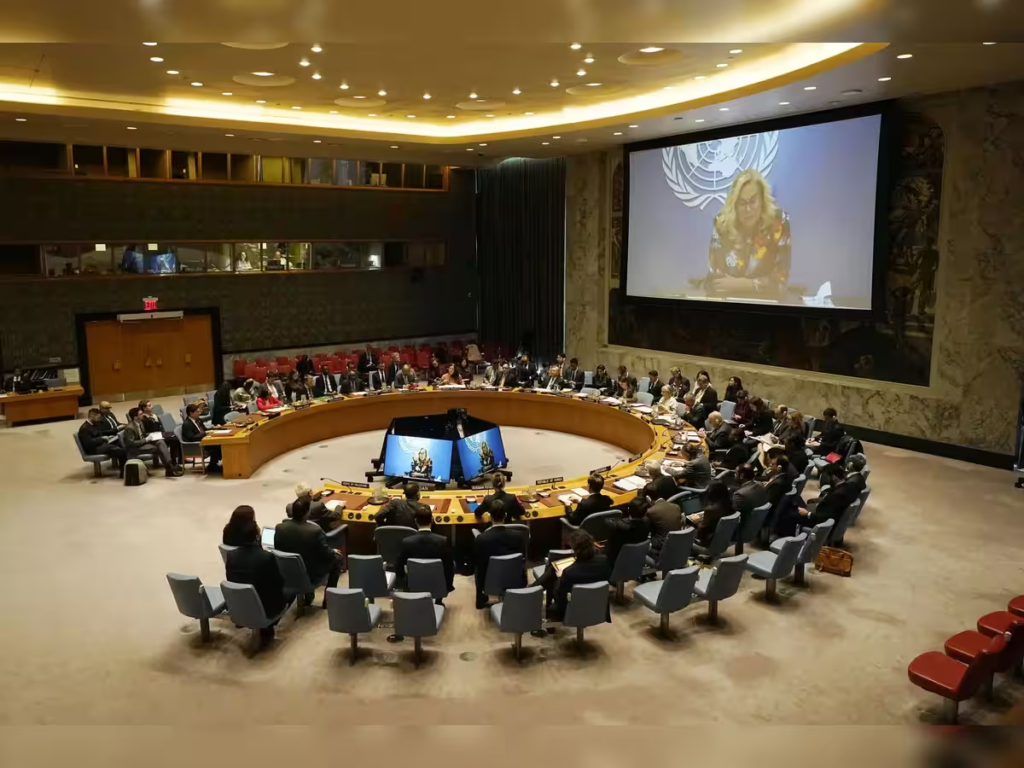
India has formally launched its campaign for a non-permanent seat on the United Nations Security Council (UNSC) for the 2028–29 term, even as it continues to press for a permanent seat on the world’s most powerful decision-making body. At first glance, the move may appear contradictory: why seek a temporary position while arguing for permanent membership?
The answer lies in diplomacy. A non-permanent seat gives India an opportunity to influence critical global security decisions, strengthen international partnerships, and reinforce its credentials as a responsible global power. Rather than undermining its campaign for permanent membership, the temporary seat is viewed as a stepping stone that keeps India at the center of global governance while broader UN reforms remain stalled.
Here’s why India is pursuing both goals simultaneously—and what it hopes to achieve.
TL;DR
- India has launched its campaign for a non-permanent UNSC seat for 2028–29.
- The bid complements, rather than replaces, India’s long-standing demand for permanent UNSC membership.
- A temporary seat allows India to vote on key issues such as wars, sanctions, peacekeeping missions, and international security.
- India has unveiled its “SHANTI” vision, focusing on peacekeeping, counter-terrorism, maritime security, climate action, sustainable development, and amplifying the voice of the Global South.
- Permanent Security Council reform remains difficult because any amendment requires the approval of all five permanent members, each of whom holds veto power.
Why Is India Seeking Another Non-Permanent Seat on the UNSC?
India’s latest campaign is rooted in a practical reality of international diplomacy: while permanent membership remains a long-term objective, a non-permanent seat offers immediate influence over some of the world’s most pressing security issues.
The UN Security Council is responsible for decisions on:
- International peace and security
- Economic sanctions
- Peacekeeping operations
- Armed conflicts
- Authorizing the use of force
- Responses to global crises
Although non-permanent members do not possess veto power, they participate in negotiations, draft resolutions, vote on key decisions, and help shape international consensus.
For India, serving on the Council demonstrates that it is not merely seeking institutional reform—it is actively contributing to global governance.
What Is a Non-Permanent UNSC Seat?
The UN Security Council consists of 15 members:
- Five permanent members (P5):
- China
- France
- Russia
- United Kingdom
- United States
These countries possess veto power over substantive Council resolutions.
The remaining 10 seats are non-permanent, elected by the UN General Assembly for two-year terms. These members participate fully in debates and voting but cannot veto resolutions.
India has previously served as a non-permanent member eight times, most recently during the 2021–22 term.
Why Doesn’t India Wait for Permanent Membership?
The simple answer is that permanent membership remains one of the most difficult reforms in international diplomacy.
Changing the Security Council’s structure requires an amendment to the UN Charter.
That process demands:
- Broad support from UN member states.
- Ratification by member countries.
- Crucially, approval from all five permanent members is required, each of whom has veto power.
This effectively means that any one permanent member can block reforms.
As a result, proposals to expand permanent membership have remained under discussion for decades without producing meaningful structural change.
Until reform occurs, contesting non-permanent elections allows India to remain directly involved in Security Council decision-making.
India’s ‘SHANTI’ Vision Explained
At the launch of India’s campaign, External Affairs Minister S. Jaishankar introduced the country’s diplomatic framework under the acronym SHANTI, which stands for:
Securing Holistic Advancement through Norms, Trust and Integrity
The vision outlines India’s priorities for its proposed Security Council term.
These include:
Peacekeeping Reform
India seeks improvements to UN peacekeeping operations while advocating greater recognition of troop-contributing countries.
Maritime Security
Protecting international sea lanes and ensuring freedom of navigation remain central to India’s Indo-Pacific strategy.
Counter-Terrorism
India has consistently called for stronger international cooperation against cross-border terrorism and comprehensive global counter-terrorism mechanisms.
Climate Action
India argues that climate-related challenges increasingly affect international peace and security, particularly in vulnerable regions.
Sustainable Development
The country aims to connect development goals with long-term global stability.
Representing the Global South
India has positioned itself as a leading voice for developing nations, advocating for more inclusive global governance and greater representation for emerging economies.
India’s Contributions to the United Nations
A key part of India’s campaign is demonstrating its longstanding commitment to the UN.
According to the government, India has:
- Deployed nearly 300,000 peacekeepers across approximately 50 UN peacekeeping missions since the organization’s establishment.
- Maintained around 4,300 personnel in active UN peacekeeping missions.
- Supported development initiatives across 79 countries.
These contributions strengthen India’s argument that it already plays a substantial role in maintaining international peace and development.
Why Is Security Council Reform So Difficult?
The current Security Council structure reflects the geopolitical realities that emerged after World War II in 1945.
Critics argue that today’s global balance of power has changed significantly.
Countries such as India, Brazil, Germany, Japan, and several African nations have argued that the Council no longer adequately represents the modern international community.
However, reform remains challenging because the permanent members enjoy unique privileges, including veto power, which many are reluctant to dilute.
As Polish Deputy Foreign Minister Władysław Teofil Bartoszewski recently noted, every permanent member has the ability to block structural reforms, making consensus extremely difficult.
Poland has expressed support for both India’s non-permanent candidacy and its broader aspiration for permanent membership, while acknowledging the institutional obstacles that have stalled reform for years.
Why Does a Temporary Seat Still Matter?
Even without veto power, non-permanent members can significantly influence Security Council discussions.
Holding a seat enables India to:
- Vote on resolutions concerning international conflicts.
- Participate in negotiations before resolutions are finalized.
- Advocate for reforms from within the Council.
- Build diplomatic partnerships with other member states.
- Demonstrate leadership on issues affecting developing countries.
Repeated participation also reinforces India’s image as a reliable stakeholder in multilateral diplomacy.
For countries seeking permanent membership, sustained engagement often strengthens credibility over time.
The Bigger Diplomatic Strategy
India’s campaign reflects a dual-track strategy.
Rather than choosing between temporary participation and permanent reform, New Delhi is pursuing both simultaneously.
Winning a non-permanent seat provides immediate diplomatic influence while reinforcing the broader argument that the Security Council should better reflect contemporary geopolitical realities.
In effect, India is using every opportunity available within the existing system while continuing to advocate changes to that very system.
Until comprehensive Security Council reform becomes politically achievable, serving as a non-permanent member remains one of the most effective ways for India to shape international security policy and strengthen its case for a permanent seat.