
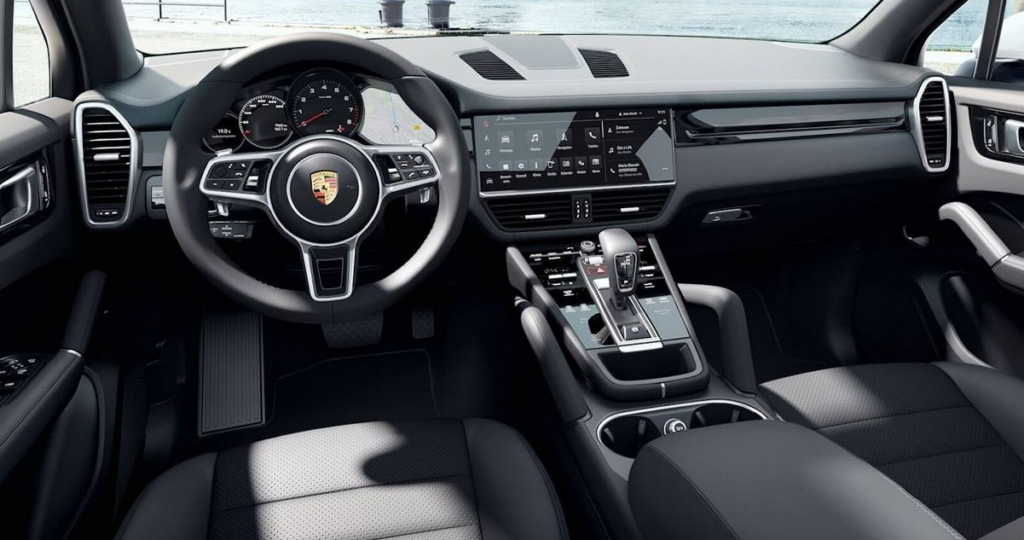
For years, automakers competed to build futuristic cabins where nearly every function lived behind a touchscreen. The fewer buttons a dashboard had, the more modern it appeared. That design philosophy quickly spread from luxury vehicles to mainstream cars, with large displays replacing climate controls, audio knobs, and even steering-wheel switches.
Now, the industry is reversing course.
Manufacturers that once championed all-digital dashboards are restoring physical controls after hearing a growing chorus of complaints from drivers. The shift reflects a broader realisation that convenience, safety, and usability often matter more than minimalist styling.
Drivers want controls they can use without looking
Touchscreens transformed vehicle interiors, but they also introduced new frustrations.
Simple actions such as changing the cabin temperature, adjusting fan speed, or increasing the audio volume often require navigating multiple on-screen menus. Unlike a physical knob or button, a touchscreen demands visual attention, forcing drivers to glance away from the road even for routine tasks.
The problem becomes more noticeable when a vehicle is moving over uneven roads, where accurately tapping a small icon can be difficult.
Some driving assistance features add another layer of complexity. In many modern vehicles, functions like Lane Keep Assist are buried within infotainment settings. Since some safety systems automatically reactivate every time the vehicle restarts to comply with regulations, drivers may have to repeat the same sequence of menu selections before every trip.
Several manufacturers are now restoring dedicated switches for frequently used features, making them quicker and easier to access.
Safety concerns helped change the conversation
The return of physical controls is not driven by customer feedback alone.
Road safety experts have increasingly questioned whether touchscreen-heavy cabins encourage unnecessary distraction. Even brief moments spent searching through menus can reduce a driver’s attention during critical situations.
Europe’s Euro NCAP safety programme has also influenced the trend. To qualify for the highest five-star safety ratings, automakers are now expected to provide physical controls for essential functions such as turn signals, hazard lights, windscreen wipers, the horn, and emergency SOS activation.
The new requirements recognise that some controls should remain instantly accessible without requiring interaction with a display.
Volkswagen admits it pushed digital design too far
Among the companies making the biggest course correction is Volkswagen.
The automaker faced criticism after introducing touch-sensitive steering-wheel controls and heavily touchscreen-dependent interfaces in vehicles such as the eighth-generation Golf and its ID electric line-up. Many owners reported accidental inputs and found the menus unnecessarily complicated during daily driving.
Volkswagen has since confirmed that future models will feature dedicated physical buttons for the controls drivers use most often, including climate settings, fan speed, seat heating, hazard lights, and audio volume.
The company has also restored conventional steering-wheel buttons on updated vehicles, acknowledging that a car should prioritize driving usability over smartphone-like interaction.
Luxury brands are striking a better balance
Premium manufacturers are making similar adjustments instead of abandoning digital technology altogether.
Mercedes-Benz plans to retain its large digital displays while reintroducing tactile controls across upcoming models. Steering wheels are expected to replace touch-sensitive haptic pads with conventional buttons, rollers, and rocker switches that offer clearer feedback during operation.
Audi is following a comparable strategy by blending expansive infotainment displays with physical switches for commonly used functions. Rather than eliminating screens, the company is redesigning how drivers interact with them.
Hyundai never fully embraced the button-free approach
While many rivals rushed toward fully digital cabins, Hyundai continued to argue that drivers should not have to depend entirely on touchscreens.
The latest Palisade demonstrates that philosophy by keeping dedicated controls for frequently used features while still offering modern digital displays for navigation, connectivity, and vehicle settings.
This balanced layout allows drivers to complete everyday tasks more naturally without sacrificing technology.
Buttons may also reinforce a sense of luxury
The return of tactile controls is not just about ergonomics.
As advanced digital features spread rapidly from premium vehicles into more affordable models, luxury brands have found it increasingly difficult to distinguish themselves through software alone.
Features that once debuted in high-end vehicles often appear in mainstream models within a few years, reducing their exclusivity.
Physical switches, premium materials, and satisfying mechanical feedback create a sensory experience that is harder to replicate through a touchscreen. That tactile quality may become an increasingly important way for luxury automakers to differentiate themselves, particularly as Chinese manufacturers expand globally with technology-rich vehicles at lower prices.
Digital technology is staying, but not everywhere
The resurgence of buttons does not signal the end of touchscreen technology.
Large infotainment systems, wireless smartphone integration, voice assistants, connected services, and over-the-air software updates remain central to modern vehicle design.
Instead, manufacturers appear to be adopting a more practical approach. Advanced features will continue to live within digital interfaces, while the controls drivers use every day will increasingly return to physical switches that can be located by touch alone.
The industry’s latest design shift suggests that the smartest automotive technology is not always the newest. Sometimes, improving the driving experience means bringing back familiar controls that help drivers stay focused where it matters most: on the road.