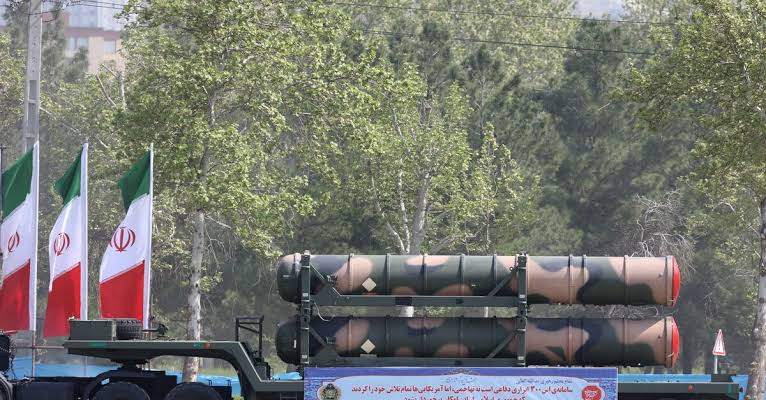
Russia has allegedly been helping Iran develop a new generation of supersonic cruise missiles under a secretive program known as C430L, according to a Financial Times investigation based on leaked Russian communications, travel records and an analysis of military patents.
The program, which reportedly began in 2023, involves Russian missile specialists assisting Iranian engineers with ramjet propulsion technology. A successful system could eventually give Iran a faster and potentially more difficult-to-intercept class of cruise missiles capable of threatening ships and other military targets.
The investigation does not establish that such a Russian-assisted missile is currently operational. Iran has already developed and flight-tested a ramjet propulsion system, but there is no evidence that a complete supersonic cruise missile produced with Russian assistance has entered service.
The alleged cooperation nonetheless represents a potentially significant development in the expanding military relationship between Moscow and Tehran.
What is Project C430L?
C430L is the reported codename for a multiyear Russian-Iranian program focused on developing supersonic cruise missile technology.
According to the Financial Times, Russia’s state arms exporter Rosoboronexport coordinated the project with NPO Mashinostroyenia, a major Russian missile design bureau that has been under US sanctions since 2014.
Leaked travel records reportedly show Russian arms-export officials and senior engineers from NPO Mashinostroyenia traveling to Iran repeatedly before a formal agreement was signed with Iran’s Ministry of Defence and Armed Forces Logistics in November 2023.
The program appears to have gone beyond the simple sale of a finished weapon.
Instead, Russian specialists allegedly worked with Iranian engineers on the technical problems involved in developing a ramjet-powered missile.
Why does Iran want ramjet technology?
A ramjet is an air-breathing engine designed to operate efficiently at high speed.
Unlike a conventional rocket, which carries both fuel and oxidizer, a ramjet uses oxygen from the surrounding atmosphere. The missile’s forward motion compresses incoming air before fuel is injected and burned.
The basic concept is not new, but making a ramjet operate reliably at supersonic speeds is technically demanding.
For a country developing cruise missiles, mastering that technology could provide a foundation for weapons capable of maintaining very high speeds over significant portions of their flight.
That combination of speed and maneuverability can make a missile more challenging for an opposing defense system to detect, track and intercept.
How far has Iran progressed?
Iran is not starting from scratch.
According to the Financial Times investigation, Iranian engineers had already constructed and flight-tested a ramjet propulsion system before Russian specialists became involved in reviewing the technical data.
That distinction is important.
The reported Russian role was not simply teaching Iran what a ramjet is. The leaked correspondence suggests Russian engineers were examining the results of Iranian testing and helping identify technical problems.
The two sides reportedly exchanged detailed questions about the fuel system, combustion stability, air intake and engine nozzle.
Those are among the engineering challenges that can determine whether a high-speed propulsion system works reliably outside a controlled test environment.
What did Russian engineers learn from Iran’s flight test?
The alleged correspondence provides an unusual glimpse into the technical discussions.
After receiving Iranian test material, Russian engineers reportedly asked questions about how the engine behaved during flight.
Their questions included changes to the fuel system, combustion stability and the performance of the air intake and nozzle.
They also reportedly wanted to know whether the ramjet continued operating after telemetry from the Iranian test stopped transmitting less than a minute into the flight.
The exchange suggests that Russian specialists were not merely handing Tehran a blueprint.
Instead, they were reportedly examining Iran’s own experimental results and using their expertise to help troubleshoot the propulsion system.
That kind of engineering assistance can be particularly valuable because practical experience often matters as much as the underlying design.
Was Russia planning to send engineers to Iran?
Yes, according to the leaked material described by the Financial Times.
In 2025, Rosoboronexport reportedly proposed sending roughly two dozen Russian specialists to Iran for technical consultations related to C430L.
The proposed visit appears to have been connected directly to questions Russian engineers had raised about Iranian flight-test data.
That would represent a deeper form of technology cooperation than simply transferring documents or selling equipment.
It would put specialists with experience in missile propulsion and design directly in contact with the Iranian development team.
What type of missile could the technology support?
Experts cited by the Financial Times said the technology could potentially be used for anti-ship and land-attack cruise missiles.
That is strategically important because Iran operates along the Persian Gulf and Strait of Hormuz, where naval forces and shipping routes are central to regional security.
A high-speed anti-ship missile could reduce the amount of time available to a target and its defensive systems to respond.
Such a capability could therefore increase the threat faced by US and allied warships operating in the region.
However, it would be incorrect to conclude that Iran currently possesses a fully operational Russian-assisted weapon with those capabilities.
The available evidence does not establish that.
Why are supersonic cruise missiles difficult to defend against?
Speed is one of their biggest advantages.
A missile traveling faster than sound can compress the time between detection and impact, particularly when it also flies at low altitude or follows a maneuvering flight path.
Modern air-defense systems are designed to detect and intercept fast-moving threats, and supersonic does not mean invulnerable.
But higher speed can complicate the defender’s job.
The threat becomes more significant when speed is combined with maneuverability, low-altitude flight and effective guidance systems.
For Iran, developing those technologies domestically could represent a substantial improvement in its ability to threaten naval and land targets.
Why is Russian assistance significant?
Iran has spent years pursuing advanced missile capabilities, including cruise missiles and systems designed to threaten targets across the Middle East.
The technical challenge is not necessarily producing one working prototype.
It is developing a reliable propulsion system that can be manufactured repeatedly and integrated into an operational weapon.
That is where Russian expertise could be particularly valuable.
Fabian Hinz of Conflict Armament Research told the Financial Times that the transfer of hands-on engineering knowledge can be extremely valuable because experienced specialists can help identify problems that may otherwise take years of testing to solve.
In other words, the most important Russian contribution may not be a finished missile. It may be expertise.
How does C430L fit into Russia-Iran military ties?
The alleged missile program is part of a much broader military relationship between Russia and Iran.
The two countries have significantly expanded defense cooperation in recent years.
Iran has supplied Russia with drones used during the war in Ukraine, while Moscow and Tehran have deepened cooperation in areas including defense, intelligence and military technology.
The relationship has become especially important as both countries seek alternatives to Western political and economic pressure.
For Tehran, Russia offers access to technical expertise and military relationships that can help strengthen domestic defense capabilities.
For Moscow, deeper cooperation with Iran expands its strategic relationships in the Middle East while potentially providing access to Iranian military technologies and expertise.
Did the program continue during the Iran conflict?
The Financial Times reported that discussions surrounding C430L continued into 2026, including after the outbreak of the current US-Israeli conflict with Iran.
A Rosoboronexport letter from June 2026 reportedly showed that Moscow and Tehran were discussing another phase of cooperation.
It remains unclear whether that next phase actually began.
That uncertainty is important because documents showing negotiations or planning do not necessarily prove that every proposed activity was completed.
The available evidence therefore demonstrates an ongoing effort to cooperate, rather than proving that a fully developed missile system has already emerged from the program.
What does the US know about the program?
The public reporting has not established the full extent of US government knowledge about C430L.
NPO Mashinostroyenia, one of the Russian organizations reportedly involved, has been under US sanctions for years because of its role in Russia’s missile sector.
The alleged transfer of advanced propulsion expertise could therefore attract additional scrutiny from Washington, particularly if the technology is determined to contribute materially to Iran’s ability to threaten US forces.
Any future US sanctions or other official measures would provide more information about how Washington assesses the program.
Is Iran building a missile similar to Russia’s BrahMos?
Media reports have compared the alleged capability to weapons such as BrahMos because of its emphasis on supersonic cruise-missile technology.
But such comparisons should be treated carefully.
BrahMos is a specific jointly developed Indian-Russian missile system with its own propulsion, guidance and operational characteristics.
The C430L program described by the Financial Times concerns an alleged technology-development effort. There is no public evidence establishing that Iran has produced a missile identical to BrahMos or that it has an operational system matching BrahMos’ full capabilities.
The important issue is the transfer of technical expertise, especially around ramjet propulsion.
Why could this matter for US warships?
The Persian Gulf and surrounding waterways are strategically important to the United States and its allies.
US naval forces regularly operate in the wider region, while the Strait of Hormuz remains a critical route for global energy shipments.
A reliable Iranian supersonic anti-ship missile could complicate naval operations by reducing reaction time and expanding the range of potential threats.
It could also force US and regional militaries to adapt their defensive systems and operating patterns.
But that is a future possibility, not evidence that the alleged C430L technology has already produced such a weapon.
What does C430L reveal about Iran’s defense strategy?
The reported program highlights an important feature of Iran’s military strategy: building domestic expertise rather than relying entirely on imported weapons.
Iran has developed a large indigenous missile industry despite decades of sanctions.
That industry has produced ballistic missiles, cruise missiles and drones, but some technologies remain particularly difficult to master.
Ramjet propulsion is one such area.
If Iran can successfully integrate outside expertise with its existing engineering base, it could accelerate the development of more sophisticated missile systems.
That could allow Tehran to produce successive generations of weapons rather than simply purchasing a limited number of foreign-made missiles.
Why does the alleged program matter now?
The timing makes C430L especially significant.
The reported cooperation continued as tensions between Iran, the United States and Israel escalated.
At a time when Iran’s missile and drone capabilities are already central to regional military planning, any outside assistance that improves Tehran’s ability to develop faster and more capable cruise missiles could have consequences well beyond the original technology-transfer program.
It could affect naval deterrence, air-defense requirements and the broader military balance in the Middle East.
Has Russia officially confirmed C430L?
No.
There has been no public confirmation from the Russian or Iranian governments of the C430L allegations described by the Financial Times.
The reporting is based on leaked documents, travel records and technical analysis rather than an official announcement of the program.
That means claims about the exact capabilities, personnel and operational status of any resulting missile should remain carefully attributed.
At present, there is no established evidence that a supersonic cruise missile developed with Russian assistance has entered Iranian military service.
What happens next?
The most important question is whether the reported cooperation moves from propulsion testing and engineering support to a complete deployable missile.
Evidence of successful flight tests, serial production or operational deployment would represent a much more significant military development.
Until then, C430L appears to be best understood as an alleged technology-development program rather than a confirmed operational weapons system.
The program also raises broader questions about how Russia’s military-technical relationship with Iran is evolving.
If Moscow is transferring not just weapons but specialized engineering expertise, the effects could last far longer than the delivery of any individual missile.
The bottom line
The Financial Times has reported that Russia secretly helped Iran develop supersonic cruise-missile technology through a program known as C430L that began in 2023.
The alleged cooperation involved Russia’s state arms exporter Rosoboronexport and missile design bureau NPO Mashinostroyenia, with Russian specialists reportedly reviewing Iranian ramjet tests and providing technical assistance on issues including fuel systems, combustion, air intakes and engine nozzles.
Iran has already built and tested a ramjet propulsion system, but there is no evidence that a complete Russian-assisted supersonic cruise missile has entered operational service.
The significance of C430L therefore lies less in a missile already sitting in Iran’s arsenal and more in the possibility that Russian expertise could help Tehran overcome difficult engineering challenges and eventually build such weapons domestically.
If that happens, the consequences could extend well beyond Iran’s borders, particularly for US and allied naval forces operating in the Middle East.