
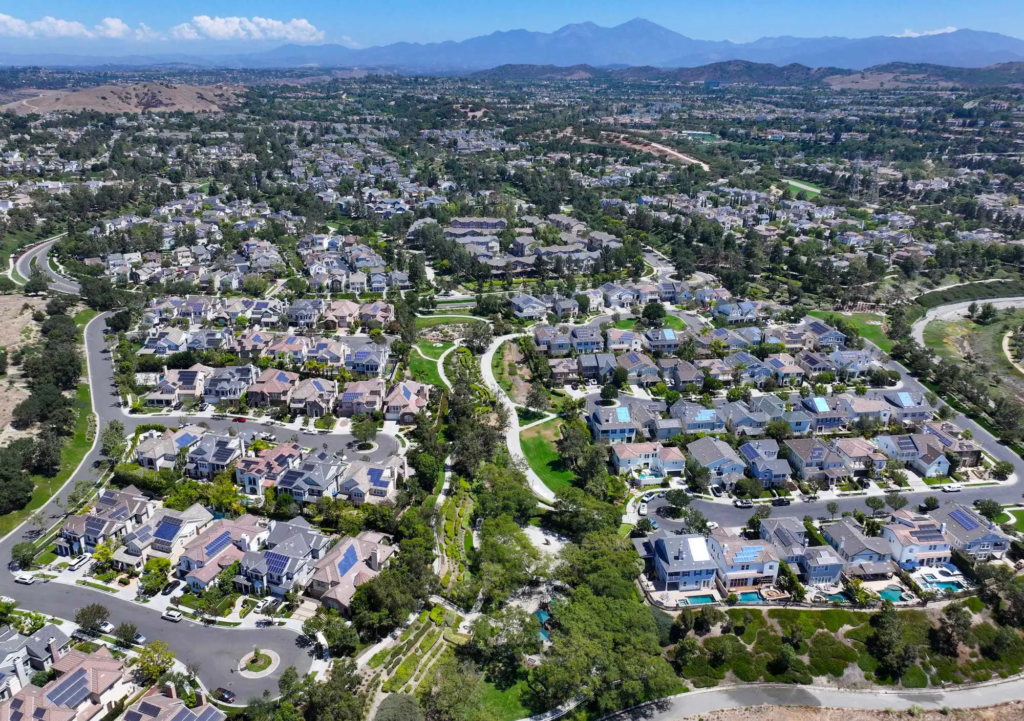
A cluster of rare cancer cases in Ladera Ranch, California, has left families searching for answers and prompted renewed scrutiny of an abandoned oil well beneath the Southern California community.
At least six children and young adults in the Orange County community were diagnosed with Ewing sarcoma between 2013 and 2024, according to residents who have tracked the cases. The rare cancer primarily affects children, teenagers and young adults and develops in bones or soft tissue.
The cases have fuelled concerns about possible environmental exposures, including pesticides, herbicides, a nearby landfill and abandoned oil wells beneath the community.
But there is an important distinction between an unusual concentration of cancer cases and proof of an environmental cause. Scientists have not established an environmental or lifestyle-related cause of Ewing sarcoma, and no evidence currently proves that the Ladera Ranch cases were caused by the well, pesticides or the landfill.
Now, old documents warning against building over one of the abandoned wells have added a new layer to the controversy.
Why are Ladera Ranch residents concerned about cancer?
The concern began with the unusually rare nature of the cancer diagnoses.
Ladera Ranch residents identified at least six cases of Ewing sarcoma among children and young adults over 11 years. The community has around 26,000 residents, according to the Los Angeles Times. California’s cancer registry is reviewing the area’s cancer data to determine whether the reported cases represent a statistically unusual cluster.
A cancer cluster generally refers to a greater-than-expected number of cancer cases occurring in a defined population, geographic area, and period of time.
However, identifying a cluster does not automatically identify its cause.
Researchers can find that cases appear geographically concentrated while still being unable to determine whether a shared environmental exposure, genetics, chance or another factor is responsible.
That uncertainty has not eased the concerns of families who have lost children or watched them undergo intensive cancer treatment.
Ewing sarcoma is extremely rare
The American Cancer Society estimates that about 200 children and teenagers in the United States are diagnosed with Ewing sarcoma each year. It accounts for roughly 1% of childhood cancers.
The cancer is most common among adolescents and young adults.
Its rarity is one reason the Ladera Ranch cases have attracted attention. At the same time, rarity makes it particularly difficult for scientists to determine whether a small number of cases represents a true cluster or an unusual coincidence.
What is Ewing sarcoma?
Ewing sarcoma is a rare cancer that develops in cells associated with bone and soft tissue.
Researchers have identified characteristic genetic changes in Ewing sarcoma cells, including alterations involving the EWSR1 gene. But those changes generally arise in cells during a person’s lifetime, and scientists do not know what causes them to occur.
The American Cancer Society says researchers have not identified known risk factors for developing Ewing sarcoma, and no known lifestyle-related or environmental causes have been established.
That does not mean environmental research is unnecessary. It means that, at present, there is insufficient evidence to identify a particular environmental exposure as the cause.
What does the abandoned oil well have to do with the investigation?
The latest concern centres on an abandoned oil well located beneath what is now Ladera Ranch.
The community was developed beginning in the late 1990s, and two abandoned oil wells were located beneath the area. The wells were reportedly re-abandoned during development in the early 2000s to bring their seals up to then-current standards.
Residents investigating the cancer cases obtained historical documents associated with one of the wells.
Among the documents were handwritten warnings apparently made during the well-abandonment process.
One note reportedly stated:
“This well is not to be built over without further considerations.”
Another notation reportedly pointed toward the message and said, “Put on final letter.”
The warnings have understandably attracted attention because homes were later constructed in the surrounding community.
But the documents do not explain why the engineer made the warning, and that missing context is critical.
Why did officials warn against building over the well?
That question remains unanswered.
The Los Angeles Times reported that former state oil and gas supervisor Kenneth Henderson, who was involved in the well’s closure, could not recall the reason for the cautionary note.
Henderson did suggest that the way the well was sealed might not meet current standards.
The California Department of Conservation, meanwhile, reportedly said the notes could have resulted from a clerical error.
That means the handwritten warning should not be interpreted as proof that the well was leaking toxic substances.
Instead, it creates a legitimate question for regulators: What prompted the engineer to write the warning, and was the underlying concern subsequently addressed?
A warning is not evidence of exposure
Karen Lincoln, director of the Center for Environmental Health Disparities Research at UC Irvine, told the New York Post that the note should not automatically be interpreted as evidence that the well is hazardous.
But she said the warning should not simply be ignored.
Potential issues could have included:
- The physical condition of the well
- How the well was sealed
- Materials used during abandonment
- The possibility of gases moving through or around the well
- Whether the sealing method remained effective over time
Abandoned wells can potentially provide pathways for underground gases or other substances to migrate toward the surface.
But there is an important scientific distinction between a potential pathway for contamination and proof that people were actually exposed to a harmful substance.
There is currently no evidence establishing that such exposure occurred at the Ladera Ranch well.
Could an abandoned oil well cause cancer?
Abandoned oil and gas infrastructure can present environmental concerns under some circumstances.
Oil and gas operations can involve substances including volatile organic compounds such as benzene, as well as other potentially hazardous materials. Researchers have investigated whether emissions from oil and gas development may affect nearby communities.
But that does not establish a connection to the Ladera Ranch Ewing sarcoma cases.
In fact, a study published in January found no statistically significant association between proximity to active or abandoned oil and gas development and childhood Ewing sarcoma in California, according to the Los Angeles Times.
That finding is particularly relevant because it directly addresses the proposed relationship between oil and gas infrastructure and this specific cancer.
It does not prove that environmental exposures played no role in Ladera Ranch. It does, however, mean that residents cannot currently point to scientific evidence establishing the abandoned well as the cause.
What about pesticides and herbicides?
Pesticides have emerged as another major concern among Ladera Ranch families.
Residents have questioned whether chemicals used to maintain landscaping throughout the planned community could have contributed to the cancer cases.
Some families have pushed for greater scrutiny of local pesticide use and have urged community authorities to consider less-toxic alternatives.
Those concerns are now part of a broader effort by residents to collect information about environmental exposures in the area.
However, the same evidentiary problem applies: there is currently no established scientific link between pesticide exposure in Ladera Ranch and the reported Ewing sarcoma cases.
The appropriate question for investigators is therefore not simply whether pesticides are present, but whether residents experienced exposure to a particular chemical at a level and duration capable of increasing cancer risk.
Could the nearby landfill be involved?
Residents have also raised concerns about the nearby Prima Deshecha Landfill.
Some families believe prevailing winds could carry emissions from the landfill toward Ladera Ranch.
The concern gained additional attention because a recent study found associations between certain industrial air pollutants and Ewing sarcoma rates at the county level.
The UCLA-led research identified pollutants including ethylbenzene, toluene, xylene, naphthalene, nickel compounds and benzo[g,h,i]perylene as being associated with higher Ewing sarcoma diagnosis rates in certain counties.
That distinction is crucial.
An epidemiological association can identify a pattern worth investigating. It cannot, by itself, prove that a particular chemical caused cancer in an individual or community.
What are authorities doing now?
The California Cancer Registry is reviewing data from Ladera Ranch to determine whether the number of Ewing sarcoma cases is statistically higher than expected.
Federal authorities have also called for the unusual cancer pattern to be evaluated through a systematic, science-based process. (Los Angeles Times)
Meanwhile, residents have organized their own effort.
A community group called Ladera Health Watch is collecting health information, reviewing pesticide and environmental records and pushing for additional investigations.
Residents have also asked California’s Geologic Energy Management Division (CalGEM) to reassess the integrity of the abandoned well and determine whether additional investigation is warranted.
These investigations could help answer questions that the old documents alone cannot.
What would investigators need to prove an environmental link?
Finding six cases is only the beginning of a cancer-cluster investigation.
Scientists would need to examine several questions:
- Are the number of cases statistically higher than expected?
- Did the affected residents share a common location or exposure?
- Were they exposed to the same chemical or contaminant?
- Was that contaminant present at measurable levels?
- Could the exposure have occurred at a dose and duration capable of causing disease?
- Does existing scientific research support a connection between the suspected exposure and Ewing sarcoma?
- Are there alternative explanations for the apparent cluster?
Environmental sampling could also become important.
Testing soil, groundwater, air and other relevant pathways could establish whether potentially hazardous substances are present. But even finding a contaminant would not automatically establish that it caused the cancer cases.
Investigators would still need to establish exposure and causation.
What we know — and what remains unknown
The Ladera Ranch situation currently presents a troubling pattern but not a proven environmental cancer cause.
What is known:
- At least six children and young adults in the community were diagnosed with Ewing sarcoma between 2013 and 2024.
- Residents have raised concerns about pesticides, a nearby landfill and abandoned oil wells.
- Historical documents contain a warning about building over one of the wells.
- California’s cancer registry is reviewing the area’s cancer data.
- Federal officials have called for the unusual pattern to be investigated.
What is not known:
- Whether Ladera Ranch constitutes a statistically significant cancer cluster.
- Why the engineer wrote the warning about the oil well.
- Whether the well has ever released hazardous substances.
- Whether residents were exposed to contaminants from the well.
- Whether pesticides or landfill emissions played any role.
- Whether any environmental exposure caused the Ewing sarcoma cases.
That distinction is essential.
The old well document may justify further investigation, but it does not establish that the well caused cancer.
Why the Ladera Ranch investigation matters
For families who have watched children battle an exceptionally rare cancer, waiting for scientific certainty is understandably difficult.
The emerging investigation offers an opportunity to replace speculation with evidence.
The questions surrounding the abandoned well, pesticide use and landfill emissions can be tested. Historical records can be examined. Environmental samples can be collected. Cancer registry data can be analyzed against expected rates.
And if investigators ultimately find no common environmental cause, that result would also matter.
The American Cancer Society currently says the causes of most Ewing sarcoma cases remain unknown and that no lifestyle-related or environmental causes have been established.
For now, the strongest conclusion is also the simplest: Ladera Ranch has reported an unusual number of rare cancer cases; residents have identified several possible environmental explanations, and authorities are investigating. But no evidence has yet established that an abandoned oil well, pesticides, or the nearby landfill caused the cancers.
The 20-year-old warning may raise important questions. It does not, by itself, provide the answers.