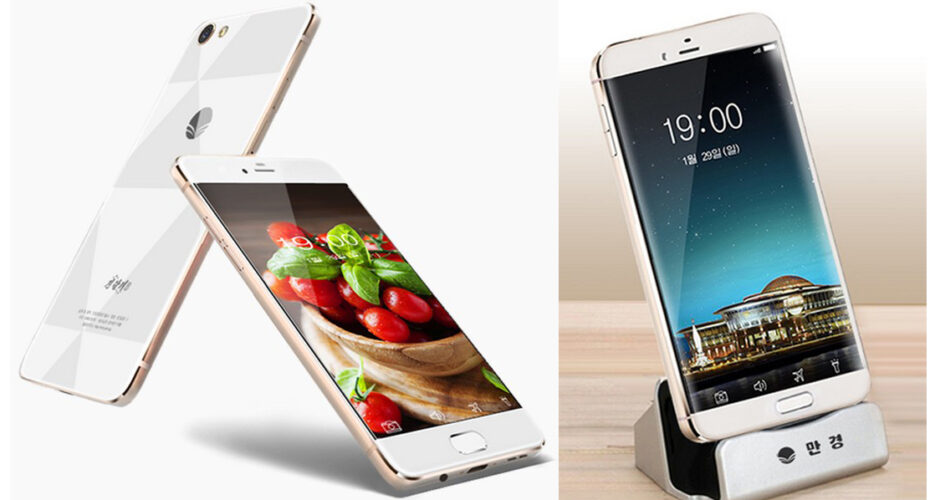
North Korea has unveiled a new version of its Jindallae smartphone at a major trade fair in Pyongyang, offering another glimpse into the country’s long-running effort to build a domestic technology ecosystem despite heavy sanctions and extreme digital isolation.
The launch took place during the Pyongyang Spring International Trade Fair, where more than 290 companies from countries including Russia, China, Mongolia, Switzerland, and Thailand reportedly participated.
At first glance, the new Jindallae looks like many modern Android smartphones sold globally. It features a sleek body, multiple rear camera lenses, and a large circular camera module similar to flagship devices released by major Chinese brands in recent years.
But beneath the polished design lies a very different digital reality.
What is the Jindallae smartphone?
The Jindallae smartphone, named after the azalea flower, has existed in various forms since 2017.
The newest version appears designed to mimic global smartphone trends, signaling North Korea’s desire to project technological modernity despite its limited access to international supply chains and software ecosystems.
The device joins a growing lineup of domestically branded North Korean electronics, including:
- Arirang smartphones
- Phurunhanal devices
- Locally promoted tablets and computers
Together, they represent a broader attempt by the North Korean government to create a controlled domestic consumer technology market.
The strategy is partly practical and partly symbolic.
Technology products help the government present an image of self-reliance and modernization while reinforcing state control over digital communication.
Why North Korea wants its own smartphone ecosystem
For years, North Korea has tried to reduce dependence on foreign digital infrastructure while still adopting modern consumer technology.
That balancing act is difficult.
The country wants the prestige and utility of smartphones, apps, and digital communication, but without the open internet access and information flow that typically accompany them.
As a result, North Korea has developed what amounts to a parallel digital universe.
Most North Korean smartphones do not connect to the global internet. Instead, they operate within a tightly restricted national intranet controlled by the government.
This domestic network allows users to:
- Make calls
- Send messages
- Access approved websites
- Use state-sanctioned apps
- Consume government-approved media
But it blocks unrestricted access to international platforms like Google, YouTube, Instagram, WhatsApp, or X.
The result resembles a sealed digital greenhouse: technologically modern on the surface, but carefully insulated from the outside world.
Why analysts doubt North Korea can fully build smartphones independently
Despite the branding around domestic innovation, experts remain skeptical that North Korea can manufacture advanced smartphones entirely on its own.
Modern smartphones require extraordinarily complex global supply chains involving:
- Advanced semiconductors
- Camera sensors
- Display technology
- Battery systems
- Specialized manufacturing tools
International sanctions severely restrict North Korea’s access to many of those technologies.
Analysts therefore believe many North Korean smartphones are likely assembled using imported or repurposed foreign components, particularly from Chinese suppliers.
A 2024 study by North Korea expert Martyn Williams suggested that several devices sold inside the country may actually be manufactured by Chinese companies before being rebranded for the domestic market.
That would not be unusual globally. Many electronics brands outsource manufacturing. But in North Korea’s case, it complicates government claims of technological self-sufficiency.
The hidden contradiction behind North Korea’s digital strategy
North Korea’s smartphone push highlights one of the country’s biggest modern contradictions.
The government wants technological advancement without information openness.
Globally, smartphones usually expand access to:
- Independent news
- Social media
- Foreign entertainment
- Global communication
- Decentralized information sharing
In North Korea, authorities attempt to separate the hardware from those freedoms.
Phones are designed not as gateways to the global internet, but as controlled tools operating inside a monitored national system.
That approach reflects the government’s broader philosophy toward technology: embrace innovation that strengthens the state, restrict anything that weakens information control.
Surveillance concerns surrounding North Korean smartphones
The growth of smartphone use in North Korea has also fueled concerns about digital surveillance and privacy.
Reports from defectors and researchers suggest some North Korean smartphones may include monitoring features uncommon in most global consumer devices.
One widely discussed claim is that certain phones periodically capture screenshots and store them in hidden folders accessible to authorities.
If accurate, such systems would allow state agencies to review user activity and detect prohibited content.
Researchers have also reported that some North Korean devices contain software designed to:
- Block unauthorized media
- Detect foreign-language content
- Prevent modification of operating systems
- Restrict file sharing
These measures align with North Korea’s longstanding effort to prevent outside cultural influence, particularly South Korean media and Western entertainment.
In effect, smartphones in North Korea function not only as communication devices but also as instruments of digital control.
Why the trade fair matters politically
The Pyongyang Spring International Trade Fair is about more than commerce.
Events like these serve diplomatic and propaganda purposes by signaling that North Korea remains economically active despite international isolation.
The participation of companies from countries including China and Russia also reflects Pyongyang’s continued efforts to maintain economic and technological relationships outside Western influence.
Technology showcases allow North Korea to project an image of resilience and modernization to both domestic audiences and foreign observers.
Even relatively modest consumer electronics launches can carry symbolic importance in that context.
Can North Korea realistically compete in consumer tech?
Realistically, North Korea is unlikely to emerge as a major independent smartphone manufacturing power anytime soon.
The country faces major obstacles:
- International sanctions
- Limited semiconductor access
- Aging industrial infrastructure
- Restricted research collaboration
- Weak integration into global supply chains
However, the government does not necessarily need to compete globally for these efforts to matter domestically.
Even limited smartphone production supports several state goals:
- Expanding controlled digital infrastructure
- Promoting national pride
- Reducing reliance on foreign branding
- Increasing surveillance capabilities
- Demonstrating technological progress
In that sense, the Jindallae smartphone is as much a political object as a technological one.
What the Jindallae launch says about North Korea’s future
The new smartphone launch reveals that North Korea is not rejecting modern technology outright. Instead, it is attempting to reshape technology into something compatible with one of the world’s most tightly controlled political systems.
That experiment raises fascinating questions about the future of digital authoritarianism.
Can a country successfully maintain modern consumer technology while permanently sealing citizens off from the global internet?
North Korea may be trying to prove that it can.
The rest of the world is watching carefully to see whether that model remains sustainable in an era where information typically crosses borders faster than governments can contain it.
TL;DR
North Korea unveiled a new version of its Jindallae smartphone at a major trade fair in Pyongyang, highlighting the country’s effort to build a domestic tech ecosystem despite sanctions and global isolation. While the device mimics modern smartphone design trends, analysts believe many components likely come from Chinese manufacturers. The phones operate within North Korea’s tightly controlled intranet system and raise ongoing concerns about surveillance and digital restrictions.