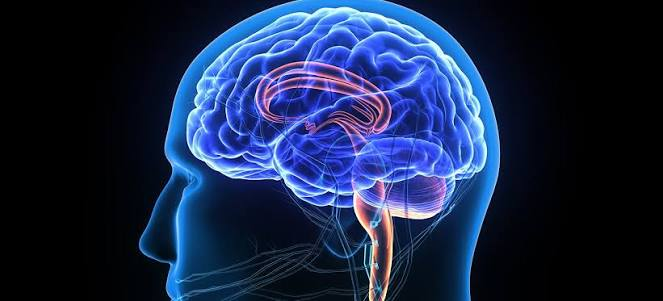
Scientists have identified a potential way to turn down severe chronic pain by first mapping how pain is represented in a person’s brain and then using precisely targeted electrical stimulation to disrupt those signals.
The approach, described in a small case series published July 30 in the journal Brain Stimulation, involved three people with severe, treatment-resistant facial pain. Researchers temporarily implanted electrodes in their brains and tested different stimulation sites over several days.
Two of the three participants experienced meaningful pain relief. One later received a permanent implant and continued to report improvement at six and 12 months.
The findings are preliminary, but they point toward a different way of treating chronic pain: rather than assuming that the same brain region controls pain in everyone, doctors could first identify each patient’s unique pain network and then target it.
What did scientists discover about chronic pain?
The researchers found that pain signals were not concentrated in one universal “pain center” of the brain.
Instead, the experience appeared to involve networks of regions working together. That helps explain why electrical stimulation aimed at a single standard location has produced inconsistent results in earlier studies of chronic pain.
Vivek P. Buch, a Stanford neurosurgeon and neuroscientist involved in the research, said pain involves collections of brain networks responsible for sensory information, chemical signals and emotional components.
The new study essentially asks whether those networks can be mapped in each patient and then selectively interrupted.
How does the brain “brake” work?
The technique works in two stages.
First, researchers create a personalised map of the patient’s pain-related brain activity.
Three participants with severe chronic facial pain underwent surgery to place temporary electrodes through small openings in the skull. Over the next three days, scientists delivered brief electrical pulses to different brain locations while monitoring how the patients’ pain changed.
That testing allowed researchers to determine which combinations of stimulation and locations appeared to reduce each person’s pain.
The second stage was targeted treatment.
Rather than implanting electrodes according to a standard template, the researchers used the information from the mapping session to select locations that had produced a beneficial response.
The idea is effectively to find each patient’s individual neural “off switch” or braking network rather than searching for one universal point in the brain.
What happened to the three patients?
The results were encouraging but far from uniform.
Two of the three participants experienced pain relief during the electrical stimulation experiments.
One participant, a woman in her 40s, subsequently received four permanently implanted electrode wires in brain regions that had responded positively during the temporary testing.
According to the researchers, she continued to feel better at both six- and 12-month follow-ups.
A second woman also experienced relief during the testing phase and was planning to receive a permanent implant.
The third participant did not obtain substantial relief from the tested stimulation patterns.
That unsuccessful case is important, researchers said, because the technique could eventually help doctors determine not only who might benefit from a procedure but also who probably should not undergo it.
Why is chronic pain so difficult to treat?
Acute pain usually has an identifiable immediate cause.
A broken bone, burn or fresh surgical wound activates pain pathways that warn the body about injury. As the injury heals, the pain generally subsides.
Chronic pain can be much more complicated.
It may continue long after an original injury has healed and can involve persistent changes in the brain and spinal cord. Sensory signals can become intertwined with emotional and cognitive processes, making the overall experience highly individual.
That complexity is one reason a treatment that works well for one person may produce little benefit for another.
The Stanford researchers are attempting to address that problem precisely by making treatment more personalised from the outset.
How is this different from traditional deep brain stimulation?
Deep brain stimulation, or DBS, is already an established medical technology.
It involves surgically implanting electrodes in the brain and connecting them to a battery-powered device that delivers controlled electrical stimulation.
DBS is best known for treating movement disorders such as Parkinson’s disease, but researchers have also investigated it for chronic pain and psychiatric conditions.
The problem is that DBS for pain has produced inconsistent outcomes. Some patients improve substantially, while others receive little or no benefit.
The new Stanford approach does not simply assume that one predetermined stimulation target will work for everyone.
Instead, it adds a personalized mapping stage before permanent treatment.
Why could personalized brain mapping make a difference?
Imagine giving every patient the same glasses prescription without checking their eyesight.
That is broadly the limitation the researchers are trying to address.
Brains differ from person to person, and chronic pain can alter neural pathways in different ways. A brain region that responds to stimulation in one patient may not be the best target in another.
By temporarily testing several locations first, doctors can gather evidence about how an individual patient’s pain network responds.
That information could make permanent neuromodulation more precise.
It could also prevent some patients from undergoing an invasive procedure that is unlikely to help them.
What kind of pain was treated?
The study focused on severe, refractory facial pain.
This type of chronic pain can be especially difficult to manage and may result from conditions affecting facial nerves and the central nervous system.
Researchers deliberately studied a very small and difficult-to-treat patient population rather than testing the approach across all forms of chronic pain.
That means the findings should not be interpreted as evidence that the same technique can currently “switch off” chronic back pain, arthritis or other widespread pain conditions.
More research will be needed to establish whether the personalized approach works beyond severe facial pain.
Is this a cure for chronic pain?
No.
The findings do not establish a cure, and the study was far too small to demonstrate that the approach is broadly effective.
Only three people were included.
Two improved, while one did not respond meaningfully during testing. One participant has demonstrated sustained improvement at one year, but that is still a limited observation.
The researchers themselves present the work as an early step toward personalised neuromodulation, not as a ready-made replacement for existing pain treatments.
What are the risks?
The approach is invasive.
Placing electrodes inside the brain requires neurosurgery, which carries risks such as bleeding, infection and damage to surrounding tissue. Permanent implanted devices can also create hardware-related complications.
Earlier DBS research for facial pain has reported complications serious enough in some patients to require removal of implanted hardware.
That makes the personalised mapping approach especially interesting because doctors may eventually be able to use temporary stimulation as a test before committing a patient to permanent implantation.
But the procedure would still involve significant medical risks and would be appropriate only for carefully selected patients.
Why did one patient’s lack of improvement matter?
Scientists often focus on successful results, but the nonresponse in this study may prove just as informative.
The third participant did not experience substantial relief from the tested stimulation patterns.
That suggests the method may eventually provide a way to identify patients whose pain does not arise from neural circuits that respond to this form of stimulation.
That could prevent an ineffective treatment from being pursued simply because a patient has severe pain.
Stanford neuroscientist Karl Deisseroth described the ability to determine whether a treatment is unlikely to work as an important potential benefit of objective, individualized neural mapping.
Could this approach work for other conditions?
Possibly, but that remains an open research question.
The underlying concept, personalised mapping followed by targeted stimulation, could potentially be investigated for other disorders involving complex brain networks.
Researchers have already been studying neuromodulation for conditions including depression, obsessive-compulsive disorder, and other neurological disorders.
However, each condition involves different neural circuits, so success in facial pain would not automatically translate to another disease.
The broader idea is what makes the research notable: identify the relevant network in an individual patient first, then design stimulation around that person’s brain rather than relying entirely on a one-size-fits-all target.
What happens next?
The next step will be larger studies involving more patients and longer follow-up periods.
Researchers need to establish how reliably the mapping process predicts successful treatment, how long the benefits last and which types of chronic pain are most likely to respond.
They also need to determine the best stimulation patterns and understand the risks associated with permanent implants.
If those questions can be answered, personalized brain stimulation could eventually become a more precise option for patients whose chronic pain has resisted conventional treatments.
For now, however, the technology remains experimental.
Why the “brain brake” discovery matters
The most important finding may not be that researchers found a universal switch for pain.
They did not.
Instead, they found evidence that severe pain can sometimes be reduced by identifying the specific neural networks involved in an individual patient and stimulating carefully selected points within those networks.
That changes the treatment philosophy.
Rather than asking, “Which part of the brain controls pain?” scientists are increasingly asking, “Which network is generating this patient’s pain, and how can we safely modulate it?”
That is a much more complicated question, but it may also be a more useful one.
The bottom line
A Stanford-led team has demonstrated an experimental approach that maps an individual patient’s pain-related brain networks before using targeted electrical stimulation to reduce severe chronic facial pain.
The study involved only three patients. Two experienced relief during testing, and one woman continued to report improvement six and 12 months after receiving a permanent implant. One participant did not respond substantially.
The research does not mean scientists have discovered a universal switch that can simply turn chronic pain off.
What it offers instead is a promising personalized strategy for a condition that often does not respond consistently to treatment.
By mapping the brain first and stimulating it second, doctors may eventually be able to determine which patients are likely to benefit and target treatment with much greater precision.
For people living with severe, treatment-resistant pain, that possibility could be more meaningful than any single “off switch.”