The aviation term “loss of separation” has drawn renewed attention after the Federal Aviation Administration (FAA) launched an investigation into an incident involving President Donald Trump‘s Marine One helicopter and a commercial passenger aircraft near Washington, D.C.
While the phrase may sound alarming, aviation experts say it does not automatically mean two aircraft were on the verge of colliding. Instead, it refers to a breach of minimum safety distances established by air traffic control regulations.
Here’s what “loss of separation” means, how it happens, and why aviation authorities take such incidents seriously.
What is a loss of separation in aviation?
A loss of separation occurs when two aircraft come closer to one another than the minimum horizontal or vertical distance required under air traffic control (ATC) rules.
These separation standards are designed to create safety margins between aircraft operating in controlled airspace. By maintaining these buffers, controllers can safely manage takeoffs, landings, and en route traffic while reducing the likelihood of conflicts.
Depending on the type of airspace, radar coverage, and phase of flight, the required separation can vary. Air traffic controllers continuously monitor aircraft positions to ensure these standards are maintained.
Why are separation standards important?
Commercial aviation relies on multiple layers of safety rather than a single safeguard.
Minimum separation standards help:
- Prevent aircraft from entering unsafe proximity.
- Give pilots and controllers time to react to unexpected situations.
- Reduce the workload in busy airspace.
- Maintain orderly traffic flow around airports.
- Lower the risk of midair collisions.
These safety buffers are intentionally conservative, meaning aircraft can safely operate even if the minimum distance is briefly reduced.
Does a loss of separation mean a crash was narrowly avoided?
No.
A loss of separation does not automatically mean two aircraft were on a collision course or that an accident was imminent.
Instead, it indicates that the required safety buffer was temporarily breached.
In many cases:
- Aircraft remain under positive air traffic control.
- Pilots maintain visual or instrument awareness of nearby traffic.
- The aircraft are already moving away from one another.
- Additional safety systems continue monitoring the situation.
This is why aviation authorities distinguish a “loss of separation” from a near midair collision, which involves a much higher level of immediate risk.
What happened in the Marine One incident?
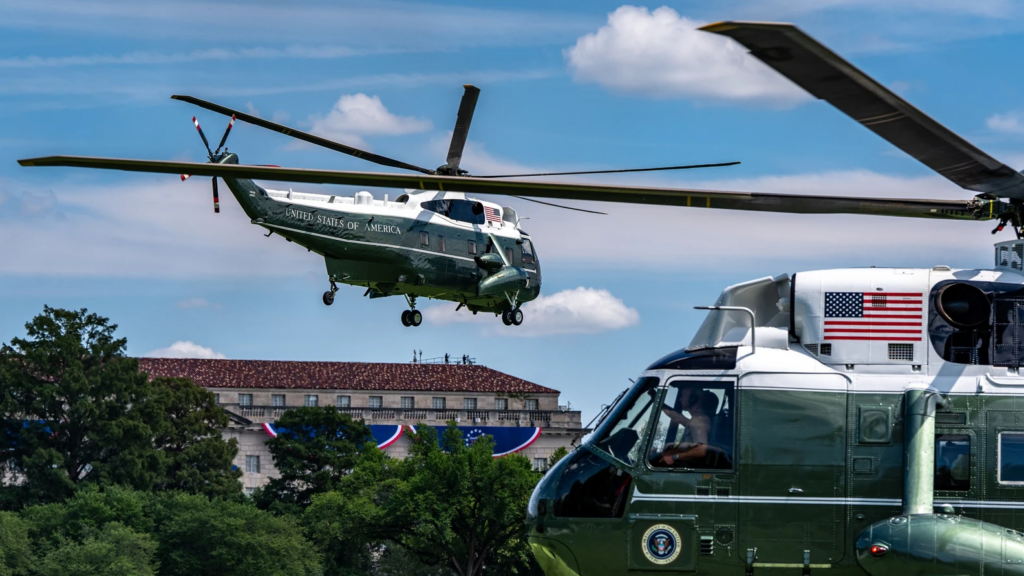
According to the FAA, there was a “momentary loss of separation” involving Marine One and a commercial passenger aircraft near Washington on August 5.
The agency said the aircraft subsequently continued moving away from each other, and there was no indication that a collision occurred.
The FAA has opened an investigation to determine:
- How the separation standards were breached.
- Whether air traffic control procedures were followed.
- Whether communications between pilots and controllers contributed.
- If any operational changes are necessary to prevent similar incidents.
As of now, the FAA has not concluded what caused the temporary reduction in separation.
What causes a loss of separation?
Several factors can contribute to these incidents.
Air traffic control coordination
Controllers manage dozens of aircraft simultaneously, particularly around major airports. Miscommunication, incorrect instructions, or timing issues can occasionally lead to aircraft coming closer than required.
High traffic volumes
Busy airspace increases the complexity of sequencing arrivals, departures, and helicopter operations, making precise coordination essential.
Weather conditions
Poor visibility, storms, or changing wind patterns may require aircraft to alter their routes or altitudes, increasing the workload for both pilots and controllers.
Pilot actions
Pilots may occasionally deviate from assigned headings or altitudes, although such situations are relatively uncommon and are investigated carefully.
Presidential and military operations
Flights involving the President, including Marine One, often require temporary airspace restrictions and special coordination. Integrating these missions with routine commercial traffic can add operational complexity, though established procedures are designed to maintain safety.
How do investigators review these incidents?
A loss of separation typically triggers a detailed safety review rather than an assumption of wrongdoing.
Investigators analyze:
- Air traffic control radar data.
- Voice recordings between controllers and pilots.
- Flight paths and aircraft positions.
- Weather conditions.
- Compliance with FAA procedures.
The goal is to identify contributing factors and recommend improvements where needed, rather than simply assign blame.
Why does this matter?
Modern aviation is built around identifying and correcting small safety lapses before they contribute to more serious incidents.
A loss of separation is treated as a valuable safety signal because it can reveal:
- Procedural weaknesses.
- Communication issues.
- Equipment limitations.
- Airspace management challenges.
Investigating these events helps regulators strengthen aviation safety and reduce the likelihood of future incidents.
TL;DR
A loss of separation occurs when two aircraft temporarily come closer than the minimum distance required under FAA safety rules. It does not automatically mean a collision was imminent. Following a reported momentary loss of separation involving President Donald Trump’s Marine One helicopter and a commercial aircraft near Washington, the FAA has opened an investigation to determine how the safety buffer was reduced and whether any procedural changes are needed.