
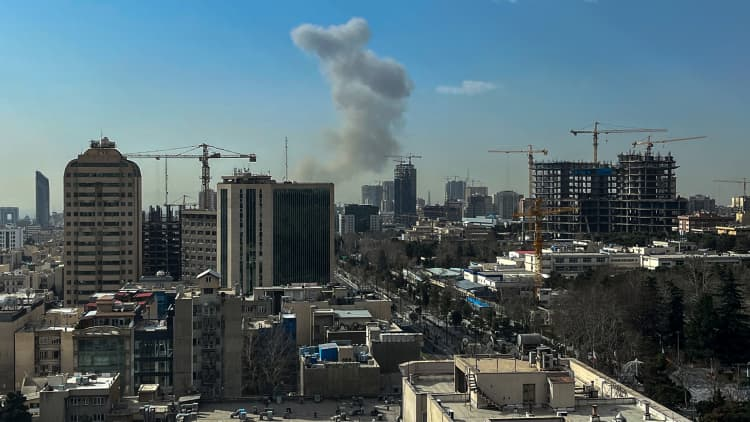
After 40 days of sustained military strikes, the United States has stepped back into a fragile ceasefire with Iran. While Donald Trump declared a “total and complete victory,” the battlefield reality tells a more complicated story.
The campaign, which began with high-impact strikes alongside Israel, aimed to decisively weaken Iran’s military capabilities and force political concessions. Instead, it ended with unresolved tensions, a volatile region, and a return to negotiations.
What were the US objectives in the Iran conflict?
Understanding what the US failed to achieve starts with what it set out to do. While no formal checklist was publicly released, analysts broadly agree on several core objectives:
Key goals of the campaign
- Cripple Iran’s military infrastructure
- Force regime change or destabilize leadership
- End or severely limit Iran’s nuclear ambitions
- Secure the Strait of Hormuz
- Reassert US deterrence across the Middle East
Each of these goals carried high stakes, not just for Washington, but for global stability.
Consider adding a visual here, mapping US objectives versus outcomes for quick reader clarity.
Why did the US fail to achieve a decisive victory?
Despite early tactical successes, the campaign struggled to translate military pressure into strategic results.
Iran’s resilience under pressure
Iran’s military strategy leaned heavily on asymmetry, low-cost, high-impact tactics that are difficult to neutralize through conventional bombing.
Key factors included the following:
- Continued use of drones and missile strikes
- Decentralized command structures
- Ability to sustain operations despite leadership losses
Even after significant damage, Iran retained enough capability to strike US interests and allies across the region.
The cost imbalance favored Iran
Modern warfare isn’t just about firepower; it’s about sustainability. Iran’s relatively inexpensive drone warfare contrasted sharply with the high operational costs of US military deployments.
This imbalance meant the following:
- The US spent significantly more per strike
- Iran could prolong the conflict at a lower cost
- Strategic fatigue set in faster for Washington
A chart comparing estimated cost-per-strike between US and Iranian systems would add strong context here.
What happened to regime change efforts?
One of the most ambitious and controversial objectives was regime change. That effort fell short.
Leadership losses did not collapse the system
While reports indicate that top figures, including Ali Khamenei, were eliminated, Iran’s governing structure remained intact.
Why?
- Power in Iran is distributed across institutions, not concentrated
- The Islamic Revolutionary Guard Corps (IRGC) maintained operational control
- Nationalistic sentiment often strengthens during external attacks
Rather than collapsing, the system adapted.
Political outcomes remained unchanged
- No pro-US government emerged
- No internal uprising shifted the balance of power
- Tehran maintained its negotiating position
This underscores a recurring lesson in modern warfare: removing leadership does not automatically transform political systems.
Why did the US fail to neutralize Iran’s military?
Despite weeks of bombardment, Iran’s military capabilities remained functional.
Operational systems stayed active
Iran continued:
- Launching retaliatory strikes
- Targeting US bases in the Gulf
- Supporting allied groups across the region
Notably, a US aircraft was reportedly shot down, highlighting that Iran’s air defense systems were still active.
Geography and strategy played a role
Iran’s terrain and infrastructure complicate military campaigns:
- Underground facilities protect critical assets
- Mountainous regions limit strike effectiveness
- Distributed systems reduce single-point failures
In simple terms, there was no single “off switch” for Iran’s military.
What went wrong in the Strait of Hormuz?
Securing the Strait of Hormuz was central to US strategy. It didn’t go as planned.
Iran turned geography into leverage
During the conflict:
- Shipping routes were disrupted
- Oil markets experienced volatility
- Commercial vessels were stranded
Rather than securing the strait through force, the US had to rely on negotiation to reopen it.
Why this matters globally
The Strait of Hormuz handles a significant share of the world’s oil supply. Any disruption:
- Raises fuel prices globally
- Impacts supply chains
- Increases economic uncertainty
A map showing global oil flow through Hormuz would strengthen this section.
How did the conflict expand beyond Iran?
Instead of staying contained, the conflict spilled across the region.
Regional escalation
- Attacks targeted US bases in neighboring countries
- Iran-linked groups increased their activity
- Tensions with Israel intensified
This widened the conflict footprint and complicated the US strategy.
Persistent flashpoints
Even after the ceasefire:
- Multiple areas remain unstable
- Proxy conflicts continue
- The risk of escalation is still high
This suggests the ceasefire is more of a pause than a resolution.
What key issues remain unresolved?
Despite 40 days of conflict, the core disputes remain largely intact.
Nuclear program
Iran continues to push for recognition of its uranium enrichment rights, a long-standing red line.
Sanctions
Tehran demands full sanctions relief, while Washington remains reluctant to concede without guarantees.
Strategic ambiguity
Reports suggest discrepancies between different versions of Iran’s negotiation proposals, raising questions about interpretation and intent.
Suggested external link: AP News coverage on discrepancies in Iran’s ceasefire proposal language.
Why did diplomacy succeed where military force did not?
Ultimately, the ceasefire came through negotiation, not battlefield dominance.
The limits of military power
Military force can
- Degrade capabilities
- Apply pressure
- Shape negotiations
But it cannot easily:
- Change political systems
- Eliminate ideological conflicts
- Guarantee long-term stability
The return to negotiations
Backchannel diplomacy played a key role in:
- Establishing ceasefire terms
- Reopening the Strait of Hormuz
- Creating a framework for future talks
Suggested internal link: your explainer on how backchannel diplomacy works in conflict zones.
What does this mean for US foreign policy?
The outcome raises important questions about strategy, expectations, and limits.
Lessons from the conflict
- Air campaigns alone rarely achieve regime change
- Asymmetric warfare can offset technological superiority
- Economic and political goals require diplomatic solutions
Strategic recalibration ahead
The US now faces a familiar dilemma:
- Escalate and risk a broader war
- Or negotiate and accept partial compromises
Either path carries consequences.
TL;DR
The US failed to achieve decisive results after 40 days of bombing Iran. It did not secure regime change, neutralize Iran’s military, or resolve core disputes. إيران remained resilient, disrupted global oil routes, and forced a return to negotiations. The ceasefire reflects the limits of military power in complex geopolitical conflicts.