
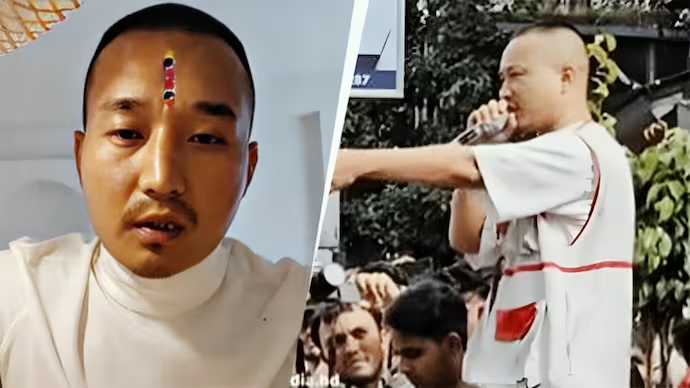
Nepal is witnessing one of its largest youth-led uprisings in recent years, as thousands of Gen Z protesters take to the streets against government-imposed social media restrictions and deep-rooted corruption. The unrest has already triggered high-level resignations and disruptions across the country, underscoring the scale of the crisis.
What Sparked the Protests?
The wave of demonstrations began after Nepal’s government announced a sweeping ban on major social media platforms earlier this month. Officials argued the move was necessary to curb “misinformation and unrest,” but the restrictions quickly ignited anger among young people who see online platforms as their primary space for expression, mobilization, and accountability.
On September 8, after days of growing unrest, the government reversed the ban late at night. By then, however, protests had escalated into a broader movement calling for systemic change.
The protests are also fueled by frustration over corruption scandals and government inefficiency, issues that have plagued Nepal for decades.
Political Fallout: Ministers Resign
The protests have rattled Nepal’s leadership. Home Minister Ramesh Lekhak and Prime Minister KP Sharma Oli both tendered their resignations as the demonstrations intensified. Their departures mark a significant moment in Nepal’s volatile political landscape, where frequent leadership changes have long hindered policy stability.
The Rise of Sudan Gurung
At the heart of the movement is Sudan Gurung, a 36-year-old activist and president of the NGO Hami Nepal, which played a pivotal role in organizing the demonstrations.
- Gurung’s organization used social media to post protest routes, safety instructions, and mobilization guides, much of it tailored to students.
- His personal story has struck a chord: he lost his child during an earthquake, a tragedy that pushed him into activism and disaster relief work.
- Gurung describes himself as an activist and philanthropist. His guiding philosophy for Hami Nepal is “For the people, by the people.”
In past interviews, Gurung has been blunt about the urgency of generational change. “It’s time the new generation steps up and challenges the old ways of running the country. You can do anything as long as you have the willpower,” he said.
How Social Media Fueled the Movement
While the government tried to silence dissent by blocking platforms, activists flipped the strategy. Hami Nepal and other groups used encrypted platforms, VPNs, and community networks to spread information quickly.
- Protest logistics circulated online within hours.
- Volunteers shared “how-to protest” guides, including tips on legal rights, first aid, and safe exit strategies.
- Hashtags supporting the movement trended regionally, amplifying Nepal’s unrest to a global audience.
The attempt to stifle dissent arguably backfired, making social media both the symbol and the weapon of the movement.
Airport Shutdown Adds to the Chaos
The unrest spilled into Nepal’s aviation sector on Tuesday (September 9), when violent protests forced the partial shutdown of Kathmandu’s Tribhuvan International Airport.
According to officials, flights approaching from the southern side were halted due to poor visibility caused by smoke from fires lit by demonstrators. Aviation authority spokesperson Gyanendra Bhul confirmed to Reuters that several Indian aircraft were left circling above Nepal until conditions cleared.
Flight tracking data from Flightradar24 showed multiple disruptions, highlighting the protests’ growing impact on regional connectivity.
Why This Matters
Nepal’s protests are not just about a temporary social media ban. They reflect deeper generational discontent with governance in the Himalayan nation. With a large portion of its population under 30, the country faces mounting pressure to reform institutions and tackle corruption.
The emergence of Sudan Gurung as a leading voice also signals a shift: traditional political figures are losing ground to grassroots activists who resonate with younger citizens.
If the government fails to address these concerns, experts warn, Nepal could see recurring cycles of unrest, potentially destabilizing a fragile democracy that has only recently emerged from decades of monarchy and civil conflict.