
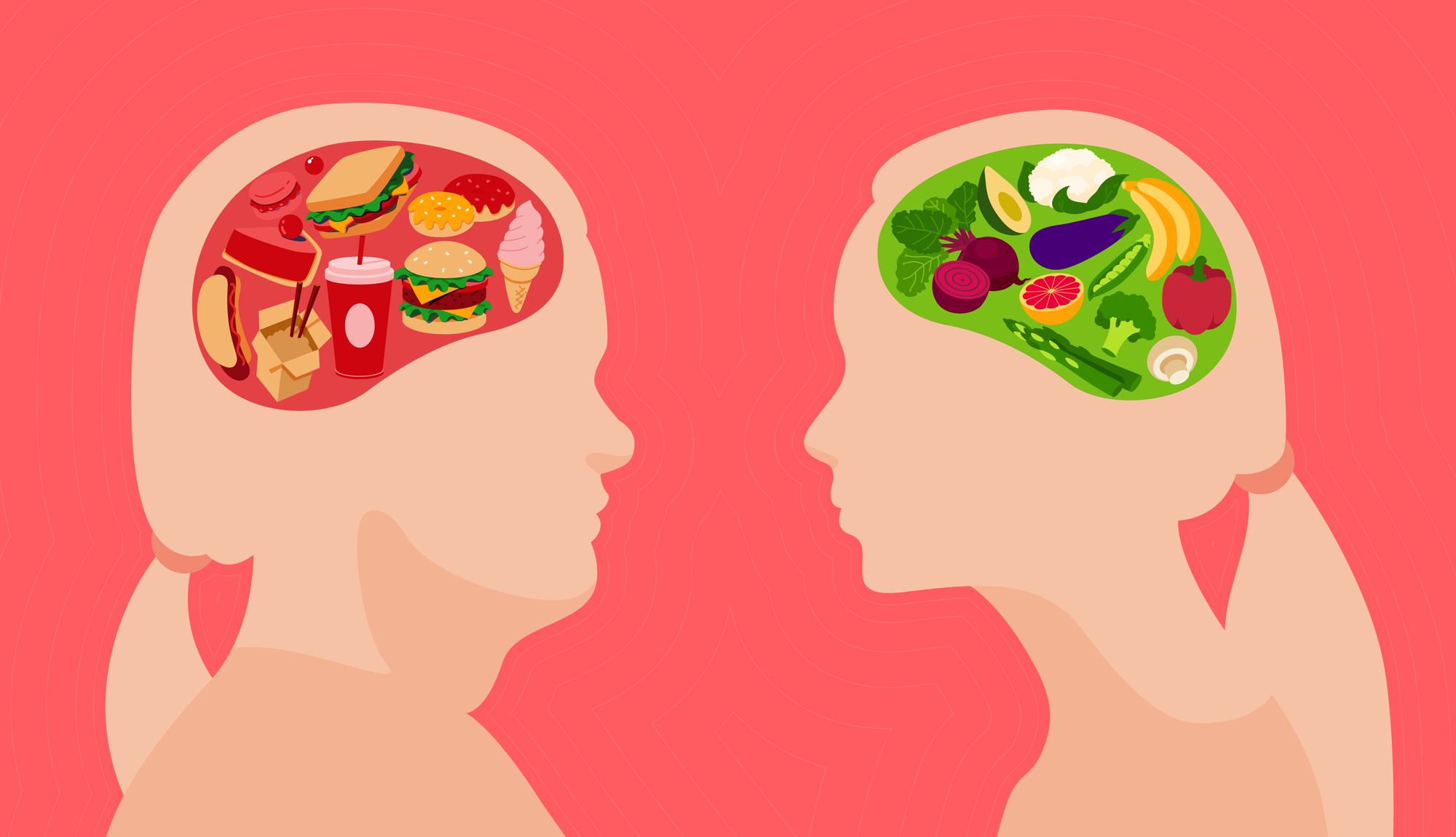
Eating is a necessary part of life, and it turns out that not only what we eat, but also when we eat, affects our brains. Irregular eating schedules have connections to poor mental health, such as depression and anxiety. It also links to cardiometabolic disease and weight gain. Fortunately, we may use our food patterns to improve our mental health and reduce negative moods.
Food and Mental health: How it works
The circadian clock system is in charge of synchronizing our internal activities at the best times of the day based on environmental cues such as light and food. Humans have evolved this wiring to satisfy changing energy needs throughout the day and night. Thus, resulting in a rhythmic pattern in our feeding habits that corresponds to the sun’s schedule.
Our eating rhythms have an impact on the primary clock, which governs metabolic function during the day-night cycle. Digestive issues have clocks, and their functions oscillate regularly during the 24-hour cycle. The digestive, absorptive, and metabolic capacity of the small intestine and liver, for example, varies throughout the day and night.
The ability of the brain to operate completely is harmed when the major circadian clock in the brain is out of sync with eating patterns. The brain accounts for only 2% of our entire body mass. But it consumes up to 25% of our energy and is particularly sensitive to calorie intake variations. As a result, irregular meal times are very certain to have unfavorable health consequences.
Food and Mood: Two peas in a pod
The fundamental mechanisms are unknown. But there is a connection between the brain circuits that control eating and those that control mood. In addition, digestive hormones influence dopamine, a neurotransmitter involved in mood, energy, and pleasure. Dopamine levels in people with depression and bipolar disorder are abnormal. Changing eating patterns are likely to play a role in poor mood maintenance.
Irregular eating habits could be a factor in the underlying causes of mood disorders. Individuals with depression or bipolar disorder, for example, have disrupted internal cycles and inconsistent eating times, which exacerbate mood symptoms. Furthermore, when compared to the general population, shift workers, who have irregular eating schedules, had a higher incidence of sadness and anxiety. Despite this information, analyzing eating patterns is not currently part of standard clinical care in most psychiatric settings.
Optimizing your eating patterns
So, what can we do to improve our eating patterns? Time-restricted eating (TRE), often known as intermittent fasting, is one potential strategy.
TRE entails limiting one’s eating window to a specific time during the day, usually four to twelve hours. For example, eating all meals and snacks in a 10-hour window from 9:00 a.m. to 7:00 p.m. is equivalent to fasting overnight. Evidence suggests that this approach improves brain function, energy metabolism, and metabolic hormone signaling.
In animal trials modeled after shift work, TRE has already been demonstrated to prevent depression and anxiety symptoms. TRE’s antidepressant properties have also been demonstrated in people. Eating on a regular schedule might also help you avoid health problems including obesity, diabetes, and cardiovascular disease.
Circadian rhythms in a 24-hour world

We live in a world that is illuminated by artificial light 24 hours a day, seven days a week, and where food is available at all times. As a result, the implications of disrupted eating cycles on mental health have become a hot topic in modern society. As more evidence on eating rhythms in people with mood disorders becomes available, adding eating rhythm treatment into clinical care could improve patient quality of life dramatically.
It is critical to improve public awareness of accessible and affordable strategies to maintain a healthy diet for the general people. This entails paying attention not just to the content of meals, but also to the rhythms of the consumption. Aligning eating patterns with the sun’s timetable will have long-term benefits for overall health and may even protect against mental disease.