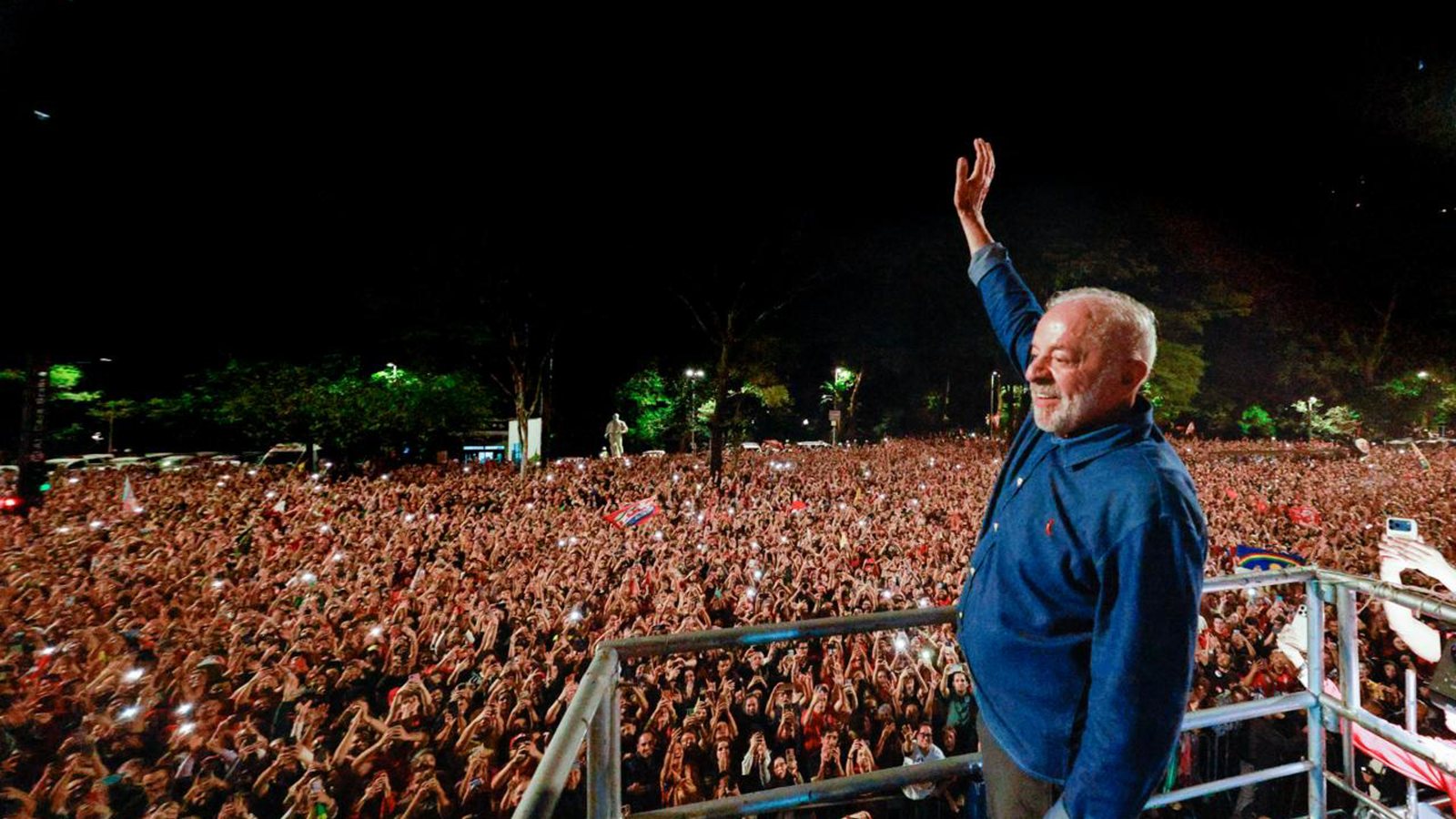
Brazil’s AI election rules got a real test in the race Luiz Inácio Lula da Silva just won. Lula took 51.79% of valid votes in the October 25 runoff against Sen. Flávio Bolsonaro and won a record fourth term, according to electoral court figures reported by Vatican News.
Some of the most shared images of him during the campaign were not real. Fans edited Lula into pop music videos, and some of those edits used AI.
Brazil’s electoral court spent those weeks enforcing AI rules the US doesn’t have. They include mandatory labels, a deepfake ban and a 72-hour blackout on new AI content before each vote. It applied them to both campaigns, and it ordered Meta to treat the two candidates equally.
That matters for American voters a week before the November 3 midterms. As we reported, AI political ads in the US have passed $137 million, most carry no disclaimer, and no federal rule requires one.
Fan edits put Lula in pop videos, and only some were AI
Lula finished second in the October 4 first round. Fan communities on X then began inserting him into music videos by Michael Jackson, Lady Gaga, Beyoncé and Katy Perry, Portal Ponto PB reported on October 11. The trend started with K-pop clips, and it mixed ordinary video editing with AI “in some cases,” the outlet said.
The edits grew out of an organized push. On October 5, fan profiles for Taylor Swift, BTS, BLACKPINK and dozens of other acts posted a joint call to back Lula, Correio Braziliense reported. The fan accounts, not the artists themselves, made that call.
Exame’s analysis of the campaign noted that viral Lula memes spread spontaneously from voters and found no similar wave for Flávio Bolsonaro. None of the reporting we reviewed tied the trend to Lula’s campaign.
Most AI content in the race was not this kind of obvious parody. The fact-checking agency Lupa’s VigIA monitor confirmed 920 AI-made or AI-altered political posts during the first-round campaign, according to Exame. Only 371 were labeled correctly, and about 60% came from ordinary users rather than candidates or parties.
Brazil’s rules: labels, a deepfake ban and a 72-hour freeze
Brazil writes its campaign rules nationally. The Superior Electoral Court, known as the TSE, first regulated AI in February 2024. That resolution banned deepfakes meant to harm or favor a candidate, the Atlantic Council’s Digital Forensic Research Lab summarized. Campaigns also had to say when they used AI and which tool.
On March 2, 2026, the court tightened those rules for this election, according to a breakdown by Data Privacy Brasil, a research group. The main changes:
- AI-altered campaign material must say so in an “explicit, prominent and accessible” way and name the technology used.
- Nobody may post or boost new AI content that alters a candidate’s image or voice from 72 hours before each round until 24 hours after. A label doesn’t help.
- AI chatbots may not recommend or rank candidates, even when a user asks.
- Platforms must file compliance plans and remove unlabeled synthetic content quickly, or share liability for it.
For the runoff, that freeze began on October 22, as a TSE ruling reported by Agência Brasil noted.
The court enforced the labels against both sides
The cases that reached the court show how the label rule works in practice. On October 13, Justice Marco Aurélio Bellizze gave the government’s top lawyer, Jorge Messias, 24 hours to delete a pro-Lula Instagram video, The Rio Times reported. It showed an AI-made elderly man and child in “Lula 13” shirts, with no AI label. Flávio Bolsonaro had filed the complaint.
Ten days later, Bellizze gave Flávio Bolsonaro two hours to remove an AI video of a figure resembling Lula from his WhatsApp channel, O Tempo reported. He cited signs of an artificial depiction “without the identification required by electoral rules” and accusations with no factual basis.
Labels were the issue in each case, not whether the clip looked real. In the Messias case, the judge said removal did not depend on how realistic the content was.
Meta’s AI tool and the equal-treatment order
The bigger fight was over Meta. Lula’s campaign told the TSE that Meta’s apps cut the reach of its posts. It also said the Meta AI chatbot refused images of Lula but made them for Flávio Bolsonaro, the Associated Press reported.
On October 15, Bellizze ordered Meta to apply identical criteria to both candidates in distribution, search and its AI tool. Breaking the order costs 500,000 reais (about $98,000) a day. He also found that Meta’s prompt controls had failed but said there was no evidence the failure was deliberate or repeated, according to Agência Brasil.
Meta’s explanation is that it had blocked Meta AI from generating images of candidates. Its filters caught full names but “did not always recognize a candidate when a common first name was paired with a ballot number.” Meta says that gap affected both candidates and was fixed on October 14. Meta told the court on October 20 that it had complied and denied any political bias, AP reported.
Meta also says that, under TSE rules, it stopped recommending candidates’ own posts to people who don’t follow them. That limits the reach of every campaign account. It doesn’t touch a fan account’s meme.
What the US has instead
The contrast with the US is about who writes the rules. In Brazil, one national court sets binding AI rules for campaigns and platforms, and its judges can order a post down within hours. The US has no federal AI label requirement for political ads.
Our guide to spotting AI political ads explains the state laws that fill the gap and the platforms’ own policies. Meta’s US freeze on new political ads, which began today, is a company policy, not a law. Deepfake ads have already run in Texas and Georgia, two of the Senate races we’re watching.
Brazil’s model has limits too. Most of its AI content came from ordinary users, not campaigns, and most of it carried no proper label. Court orders reach one post at a time.
The result is also still contested. Flávio Bolsonaro said it was “impossible to recognise the results” after a last-minute extension of voting hours and plans to seek an annulment, Al Jazeera reported. Meanwhile, the platforms’ final compliance reports are due to the TSE on December 19, CNN Brasil reported.