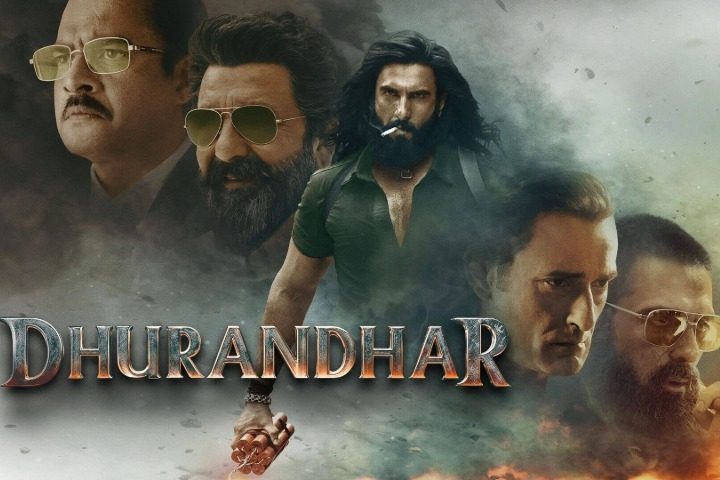
Dhurandhar movie review: Director Aditya Dhar delivers one of the most gripping theatrical experiences of 2025, led by a powerhouse cast featuring Ranveer Singh and Akshaye Khanna. After years of Hindi films drifting toward OTT-friendly storytelling, Dhurandhar finally brings back the kind of scale, tension, and cinematic payoff that demands a theater viewing.
The film blends real historical events, covert operations, and underworld politics into a tense narrative that rarely loses momentum. With Ranveer in one of his most controlled performances and Akshaye reminding audiences why he remains unmatched in understated intensity, Dhar creates a world that feels both familiar and startlingly new.
What Is Dhurandhar About?
Dhurandhar draws inspiration from real events that shaped modern Indian security policy. The narrative begins in 1999 during the Kandahar hijacking, where India was forced to release three terrorists, including Masood Azhar, to save hostages. R. Madhavan plays Ajay Sanyal, an intelligence officer whose strategic advice is ignored by higher authorities, leading to consequences that echo through the story.
The plot shifts to the 2001 Parliament attack, after which the Indian government agrees to Sanyal’s long-pending proposal: initiate an undercover operation aimed at dismantling terror networks across the border.
This mission sets the stage for Ranveer Singh’s entry.
Ranveer Singh as Hamza Ali Mazari
Ranveer appears in a rugged, long-haired avatar as he crosses into Afghanistan and later Pakistan, assuming the identity of Hamza Ali Mazari, a Baloch resident. His character’s ascent in Lyari’s gang-dominated ecosystem forms the core of the film.
Hamza gains the trust of gang leader Rehman Dakait, played brilliantly by Akshaye Khanna. After saving Rehman’s younger son during an attack, Hamza becomes part of the inner circle, gradually gaining access to illegal operations and crucial intel.
Key Antagonists and Parallel Tracks
The story expands with the entry of:
- Arjun Rampal as Major Iqbal of ISI, planning a major attack on India
- Sanjay Dutt as Aslam Khan, a feared officer whose hatred for Balochistan shapes his conflict with Rehman
- Rakesh Bedi as politician Jameel Yamali, adding a satirical edge
Each new character enters at the right moment, adding layers to the storyline without overcrowding it.
How Aditya Dhar Crafts a Gripping Experience
Dhurandhar opens with a gritty tone and sustains its thrill through a chapter-wise narrative structure. Each chapter is clearly titled, helping the audience follow a complex storyline without confusion. This approach works especially well for films that span multiple timelines, political arcs, and character introductions.
The structure may remind some viewers of international films that use chapter-based storytelling, but Dhar applies it to an Indian political thriller with strong purpose. It keeps the pace sharp and gives each plot strand room to breathe.
Real footage and audio from actual terror incidents are also incorporated at key points, grounding the film in reality and amplifying its emotional impact.
What Works in Dhurandhar
Strong Performances Across the Board
Ranveer anchors the film with a restrained, controlled performance. His silence adds more weight than dialogue, echoing the intensity he brought to earlier roles while feeling more mature.
Akshaye Khanna steals several scenes as Rehman Dakait. His understated menace, layered emotional beats, and unpredictable reactions make him the film’s standout performer.
Additional wins include:
- R Madhavan’s calm authority as Ajay Sanyal
- Arjun Rampal’s cold, deliberate portrayal of ISI’s Major Iqbal
- Sanjay Dutt’s intimidating persona as Aslam Khan
- Sara Arjun’s impressive turn as a 19-year-old navigating a dangerous world
Writing That Avoids Loud Patriotism
The screenplay maintains a gripping tone without resorting to heavy monologues or exaggerated patriotic moments. In a landscape where nationalist thrillers often overplay emotion, Dhurandhar keeps things grounded and believable.
Clean Narrative Flow
Despite juggling intelligence missions, gang rivalries, geopolitical tensions, and undercover identities, the storyline remains clear. The pacing rarely falters, keeping viewers invested.
Where Dhurandhar Falls Short
The biggest drawback is its length. While the screenplay is engaging, the film is undeniably long, and several scenes could have been trimmed to tighten pacing.
Another weak point is the climax. Compared to the rest of the film’s build-up, the final act loses some tension and urgency. The brutality in some sequences feels slightly excessive, though not sensationalized.
Final Verdict: Should You Watch Dhurandhar?
Dhurandhar is one of the rare Hindi films in recent years that truly earns the theatrical experience. The performances are compelling, the storyline is rich with intrigue, and the execution shows meticulous craft. The length may challenge some viewers, and the climax may leave a few wanting more, but the film as a whole is an impressive achievement.
The first part lays a strong foundation, introducing characters and conflicts with clarity. The second part, scheduled for release in March, is expected to explore Hamza’s true identity, his motivations, and the outcome of his mission.
Dhurandhar is currently in theatres, and it deserves to be watched on the big screen for maximum impact.