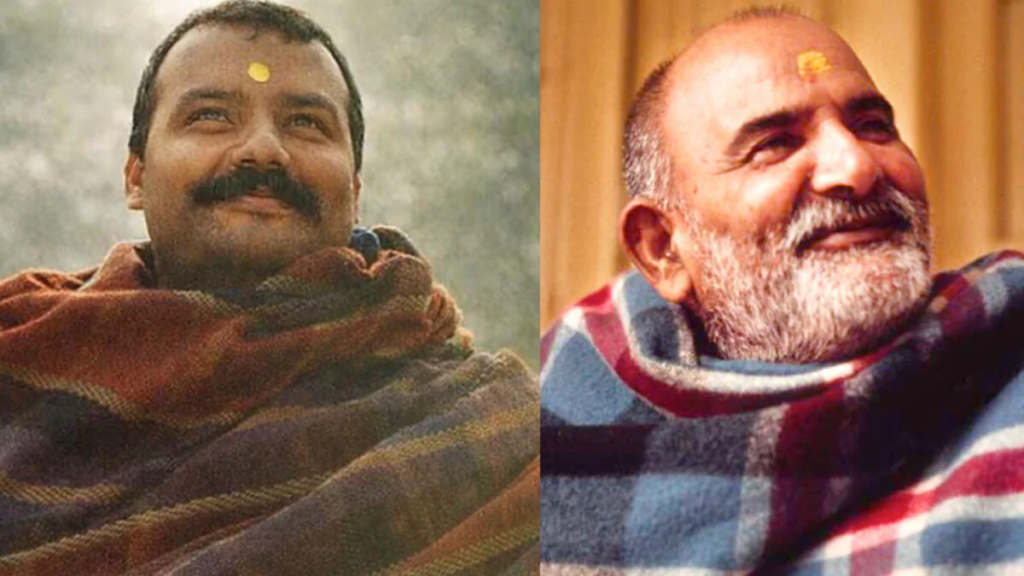
The surprise success of Hanuman Ansh has brought renewed attention to one of India’s most widely known modern spiritual figures: Neem Karoli Baba.
Directed by Vishal Chaturvedi, the film is based on the life and spiritual journey of the Hindu teacher, who was also a devoted follower of Lord Hanuman. What began as a modest theatrical release has reportedly turned into a sleeper hit, drawing audiences well beyond its initial footprint.
The film was made on a reported budget of around ₹1.7 crore and earned approximately ₹74 crore gross in India within 27 days. Its release reportedly expanded from about 250 theaters to roughly 1,200 screens.
But the renewed interest raises a larger question: Who exactly was Neem Karoli Baba, and why does his influence extend far beyond India?
Neem Karoli Baba was known for devotion, service, and simplicity
Neem Karoli Baba, also known as Maharaj-ji and Neeb Karori Baba, was a 20th-century Hindu spiritual teacher whose teachings centered on devotion, compassion and service.
Much of what is known about his life comes through his disciples, devotees, and accounts of people who encountered him. Unlike many prominent religious figures, Baba did not build his reputation around a large formal institution or a conventional religious organization.
Instead, his influence spread through personal encounters, stories, and the people who carried his teachings to different parts of the world.
His devotion to Lord Hanuman was particularly important to his spiritual identity. For his followers, Hanuman represented selfless devotion, strength, and service—principles that became closely associated with Baba’s teachings.
What is Kainchi Dham?
One of the most tangible parts of Neem Karoli Baba’s legacy is Kainchi Dham, an ashram in Uttarakhand that he established in 1962.
Located in the Kumaon hills, the ashram has developed into an important pilgrimage destination for his followers. Thousands of devotees visit the site, with particularly large gatherings around June 15, the anniversary of its founding.
Kainchi Dham is known for its relatively simple atmosphere. The complex includes temples, residential areas, and communal spaces where devotees participate in prayers, meals and service activities.
For many visitors, the significance of the ashram lies less in its architecture than in its association with Maharaj-ji and the community that continues to follow his teachings.
What miracles are attributed to Neem Karoli Baba?
Stories of miracles form an important part of Neem Karoli Baba’s popular legacy.
Followers have attributed extraordinary events to him, including accounts of objects appearing seemingly out of nowhere, healing, unusual journeys, and even teleportation. Such stories became part of the oral tradition surrounding Baba and were repeated by devotees over the years.
However, these accounts need to be understood in context.
There is a difference between documented historical evidence and stories preserved through religious faith and personal testimony. The miracle stories associated with Neem Karoli Baba belong primarily to the latter category and are not independently established historical facts.
For devotees, however, their spiritual significance remains central to Baba’s legacy.
Why was Lord Hanuman so important to him?
Neem Karoli Baba’s association with Lord Hanuman is one of the defining elements of his spiritual identity.
His teachings emphasized bhakti, or devotion, rather than intellectual or theological complexity. Love for God, service to others, and compassion were recurring themes in accounts of his teachings.
That connection also sits at the heart of Hanuman Ansh.
The film follows a grieving boy who turns toward God after losing his mother. His spiritual journey ultimately leads him toward service and devotion before he becomes Neem Karoli Baba.
According to director Vishal Chaturvedi, the movie’s unexpected success has been driven by a combination of its story, music, performances, and strong word-of-mouth publicity.
How did Neem Karoli Baba become known around the world?
Perhaps the most remarkable part of Neem Karoli Baba’s legacy is how far his influence traveled.
A major figure in that story was Richard Alpert, an American psychologist who later became known as Ram Dass.
Alpert met Neem Karoli Baba in India in 1967. Baba gave him the name Ram Dass, commonly translated as “servant of God.”
Ram Dass went on to become one of the most influential Western teachers associated with Indian spirituality. His 1971 book Be Here Now became a landmark work for generations of Western readers interested in meditation, spirituality, and Indian philosophy.
Through Ram Dass and other Western disciples, stories and teachings associated with Neem Karoli Baba reached audiences who might otherwise never have encountered him.
Did Steve Jobs actually meet Neem Karoli Baba?
The connection between Steve Jobs and Neem Karoli Baba is often repeated, but there is an important distinction.
Jobs never met Baba.
Jobs traveled to India in 1974 in search of spiritual guidance and reportedly hoped to meet him. By then, however, Neem Karoli Baba had died in 1973.
Jobs nevertheless visited Kainchi Dham during his journey through India. The experience has subsequently become an important part of the story surrounding the ashram’s influence on Silicon Valley.
The connection is particularly notable because Jobs later became one of the world’s most influential technology entrepreneurs.
What about Mark Zuckerberg?
Facebook co-founder Mark Zuckerberg also visited Kainchi Dham.
The visit reportedly took place during a difficult period for Facebook, and Zuckerberg has said that Steve Jobs had advised him to visit the temple when he was trying to reconnect with the company’s purpose.
The story has become one of the most widely circulated examples of the intersection between Indian spirituality and Silicon Valley.
It also helped turn Kainchi Dham into a destination of interest far beyond traditional religious circles.
How did Julia Roberts become interested in Neem Karoli Baba?
Neem Karoli Baba’s influence has also reached Hollywood.
Actor Julia Roberts has spoken publicly about her fascination with him. She has described being drawn to a photograph of Baba despite knowing very little about him at the time.
Roberts later discussed the experience during an appearance on Good Morning America, explaining how the encounter with his image contributed to her interest in Hindu spirituality.
Her story is another example of how Baba’s influence has often spread through personal experiences rather than through a conventional institutional network.
Why does Neem Karoli Baba remain influential?
Neem Karoli Baba died in 1973, but his influence has continued for more than five decades.
Part of the reason is the simplicity of the principles associated with his teachings. Devotion, love, compassion, and service are ideas that can be practiced without requiring followers to belong to a particular institution.
Another factor is the remarkable network of people connected to his legacy.
From Indian devotees to Western spiritual teachers such as Ram Dass, and from pilgrims at Kainchi Dham to internationally known figures who have visited the ashram, Baba’s influence has crossed geographical and cultural boundaries.
That makes his story unusual. He became internationally recognized not because he built a conventional global organization, but because people carried their experiences of him with them.
What Hanuman Ansh adds to the story
The success of Hanuman Ansh has introduced Neem Karoli Baba to a new generation of viewers who may know little about him.
Rather than simply presenting him as a religious figure surrounded by miracle stories, the film places his transformation within a broader narrative of grief, faith, and service.
That may help explain why the movie has connected with audiences beyond the traditional devotional-film market.
For viewers discovering Neem Karoli Baba through the film, the deeper story is not simply about miracles. It is about how a relatively simple message—love God, serve others, and act with compassion—traveled from an ashram in the hills of Uttarakhand to followers around the world.
And that legacy, more than 50 years after his death, continues to make Neem Karoli Baba a fascinating figure in modern Indian spirituality.