Why The Arctic Is Suddenly Too Valuable to Ignore
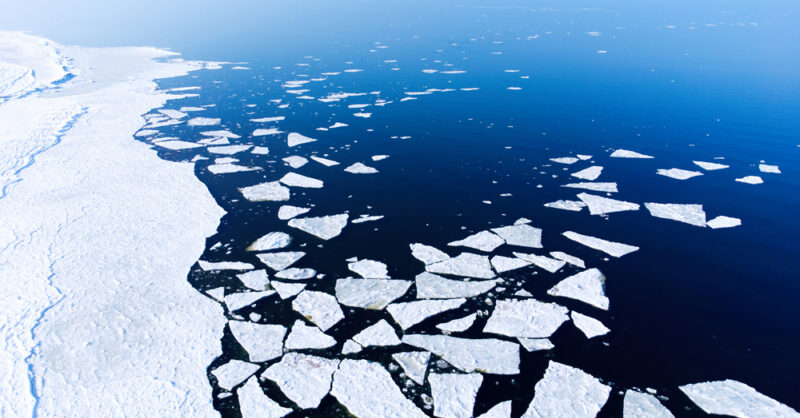
With accelerating climate change, the Arctic is undergoing rapid transformation. Ice cover is retreating, exposing vast expanses of previously frozen ocean and seabed. That shift doesn’t just matter for climate science — it opens up access to resources, shipping lanes, and geopolitical leverage that were once locked under ice.
No longer purely a frozen frontier, the Arctic is evolving into one of the most contested regions on Earth. And many of the world’s leading powers are racing to stake their claim.
What Riches Lie Beneath Arctic Ice?
Oil, Gas, and Natural Resources
- According to a classical assessment by the United States Geological Survey (USGS), roughly 13% of the world’s undiscovered oil and 30% of its undiscovered natural gas are believed to lie under the Arctic — much of it offshore, beneath the seabed.
- Some estimates place the region’s potential reserves at around 90 billion barrels of technically recoverable oil, plus vast volumes of natural gas and natural-gas liquids still to be tapped.
Critical Minerals & Rare Earths
- Beyond fossil fuels, the Arctic and adjacent lands such as Greenland hold rich deposits of strategic minerals: iron ore, copper, nickel, platinum-group metals, uranium, and rare-earth elements used in electric vehicles, batteries, green-tech, and other high-demand industries.
- As global demand grows for clean energy and high-tech manufacturing, these mineral reserves make the Arctic more critical than ever.
Why Shipping and Trade Routes Are Reshaping Global Logistics
As Arctic ice melts, new maritime corridors are slowly becoming navigable — at least for parts of the year:
- The Northern Sea Route along Russia’s Arctic coast.
- The Northwest Passage through the Canadian Arctic archipelago.
These routes, when used successfully and consistently, can shrink transit times between Asia and Europe by up to 40% and cut shipping costs significantly compared with traditional routes via the Suez Canal or around southern Africa.
Faster routes mean cheaper shipping, faster delivery, and a strategic advantage, a big attractor for global commerce.
Who Controls the Arctic? The Current Legal & Political Landscape
Arctic Coastal Nations & the Legal Framework
Eight countries border the Arctic Ocean: Canada, Denmark (via Greenland), Finland, Iceland, Norway, Russia, Sweden, and the United States (via Alaska). These countries are members of the Arctic Council.
Under the terms of the United Nations Convention on the Law of the Sea (UNCLOS), each coastal state controls:
- Its land territory and internal waters
- Territorial seas (up to ~12 nautical miles from baseline)
- An Exclusive Economic Zone (EEZ) up to 200 nautical miles from the coast, granting sea resources rights within that zone.
Extending Claims Beyond the 200-Mile Limit
UNCLOS also allows nations to claim an extended continental shelf — beyond 200 nautical miles — if they can prove the seabed is a natural geological extension of their landmass. This matters because it grants rights over seabed resources (oil, gas, minerals) even beyond the conventional EEZ.
Several Arctic states — notably Russia, Canada, Denmark (Greenland), and Norway — have submitted overlapping claims. This has produced potential flashpoints centered around features such as the Lomonosov Ridge, a gigantic undersea formation thought to straddle multiple claimed sectors.
Because these claims overlap, final resolution often depends on geological proof, submissions to the UN body overseeing continental-shelf claims, and diplomacy — not simply geography.
Why the Melting Ice Is Rewriting Geopolitics
As the Arctic becomes more accessible:
- Countries that invest in icebreakers, Arctic shipping infrastructure, and military/ coast guard presence gain leverage over shipping lanes and resource access.
- Interests shift from purely scientific or environmental concerns to economic, strategic, and security stakes.
- Overlapping claims and competition for resource-rich territories, especially the seabed, increase the chance of diplomatic friction, or worse.
For example, nations like Russia have poured heavily into Arctic infrastructure and icebreakers, seeing the region as a strategic priority. Meanwhile, countries such as Norway, Canada, and Denmark (Greenland) face pressure to defend their claims and expand their presence while balancing environmental protection and indigenous rights.
Why the Arctic Race Matters to the World
- Energy Security & Global Supply Chains: Tapping Arctic oil, gas, and minerals could reduce dependence on traditional suppliers. Critical minerals may power green-tech and clean-energy transitions globally.
- Trade Efficiency: Once Arctic routes become more predictable, global shipping, especially between Europe and Asia, may get a speed and cost upgrade.
- Geopolitical Stability (or Instability): The Arctic could emerge as a new front in strategic competition, maritime, economic, and military, especially as climate change accelerates access.
- Environmental & Indigenous Impact: Rapid extraction and shipping increase the risk of ecological disruption, pollution, and threats to fragile Arctic ecosystems and indigenous communities.
What to Watch Next
- Finalization of continental-shelf claims — especially around contested zones like the Lomonosov Ridge.
- Construction and deployment of icebreakers, ports, and shipping infrastructure by major powers.
- Arctic Council developments — or potential fractures — as national security and economic interests clash.
- Global demand for critical minerals and energy may accelerate Arctic extraction despite environmental and logistical hurdles.
Conclusion: The Arctic Is No Longer a Frozen Backdrop: It’s a Global Frontline
What was once considered a remote, inhospitable wilderness is rapidly becoming ground zero in a high-stakes global competition. As ice melts and technology advances, the Arctic’s vast stores of oil, gas, rare minerals, and the promise of faster shipping corridors are turning an icy frontier into a controversial arena for power, profit, and political posturing.
The world could be entering an era when the Arctic’s fate matters not just to northern polar states, but to every economy, every supply chain, and every government. Understanding what’s at stake isn’t optional; it’s essential.