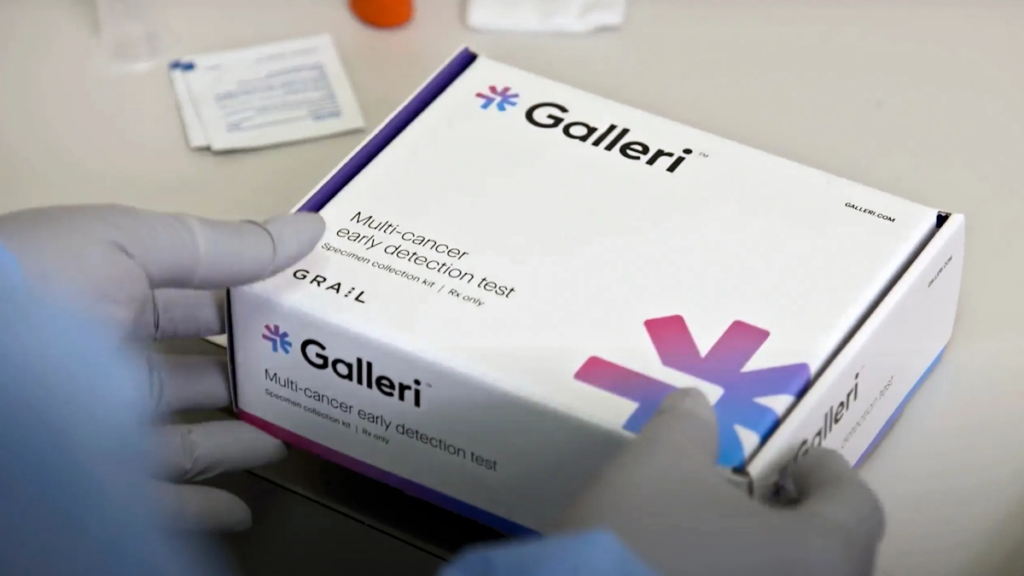
A single blood test that can screen for dozens of cancers at once may soon change the way cancer is detected in the United States.
The U.S. Food and Drug Administration (FDA) is evaluating the Galleri blood test, developed by Grail, for breakthrough device designation—a move that could accelerate its path toward broader clinical adoption. Unlike traditional screening methods that focus on one type of cancer at a time, the Galleri test aims to detect signals from more than 50 cancers using a single blood sample.
If the technology receives full regulatory approval and gains insurance coverage, experts say it could mark one of the biggest shifts in cancer screening in decades.
What Is the Galleri Blood Test?
The Galleri test is a multi-cancer early detection (MCED) blood test designed to identify cancer signals before symptoms appear.
Instead of looking for a specific cancer, the test analyses fragments of DNA and other biological markers circulating in the bloodstream. Tumours shed genetic material into the blood, and advanced sequencing technology can detect patterns associated with cancer.
The goal is simple but ambitious: find cancers earlier, when treatment is often more effective, and survival rates are typically higher.
How the Test Works
The Galleri test:
- Requires a single blood draw
- Searches for cancer-related DNA signals
- Can identify potential signs of more than 50 cancers
- Uses artificial intelligence and genomic analysis to interpret results
- Predicts where the cancer may have originated in the body
The final feature is particularly important because it helps physicians determine which organs or tissues require further investigation.
Why Is the FDA Review Significant?
The FDA’s breakthrough device program is intended for technologies that could provide more effective diagnosis or treatment for serious conditions.
A breakthrough designation does not mean a product is approved. Instead, it provides closer collaboration with regulators and can speed up the review process.
For Galleri, the designation could be a major step toward broader adoption across healthcare systems.
More importantly, it could eventually pave the way for coverage through Medicare and private insurance plans, significantly reducing out-of-pocket costs for patients.
How Is Cancer Screening Done Today?
Current cancer screening relies on separate tests for individual cancers.
Common examples include:
- Mammograms for breast cancer
- Colonoscopies and stool tests for colorectal cancer
- Pap tests and HPV screening for cervical cancer
- PSA tests for prostate cancer
- Low-dose CT scans for lung cancer in high-risk individuals
While these tools have saved countless lives, they only cover a limited number of cancers.
Many deadly cancers—including pancreatic, ovarian, liver, and esophageal cancers—often have no routine screening options available for the general population.
The Gap in Current Screening
According to cancer experts, many cancers are diagnosed only after symptoms develop, when treatment becomes more difficult.
A test capable of detecting multiple cancers simultaneously could potentially close that gap and identify diseases that currently go unnoticed until advanced stages.
A useful infographic here would compare traditional single-cancer screening methods with multi-cancer blood testing.
Why Researchers Believe Multi-Cancer Testing Matters
Cancer remains one of the leading causes of death worldwide.
One of the biggest challenges in cancer care is that many cancers develop silently.
By the time symptoms appear, the disease may have already spread.
Potential Benefits of Earlier Detection
Earlier detection can:
- Increase treatment options
- Improve survival rates
- Reduce the need for aggressive therapies
- Lower long-term healthcare costs
- Improve quality of life for patients
This is why researchers have spent years exploring whether a single blood test could serve as an effective early warning system.
What Makes Galleri Different?
Unlike traditional diagnostic tests, Galleri is not designed to confirm cancer.
Instead, it functions as an early detection tool.
Screening vs. Diagnosis
This distinction is critical.
A positive Galleri result does not automatically mean someone has cancer.
Instead, it signals that further testing may be needed.
Doctors would still rely on:
- Imaging scans
- Biopsies
- Endoscopies
- Other diagnostic procedures
to confirm whether cancer is actually present.
The test is intended to complement—not replace—existing screening programs.
How Accurate Is the Galleri Test?
One of the most important questions surrounding any screening technology is accuracy.
Researchers continue to study:
- Detection rates across different cancers
- False-positive rates
- False-negative rates
- Performance in real-world settings
- Long-term patient outcomes
While early trial results have generated significant interest, many experts stress that additional data is needed before multi-cancer blood tests become a routine part of preventive healthcare.
Large clinical studies are currently underway to better understand the technology’s benefits and limitations.
Cost Remains a Major Consideration
At present, Grail lists the Galleri test at approximately $950.
Without broad insurance coverage, that price places it beyond the reach of many consumers.
FDA approval could eventually support reimbursement decisions by Medicare and private insurers, potentially making the technology more accessible.
Healthcare economists will also be watching closely to determine whether widespread screening can reduce overall treatment costs by catching cancers earlier.
Challenges and Questions Ahead
Despite the excitement surrounding multi-cancer blood testing, several questions remain.
Key Issues Still Being Studied
Researchers continue to evaluate:
- Which populations benefit most from testing
- How frequently testing should occur
- Whether screening reduces cancer deaths
- Potential risks of overdiagnosis
- The emotional impact of uncertain results
Addressing these questions will be essential before widespread adoption.
A New Era of Cancer Detection?
The FDA’s review of the Galleri test reflects a broader transformation underway in cancer care.
Advances in genomics, artificial intelligence, and precision medicine are creating opportunities to identify disease earlier than ever before.
If ongoing studies confirm its effectiveness, Galleri could become part of a new generation of blood-based screening tools capable of detecting cancers that currently evade routine testing.
For patients, that could mean earlier interventions, more treatment options, and potentially better outcomes.
For healthcare systems, it represents a shift from finding cancer after symptoms emerge to identifying it before it has a chance to spread.
Whether Galleri ultimately becomes a standard part of annual health screenings remains to be seen, but its progress through the FDA review process marks a significant moment in the future of cancer detection.
TL;DR
- The FDA is considering the Galleri blood test for breakthrough device designation.
- The test can detect signals from more than 50 cancers using a single blood sample.
- Galleri analyzes DNA fragments and other cancer markers circulating in the bloodstream.
- It predicts where a potential cancer may have originated, helping guide follow-up testing.
- The test is an early detection tool, not a diagnostic test.
- Current screening programs typically focus on only a handful of cancers.
- The retail price is approximately $950, though future insurance coverage could improve accessibility.
- Researchers are still evaluating long-term effectiveness and clinical outcomes.