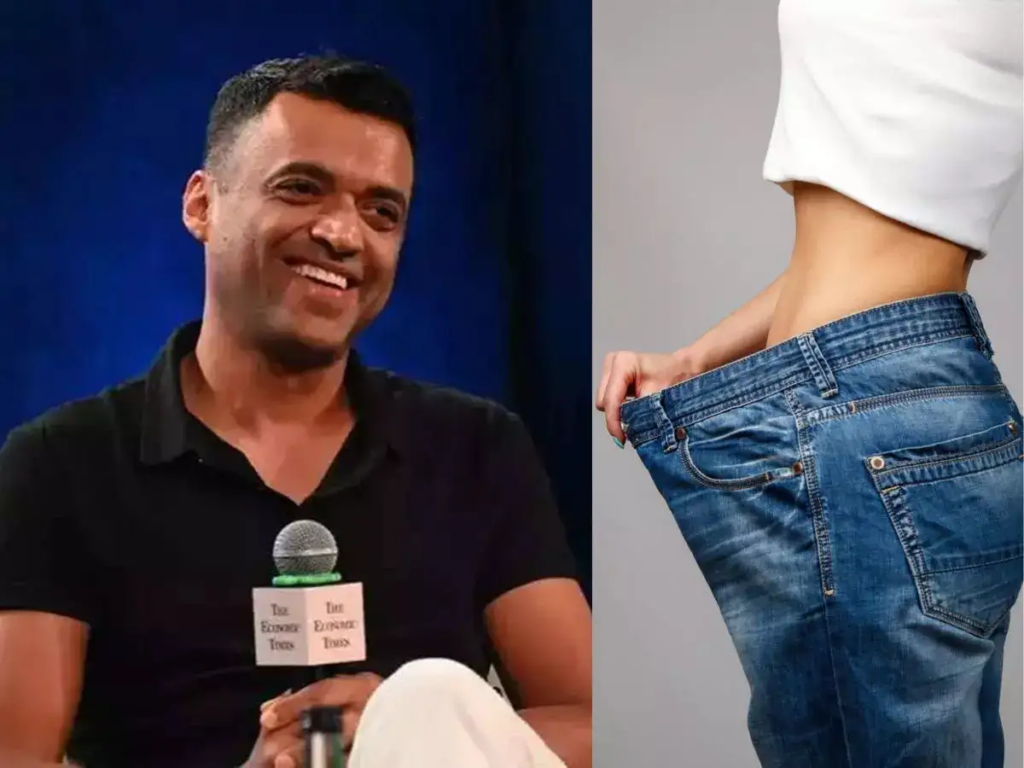
Deepinder Goyal’s startup Temple is hiring engineers. But unlike most tech job postings, this one comes with a physical requirement: men must have less than 16% body fat, and women less than 26%.
The announcement, shared by Deepinder Goyal on X, quickly went viral—not just for the roles on offer, but for the hiring filter itself. Temple, his new health-tech venture, is building what Goyal describes as an experimental wearable device that measures brain blood flow in real time.
The unusual eligibility criteria have sparked equal parts admiration and skepticism. Is this bold product-market alignment or a risky precedent in tech hiring?
What Is Temple, and Why Is It Making Headlines?
Temple is a health-tech startup focused on elite performance and longevity. According to Goyal, the device currently in the research prototype stage aims to measure brain blood flow continuously and precisely—something no mainstream wearable claims to do today.
In his post, Goyal described Temple as “the ultimate wearable for elite performance athletes.” The goal isn’t incremental improvement over smartwatches. It’s a category-defining product.
Temple’s vision sits at the intersection of:
- Performance optimization
- Longevity science
- Brain health monitoring
- Wearable technology innovation
For context, most consumer wearables today track metrics like heart rate variability (HRV), sleep cycles, oxygen saturation, and activity levels. A device capable of measuring cerebral blood flow in real time would represent a significant leap, if technically validated.
Why Is Temple’s Hiring Criteria So Controversial?
The core of the controversy isn’t the product. It’s the filter.
Temple’s hiring announcement states:
- Men must have <16% body fat
- Women must have <26% body fat
- Candidates outside this range can join on probation if they reach the target within three months
Goyal framed the requirement as philosophical alignment rather than aesthetic preference. His argument: if the product is built for people who push their bodies to the edge, the builders should embody that mindset.
The Stated Rationale
According to Goyal, Temple is “building for people who push their bodies to the edge.” He wants engineers who are also athletes—people willing to test the device under real physiological stress.
From a founder’s perspective, the logic appears to be:
- Deep product empathy requires lived experience
- Fitness discipline signals commitment and performance culture
- The team should reflect the target user
This mirrors how some elite sports brands recruit athletes as product testers. However, applying that philosophy to engineering hiring is rare—and legally complex in many jurisdictions.
Is Body Fat a Reasonable Hiring Metric?
This is where the debate becomes more nuanced.
Body Fat vs. Performance
Body fat percentage is not a universal proxy for athleticism or discipline. Two individuals with identical performance capacity can have different body compositions due to:
- Genetics
- Hormonal factors
- Age
- Training style
- Metabolic differences
A marathon runner, powerlifter, and CrossFit athlete may all fall into different body fat ranges despite elite performance levels.
Experts in exercise physiology would likely argue that performance-based metrics—VO2 max, strength benchmarks, recovery scores—better reflect athletic capability than body fat alone.
Workplace Legal Implications
In the United States, hiring decisions based on physical criteria unrelated to job performance can raise legal questions. Employment law experts would likely examine:
- Whether the physical requirement is a bona fide occupational qualification (BFOQ)
- Potential discrimination concerns
- Gender-specific thresholds
Temple is based in India, and employment law frameworks differ. Still, global scrutiny is inevitable when a founder of Goyal’s stature makes such a public declaration.
What Does This Say About Founder-Led Culture?
Temple reflects something deeper than a hiring experiment. It reflects Goyal’s personal philosophy.
Over the years, Goyal has publicly shared his interest in:
- Blood marker tracking
- Intermittent fasting
- Meditation
- Hyperbaric oxygen therapy
- Supplement regimens
- Longevity experiments
Temple appears to be the product extension of those personal biohacking experiments.
In Silicon Valley and global tech circles, founder-led culture often sets extreme standards early. Think of early Amazon’s intensity under Jeff Bezos or Tesla’s performance expectations under Elon Musk. But Temple’s approach shifts the bar from productivity metrics to physiological metrics.
That’s new.
Could Temple’s Strategy Actually Work?
Controversial hiring filters can serve strategic purposes.
Brand Signaling
Temple has instantly positioned itself as:
- Elite
- Performance-driven
- Disciplined
- Uncompromising
Even critics are talking about it. From a marketing standpoint, the move generated organic reach without paid advertising.
Team Alignment
If Temple truly aims to serve elite athletes, having engineers who:
- Train intensely
- Understand recovery cycles
- Track biomarkers
- Care about marginal gains
could improve product iteration speed.
However, it also narrows the talent pool dramatically—especially in specialized domains like machine learning and neural decoding research.
One viral comment summed up the skepticism: “I don’t think there exists an embedded systems engineer with less than 16% body fat.”
Hyperbole aside, hardware engineering and deep-tech talent are already scarce.
What Is Temple Really Building?
Beyond the hiring debate, the bigger question is whether Temple’s device can deliver on its promise.
Measuring brain blood flow continuously and non-invasively is technically challenging. Current medical-grade technologies like functional MRI (fMRI) and transcranial Doppler ultrasound are:
- Expensive
- Stationary
- Not wearable
If Temple has discovered a scalable breakthrough, it would impact:
- Concussion monitoring
- Cognitive decline research
- Athletic recovery
- Neurodegenerative disease tracking
Why Does This Matter for the Tech Industry?
Temple’s hiring model forces a broader question: Should culture fit extend to measurable physical traits?
Tech companies have historically screened for:
- Cognitive ability
- Problem-solving skill
- Cultural alignment
- Mission passion
Temple adds a physiological filter.
If successful, it could inspire niche vertical startups to build “embodied teams”—where product developers are also core users. If it fails, it may serve as a cautionary tale about over-indexing on founder ideology.
Either way, it expands the conversation about what “alignment” really means.
TL;DR
- Deepinder Goyal’s startup Temple is hiring engineers—but only those under specific body fat thresholds.
- The company is building a wearable that measures brain blood flow in real time.
- The hiring filter has sparked debate about legality, fairness, and effectiveness.
- Temple’s strategy signals an elite performance brand identity.
- The real test will be whether the technology delivers measurable breakthroughs.
Temple’s body fat hiring criteria may grab headlines, but its long-term credibility will depend on scientific validation and product execution—not percentages on a caliper.