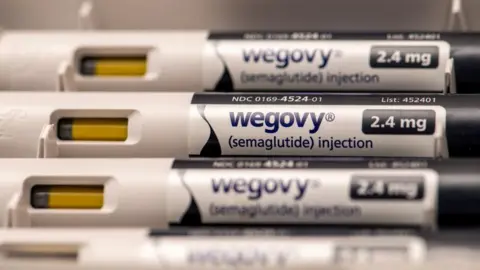
Weight-loss injections such as Mounjaro and Wegovy have been hailed as game-changers, helping people lose amounts of weight that were previously hard to achieve without surgery. But a new study suggests there is a major catch: once people stop taking these drugs, the weight comes back—much faster than after traditional dieting.
According to research published in the British Medical Journal (BMJ), people who stop using weight-loss jabs regain weight up to four times faster than those who stop dieting and exercising. The findings raise urgent questions about how these drugs should be prescribed, how long they should be taken, and what patients should realistically expect once treatment ends.
What does the new study reveal about weight regain after weight-loss jabs?
The BMJ study analyzed data from 37 clinical trials involving more than 9,000 overweight or obese patients. Researchers compared outcomes from:
- Weight-loss injections (including newer GLP-1 drugs)
- Traditional dieting and lifestyle interventions
- Other weight-loss pills
The headline finding is stark:
- People using weight-loss jabs lost around 20% of their body weight
- After stopping treatment, they regained an average of 0.8 kg (1.7 lbs) per month
At that pace, most participants returned to their pre-treatment weight within about 18 months.
By contrast, people who lost weight through diet and exercise regained it far more slowly—around 0.1 kg per month.
How fast is weight regained after stopping Wegovy or Mounjaro?
The study found that weight regain after stopping GLP-1 drugs is rapid and consistent across trials.
Average regain rates:
- After weight-loss jabs: ~0.8 kg per month
- After dieting: ~0.1 kg per month
That means people who stop injections regain weight around eight times faster month-to-month, and roughly four times faster overall, than those who stop conventional weight-loss programs.
Dr. Susan Jebb of Oxford University, one of the study’s investigators, warned that patients need to be fully informed about this risk before starting treatment.
“These drugs are highly effective while you’re on them,” she noted, “but the challenge is what happens when treatment stops.”
Why does weight come back so quickly after stopping weight-loss injections?
To understand the rebound effect, it helps to look at how these drugs work.
How GLP-1 weight-loss drugs affect the body
Mounjaro and Wegovy mimic GLP-1, a natural hormone that:
- Reduces hunger
- Slows stomach emptying
- Helps people feel full sooner
But these injections deliver GLP-1 at levels far higher than the body normally produces.
Dr. Adam Collins, a nutrition expert at the University of Surrey, explains that long-term exposure to high GLP-1 levels may:
- Reduce the body’s own GLP-1 production
- Lower sensitivity to the hormone over time
When the drug is suddenly withdrawn, appetite control can rebound aggressively—making overeating more likely and weight regain faster.
Why this matters: The biology of obesity doesn’t reset just because weight is lost. Once the medication is removed, the body often fights hard to return to its previous weight.
Are these findings based on real-world use or clinical trials?
This is a crucial caveat.
The study’s conclusions are based on clinical trials, not long-term real-world data. Only eight of the 37 studies examined newer GLP-1 drugs such as Wegovy and Mounjaro, and:
- Follow-up after stopping treatment was limited to one year
- Long-term effects beyond that period remain uncertain
Dr. Jebb emphasized that while the trend is clear, more real-world research is needed to understand how people fare over several years—especially those who combine medication with sustained lifestyle changes.
How does weight regain compare with traditional dieting?
The comparison may surprise some readers.
Diet and exercise outcomes:
- Smaller initial weight loss
- Slower, more gradual regain
- Average regain: ~0.1 kg per month
Injection-based weight loss:
- Larger, faster initial weight loss
- Much faster rebound after stopping
- Average regain: ~0.8 kg per month
In other words, dieting may be less dramatic—but also less volatile.
This helps explain why many obesity specialists now describe GLP-1 drugs not as short-term solutions, but as chronic treatments.
Are weight-loss injections meant to be lifelong?
Increasingly, experts say yes—for some patients.
The NHS recommends weight-loss jabs only for people with obesity-related health risks, such as diabetes or heart disease, not for cosmetic weight loss.
Many specialists argue that, much like blood-pressure or diabetes medication:
- Stopping treatment often leads to relapse
- Long-term or lifelong use may be necessary
- Ongoing medical supervision is essential
This raises ethical and practical questions about cost, access, and long-term safety.
How popular are “skinny jabs” in the UK right now?
Use of these injections has surged.
According to recent estimates:
- 1.6 million UK adults used weight-loss jabs in the past year
- Most obtained them through private prescriptions
- An additional 3.3 million people say they are interested in trying them in the next year
These figures come from nationally representative surveys cited by Cancer Research UK in early 2025.
However, an important limitation remains:
- GPs and NHS weight-management services cannot automatically continue prescriptions that were started privately
This creates a gap between demand and regulated medical access.
Why this study matters for patients and policymakers
The findings challenge the idea of weight-loss injections as a quick fix.
They suggest:
- Patients need clear warnings about rebound weight gain
- Stopping treatment without a long-term plan carries real risks
- Policymakers must prepare for sustained demand, not short courses
As prescriptions rise, so do questions about affordability, fairness, and long-term public health impact.
TL;DR
- People who stop Mounjaro or Wegovy regain weight much faster than those who stop dieting.
- Average regain after jabs is about 0.8 kg per month.
- Most return to their original weight within 18 months.
- The effect may be linked to how GLP-1 drugs alter appetite hormones.
- Experts increasingly see these drugs as long-term or lifelong treatments.