
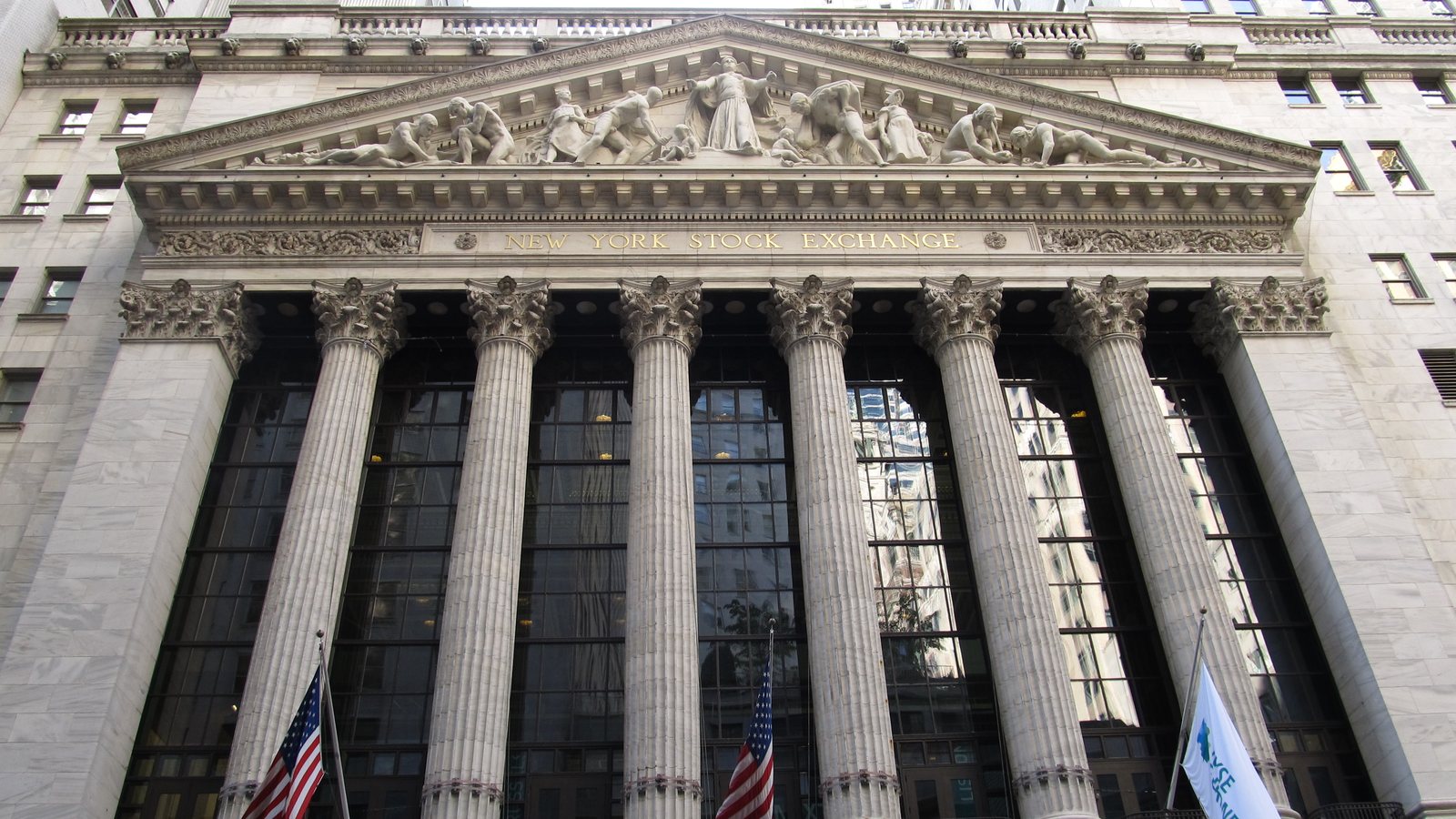

Wall Street rallied on Wednesday after Democrats won both chambers of Congress, but data center stocks went the other way. The Dow Jones Industrial Average was up 1,325 points, or 2.6%, at 11:15 a.m. ET, the Associated Press reported. Power producer Vistra was down 15.4% and CoreWeave 9.5% in Reuters’ midday count.
That split is the story of the day. Investors welcomed a check on big policy swings. They also priced in a slower AI construction boom. Anyone holding an S&P 500 index fund owns both sides of that trade.
Futures fell overnight, then flipped by the open
The rally did not start on election night. As Democrats pulled ahead, S&P 500 futures were down 1.13% at 9:46 p.m. ET Tuesday, Stocktwits reported. Japan’s Nikkei was down 2.85% around midnight ET, and SoftBank Group, an OpenAI investor, slumped 8%, according to Euronews.
By 3:37 a.m. ET, Dow futures had turned up 0.5%, Yahoo Finance’s Fiona Craig wrote. She reported that ING tied the early selloff to worries about AI spending. ING said the rebound reflected that the new Congress doesn’t take office until January.
| Time (ET) | Dow | S&P 500 | Nasdaq | Source |
|---|---|---|---|---|
| Tue 9:46 p.m. (futures) | -0.76% | -1.13% | about -2% (Nasdaq-100) | Stocktwits via Yahoo Finance |
| Wed 3:37 a.m. (futures) | +0.5% | +0.2% | +0.2% (Nasdaq-100) | Yahoo Finance |
| Wed open | +1.93% (52,784.48) | +1.14% | +1.07% | Reuters via Investing.com |
| Wed 9:46 a.m. | +2.30% (52,989.79) | +1.72% (7,698.80) | +2.13% | Reuters via GV Wire |
| Wed 11:15 a.m. | +2.6% (+1,325 points) | +1.5% | +1.7% | AP |
Scott Chornert, head of US equity strategy at Citi Research, told Reuters the general view is “that this is a clearing event.” The election uncertainty “is now behind us,” he said, in a copy carried by GV Wire. The 10-year Treasury yield slipped to 4.92% from 4.95%, AP reported.
Data center builders and power producers took the hit
The losers were the companies that build, power and rent out AI computing.
| Stock or market | Move | Time (ET) | Source |
|---|---|---|---|
| Cipher Digital | -21% | story at 12:10 p.m. | Reuters |
| Vistra | -15.4% | story at 12:10 p.m. | Reuters |
| GE Vernova | -11.5% | story at 12:10 p.m. | Reuters |
| CoreWeave | -9.5% | story at 12:10 p.m. | Reuters |
| Constellation Energy | -9.2% | story at 12:10 p.m. | Reuters |
| Applied Digital | -8.8% | story at 12:10 p.m. | Reuters |
| Nvidia | -1.8% | 11:15 a.m. | AP |
| Amazon, Microsoft | about +6% each | story at 12:10 p.m. | Reuters |
| Alphabet | +4.6% | story at 12:10 p.m. | Reuters |
| First Solar, Enphase Energy | +9.6%, +10.3% | 11:15 a.m. | AP |
| Lockheed Martin | -6.4% | 11:15 a.m. | AP |
| Brent crude | -8.9% to $94.29 | 11:58 a.m. | Reuters |
Reuters called Vistra and Constellation among the power companies most exposed to Texas data center projects. AP reported that investors see Democratic wins in Texas as a possible brake on new AI data centers.
Local votes pointed the same way. Voters went against data centers in 37 of 38 counted local measures on Tuesday, by our tally of the data center ballot measures.
Jeff Buchbinder of LPL Research connected the two, CBS News reported. Data center decisions “sit at the state and utility-commission level,” he said. He expects the buildout to happen, but said Democratic wins and local “not in my backyard” pushback may slow it “some.”
Why Amazon rose while its suppliers fell
Goldman Sachs analysts expect Democratic governors in Texas, Georgia and Michigan to impose conditional moratoria, Morningstar reported. States likely to restrict data centers hold 45% of planned US capacity, they said.
That is bad news for builders and good news for owners. “The hyperscalers already have data centers, so those assets are more valuable now,” Art Hogan of B. Riley Wealth told Reuters. Mark Malek of Siebert Financial put it this way: “The AI buildout will become more expensive, not disappear.”
UBS analysts were calmer about Washington. Greater congressional oversight will “not necessarily derail the AI investment cycle,” they said, Morningstar reported.
Oil fell as traders bet on less war spending
Brent crude was up 0.6% at $104.20 at 1:57 a.m. ET, Yahoo Finance reported, before sliding all day. By 11:58 a.m. it was down 8.9% at $94.29, its lowest since September 4, Reuters’ Arathy Somasekhar reported.
Traders were waiting for Washington’s next move in the Iran war, Reuters said. Trump told the Financial Times on Tuesday that the US had no immediate plans to strike Iran.
A Democratic Congress “could also tighten US military spending in the Middle East,” said Dennis Kissler of BOK Financial. Carl Larry of Enverus was warier: “I’m more concerned that we can see an escalation in Iran sooner than a resolution.”
ExxonMobil fell 3.5% and ConocoPhillips 4.4% by 11:15 a.m., AP reported. Our explainer on who profits from gas prices shows how crude feeds the pump.
What a Democratic Congress can and can’t change for investors
The calendar sets limits. The new Congress doesn’t convene until January, Yahoo Finance noted. Any bill curbing data centers would also need Trump’s signature or a two-thirds veto override. Our midterm election results show how the seats fell.
Stephen Brown of Capital Economics said the gains do “not change too much for the near-term policy outlook,” CBS reported. He pointed to the Senate filibuster and Trump’s veto.
History offers a pattern, with the usual caveat. The S&P 500 rose an average of 15.5% in the six months after the last 14 midterms, according to Edward Jones figures cited by CBS. Those figures go back to 1970, and an average says nothing about the next six months. “Earnings trump elections,” Brian Jacobsen of Annex Wealth Management told AP.
For a 401(k) in a broad index fund, Wednesday was mostly a reshuffle inside the fund. Big Tech, hospitals and solar gained, while data center builders, defense and oil lost. Our look at what an AI bubble would mean explains how much of the index rides on AI.
All figures here are intraday, and markets close at 4 p.m. ET. The next deadline comes first: spending authority expires on December 11. Goldman Sachs analysts said a short-term extension to February or March “looks most likely,” Morningstar reported.