
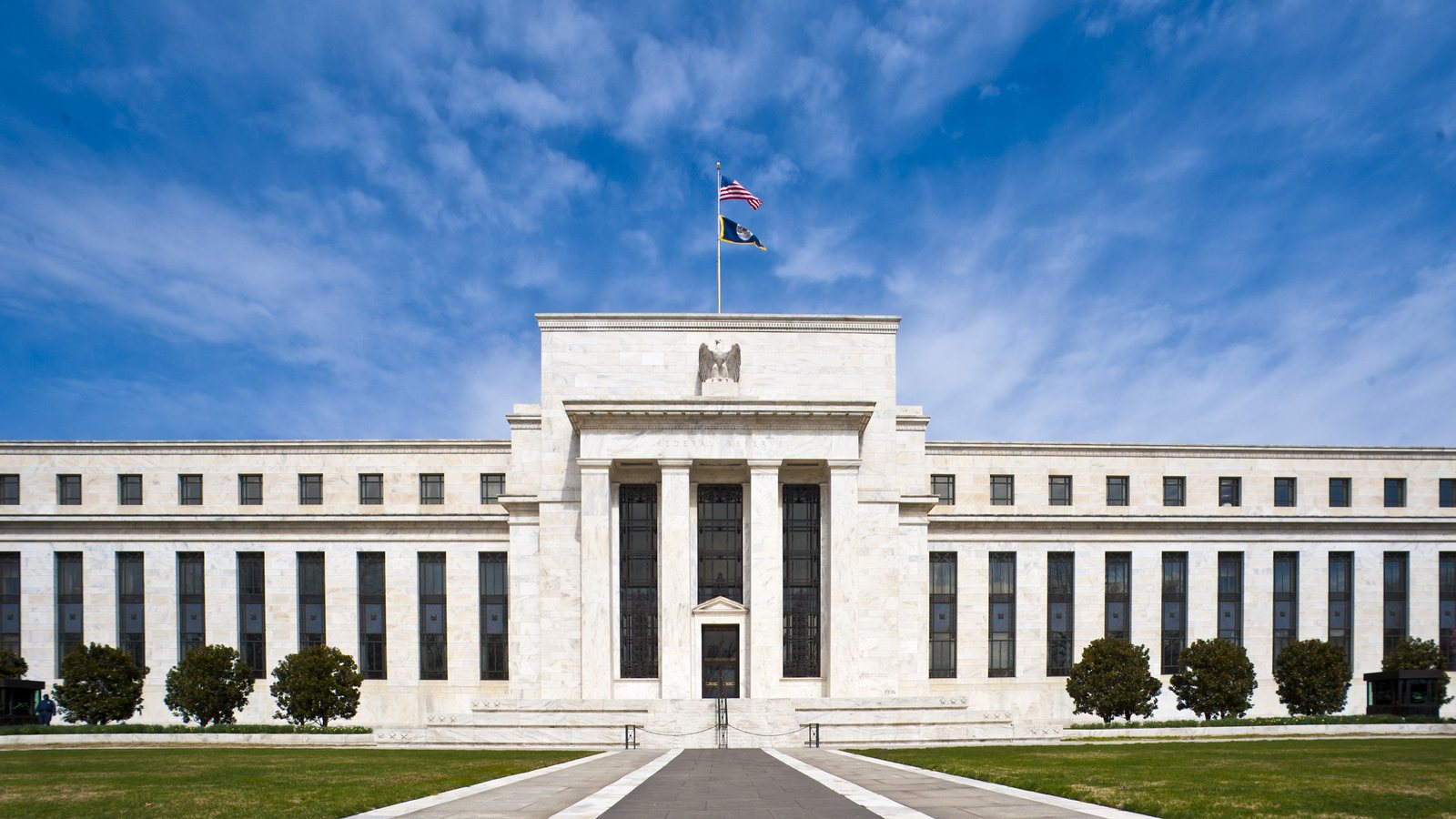

The Federal Reserve held its benchmark rate at 3.75% to 4% on Wednesday, but two officials voted for a Fed rate hike instead. Traders now see about an 85% chance of a quarter-point increase at the next meeting, on December 9.
For most households, one more quarter point is a small cost on a credit card and nothing at all on a fixed-rate mortgage. The bigger bill is already here: mortgage rates are more than a point higher than a year ago, even though the Fed’s rate is exactly where it was then.
Two dissents, and both wanted a hike
The Federal Open Market Committee voted 10-2 to hold, according to its statement. Fed Governor Lisa Cook and Cleveland Fed President Beth Hammack “preferred to raise the target range” by a quarter point.
The vote extends a hawkish run. In July, the committee held at 3.5% to 3.75% in a 9-3 vote, and Hammack, Minneapolis Fed President Neel Kashkari and Dallas Fed President Lorie Logan dissented in favor of a hike. In September, all 12 voters approved a quarter-point increase to the current range.
The September projections already pointed to one more move. Officials’ median forecast put the fed funds rate at 4.1% by the end of 2026, the Fed’s projection table shows. That’s the midpoint of a 4% to 4.25% range, one quarter point above today’s.
Wednesday’s statement also changed its wording. The Fed upgraded growth to a “strong” pace from “solid.” It dropped a line saying its policy action would support “a timelier return” to 2% inflation. In its place, the committee said “the accumulation of more information” will help it decide the right stance.
Futures markets read that as a pause, not a turn. Traders put the odds of a December hike at about 85%, Yahoo Finance reported, citing Bloomberg data. They expect the rate to reach nearly 4.7% by September 2027, about three more quarter-point increases.
Inflation is running at 3.7%, and energy is the driver
The Fed is raising rates because prices are climbing faster than its 2% goal. Consumer prices rose 3.7% in the 12 months to September, the Bureau of Labor Statistics reported on October 14. Energy prices were up 20.4% and gasoline 34.2%.
Excluding food and energy, prices rose 2.6%, up from 2.4% in August. Fuel costs have pushed the headline number up since the war with Iran began, as we reported on who profits from $4.29 gas. The gap shows how much of today’s inflation comes from fuel rather than from the wider economy.
Fed Chair Kevin Warsh said officials think their earlier moves are beginning to bite. The committee’s “overwhelming judgment” is that its “monetary medicine” is “starting to work some, but there’s no firm conclusions,” he told reporters, according to Yahoo Finance’s live coverage.
He also rejected the idea that next Tuesday’s midterm elections shaped the decision. “Politics played no role in the decision,” Warsh said. “I just spent two days with my colleagues upstairs. I didn’t hear an utterance about politics.” He declined to respond to President Trump’s criticism that rates should be lower.
A quarter point adds about $15 a year to a $6,000 card balance
Credit cards are where a Fed move shows up fastest. Many card rates are variable and tied to the prime rate, which banks set partly from the fed funds target, the Fed explains. The prime rate stood at 7% in the week to October 27, Fed data show, three points above the top of the Fed’s range.
Card accounts charged interest paid an average of 22.36% in August, according to the Fed’s consumer credit report. A quarter-point increase would lift that to about 22.61%.
On a $6,000 balance carried for a full year, that’s about $15 more in interest, by our calculation, or $1.25 a month. The interest itself is the real burden: about $1,342 a year at today’s average rate.
Home equity lines of credit work the same way. HELOC rates are generally variable, and lenders commonly use the prime rate as the index, Experian notes. A quarter point on a $50,000 balance adds about $125 a year, or roughly $10 a month.
If the Fed follows the path traders expect, three more increases would add about $45 a year on that card balance and $375 on the HELOC. Those are rough figures that assume the balance stays flat and the rate moves fully with prime.
Your mortgage rate follows the 10-year Treasury
Fixed mortgage rates don’t move with the Fed’s rate. They track long-term bond yields, and the past year shows the gap clearly.
On October 29, 2025, the Fed cut its rate to 3.75% to 4%, the same range it holds today. The 10-year Treasury yield was 4.08% that day. On Wednesday it closed at 5.05%, Treasury Department data show.
Mortgage rates moved with the bond market. The 30-year fixed rate averaged 7.32% in the week to October 22, Freddie Mac’s survey shows, up from 6.19% a year earlier.
On a $400,000, 30-year loan, that difference adds about $300 to the monthly principal and interest payment, by our calculation: roughly $2,748 now against $2,447 at last year’s rate. A December Fed hike could nudge long-term yields either way, depending on whether investors read it as tough on inflation or as a drag on growth.
“Those hoping to make a home purchase in the months ahead should plan for further mortgage rate volatility,” Realtor.com chief economist Danielle Hale said in a statement quoted by Yahoo Finance. The White House’s latest housing order doesn’t touch that rate either.
Savers see the other side of the gap. The national average savings account paid 0.38%, the FDIC’s latest monthly figures show, while a three-month Treasury bill yielded 4.18% on Wednesday. On $10,000, that’s about $38 a year against roughly $418. A December hike would widen the difference for anyone still in a low-rate account.
Two jobs reports and one inflation report before December 9
Warsh called the weeks ahead “an information-rich interval,” and the calendar backs him up. The Labor Department releases the October jobs report on November 6 and October consumer prices on November 10, according to the BLS schedule. The November jobs report follows on December 4.
November’s inflation figures arrive on December 10, the day after the Fed decides. So the committee will vote without them.
The December 8-9 meeting also brings new projections, including a fresh set of officials’ rate forecasts, the Fed’s calendar shows. Those will show whether the median official still sees rates topping out near 4.1%, or higher.
The format changes next year. Warsh said one of the Fed’s eight meetings in 2027 will focus only on long-run strategy, with no rate vote and no statement. He expects two such meetings in 2028. The next rate decision is due on December 9.