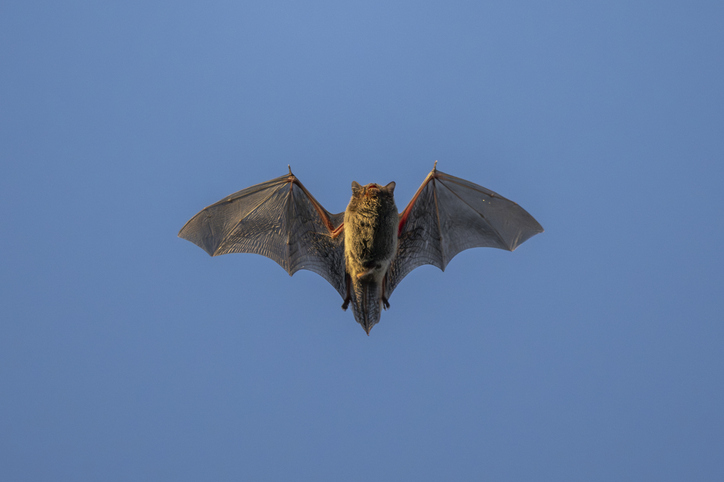
A newly identified bat virus is drawing attention from global health researchers after early findings suggested it may have the ability to infect human cells. The virus, known as Alphacoronavirus KY43, was discovered in bat populations across East Africa and is now being closely studied for its potential pandemic risk.
The research, published in Nature, does not suggest an imminent outbreak. But it does highlight a growing reality in modern epidemiology: scientists are increasingly identifying potential threats before they spill over into humans.
What is alphacoronavirus KY43?
KY43 belongs to a broader group of coronaviruses known as alphacoronaviruses, a category distinct from betacoronaviruses like COVID-19. While alphacoronaviruses have historically been less associated with large-scale human outbreaks, this discovery challenges some of those assumptions.
The virus was found in heart-nosed bats living in parts of:
- Kenya
- Eastern Sudan
- Northern Tanzania
Bats are considered natural reservoirs for many viruses due to their unique immune systems and ecological diversity. Most of these viruses never infect humans, but a small fraction can cross species barriers under the right conditions.
How did scientists discover KY43?
The research team took a forward-looking approach rather than reacting to an outbreak. Instead of studying viruses already infecting humans, they examined a database of known viral genetic sequences.
Lab-based screening of viral “spike” proteins
Scientists synthesized spike proteins from multiple alphacoronaviruses and tested how they interact with human cells. These spike proteins act like molecular keys, determining whether a virus can unlock and enter a host cell.
Their screening process revealed that KY43 could bind to a receptor found in human lung cells, a crucial first step for infection.
A shift in scientific assumptions
Previously, researchers believed alphacoronaviruses used a limited set of receptors to infect hosts. This study suggests otherwise.
Instead, the findings indicate:
- Alphacoronaviruses may use a wider variety of receptors
- Their host range could be broader than previously thought
- The potential for cross-species transmission may be underestimated
That shift expands the universe of viruses scientists must monitor.
Can KY43 actually infect humans?
Here’s the critical nuance: KY43 can enter human cells in laboratory conditions. That does not mean it can cause disease in humans in the real world.
For a virus to trigger an outbreak, several hurdles must be cleared:
- Successful entry into human cells
- Ability to replicate inside the body
- Capacity to evade the immune system
- Efficient transmission between people
At present, researchers emphasize:
- There is no evidence of human infection
- There is no proof of immune evasion
- The disease severity, if any, is unknown
In other words, KY43 has some of the tools, but not necessarily the full playbook.
Why are scientists concerned about bat viruses?
Bats have long been at the center of zoonotic disease research, and for good reason.
A vast viral reservoir
Scientists estimate there are hundreds of thousands to over a million undiscovered viruses in wildlife that could potentially infect humans. Bats host a significant share of these.
Lessons from COVID-19
The global impact of COVID-19 reshaped how scientists approach emerging pathogens. While the exact origins of SARS-CoV-2 remain debated, its links to bat coronaviruses reinforced the importance of early detection.
The KY43 discovery fits into a broader effort to identify “high-risk” viruses before they spill over, rather than scrambling after an outbreak begins.
What makes this discovery different?
Unlike past outbreaks, this is not a case of reacting to a spreading virus. It is an example of proactive surveillance.
Finding threats before they emerge
Researchers describe KY43 as a virus with a potential “toolkit” for human infection. That phrasing matters. It suggests:
- The virus has some biological capabilities needed for infection
- But it has not yet demonstrated real-world transmission
This early-stage identification allows scientists to:
- Monitor regions where the virus exists
- Study how it evolves over time
- Begin preliminary work on vaccines or antivirals
A shift toward pandemic preparedness
Traditionally, global health systems respond after outbreaks begin. Studies like this aim to flip that model.
Instead of reacting, researchers are:
- Mapping viral diversity in wildlife
- Identifying high-risk genetic traits
- Building early warning systems
What happens next?
The discovery of KY43 is just the beginning of a longer scientific process.
Key research priorities
Scientists are likely to focus on:
- Determining whether KY43 can replicate in human cells beyond lab conditions
- Studying its ability to evade immune responses
- Monitoring bat populations and nearby human communities
Surveillance in East Africa
The regions where KY43 was found may see increased research activity, including:
- Field sampling of wildlife
- Serological studies in local populations
- Environmental monitoring
These efforts help detect any early signs of spillover.
Should the public be worried?
Short answer: No immediate cause for alarm, but plenty of reason for attention.
This discovery is better understood as an early warning signal, not a crisis.
Experts stress:
- The risk is theoretical at this stage
- No human cases have been reported
- Most animal viruses never become human threats
But ignoring such signals in the past has proven costly. Early awareness allows for measured, science-driven preparation rather than panic.
Why this matters in 2026
The KY43 discovery reflects a broader shift in how the world thinks about pandemics.
From reaction to anticipation
After COVID-19, global health priorities have evolved:
- Surveillance is expanding beyond known pathogens
- Funding is increasing for early-stage research
- International collaboration is becoming more critical
The growing catalog of potential threats
KY43 is not unique. It is one of many viruses being identified as part of a growing global database of potential zoonotic threats.
That raises a sobering reality: the next pandemic threat may already exist quietly in nature.
TL;DR
- Scientists have identified a bat virus, KY43, that can enter human cells in lab tests
- It was discovered in East African bat populations
- There is no evidence it infects humans or causes disease
- The study highlights the need for proactive pandemic surveillance
- Experts say this is an early warning, not an immediate threat