The US war with Iran has cost at least $47.1 billion as of mid-October. That’s according to a US Central Command estimate given to lawmakers and first reported by CBS News. Reuters reported the same total from Pentagon data it obtained. The Pentagon hasn’t released this Iran war cost estimate itself.
Most of the money isn’t the day-to-day cost of operations. About $29 billion of it goes to replacing munitions already fired. By our calculation, that’s more than 60% of the total. For taxpayers, the bill keeps arriving long after the shooting slows, and Congress hasn’t yet approved the money to pay it.
Where the $47.1 billion went
CENTCOM’s estimate splits the total three ways, CBS reported:
- About $29 billion to replace expended munitions
- $6.1 billion to replace lost equipment
- About $11.9 billion in incremental costs, such as support for troops
Reuters’ version, carried by The Business Standard, said the equipment figure covers “platform losses.” Those include aircraft and many drones.
Operating costs include flight operations and cyber support. The Pentagon did not immediately respond to Reuters, and CBS said it had asked the Pentagon for comment.
The equipment line has a record behind it. Through June 30, Iranian fire destroyed four F-15s and up to 30 MQ-9 Reaper drones, the Pentagon’s inspector general said in September. It also listed an F-35 and seven KC-135 tankers as damaged, CBS News reported.
Is it really up 25% since July?
Reuters said the new figure is more than 25% above the $37.5 billion that Defense Secretary Pete Hegseth gave in July. The arithmetic is right, but the comparison is looser than it looks.
Hegseth gave senators that $37.5 billion total on July 21, PBS NewsHour reported. According to PBS, it already included expected costs through Sept. 30, the end of the fiscal year. So the jump partly reflects costs the Pentagon didn’t foresee in July, not only new spending.
CENTCOM’s own numbers give a cleaner trend. It put the war at $43.6 billion as of Sept. 3, Spectrum News reported, citing the AP.
The tally then grew by about $3.5 billion in roughly six weeks. That’s around $2.5 billion a month, by our math. It sits inside the Congressional Budget Office’s range of $2 billion to $3 billion a month while the war continues.
The estimate leaves out the damaged bases
The $47.1 billion leaves out damage to US bases in the Middle East, CBS reported. Iranian drones and missiles hit many of them. Reuters said the figures don’t clearly cover repairs either.
That gap could be large. The inspector general found “hundreds” of damaged or destroyed buildings and structures at US bases, Breaking Defense reported. They span Kuwait, Bahrain, Qatar, the UAE, Saudi Arabia, Iraq, Oman and Jordan.
The report gave no repair estimate. It did put repairs to US diplomatic posts in four countries at about $184 million.
The CBO’s earlier estimate, $38 billion through Aug. 1, also left out some human costs, the AP reported via WCAX. It excluded troops killed or wounded and long-term veterans’ care.
Seven service members died and 417 suffered wounds through June, Breaking Defense reported. So every official number so far is a floor, not a final bill.
Congress hasn’t paid for it yet
The White House asked Congress in June for $87.6 billion in supplemental funding, mostly for the war. Congress hasn’t approved it, the AP reported. Hegseth told senators in July the money was an “urgent, necessary injection of resources,” PBS reported.
CBO found that the war-related part of that request came to $42.3 billion. By our comparison, the war’s estimated cost has already passed that figure, before the request has cleared Congress. CBO also warned its numbers were uncertain. The Pentagon declined to answer its request for information, which CBO called a break from norms.
The war is also showing up in prices. CBO expects it to lift inflation about 0.5 percentage points above its earlier forecast into early 2027, the AP reported. Disrupted oil, gas and shipping routes are the main reason. Our look at who is profiting from $4.29 gas covers that side of the bill.
Restocking the missiles will take years
Money is the smaller problem with the munitions. Through June, the military spent $22.3 billion of a $33.4 billion total on munitions, the inspector general reported. That spending “has resulted in strategic inventory shortfalls,” the report said.
Officials pointed to bottlenecks in solid rocket motors, high-grade explosives and skilled labor, Breaking Defense reported.
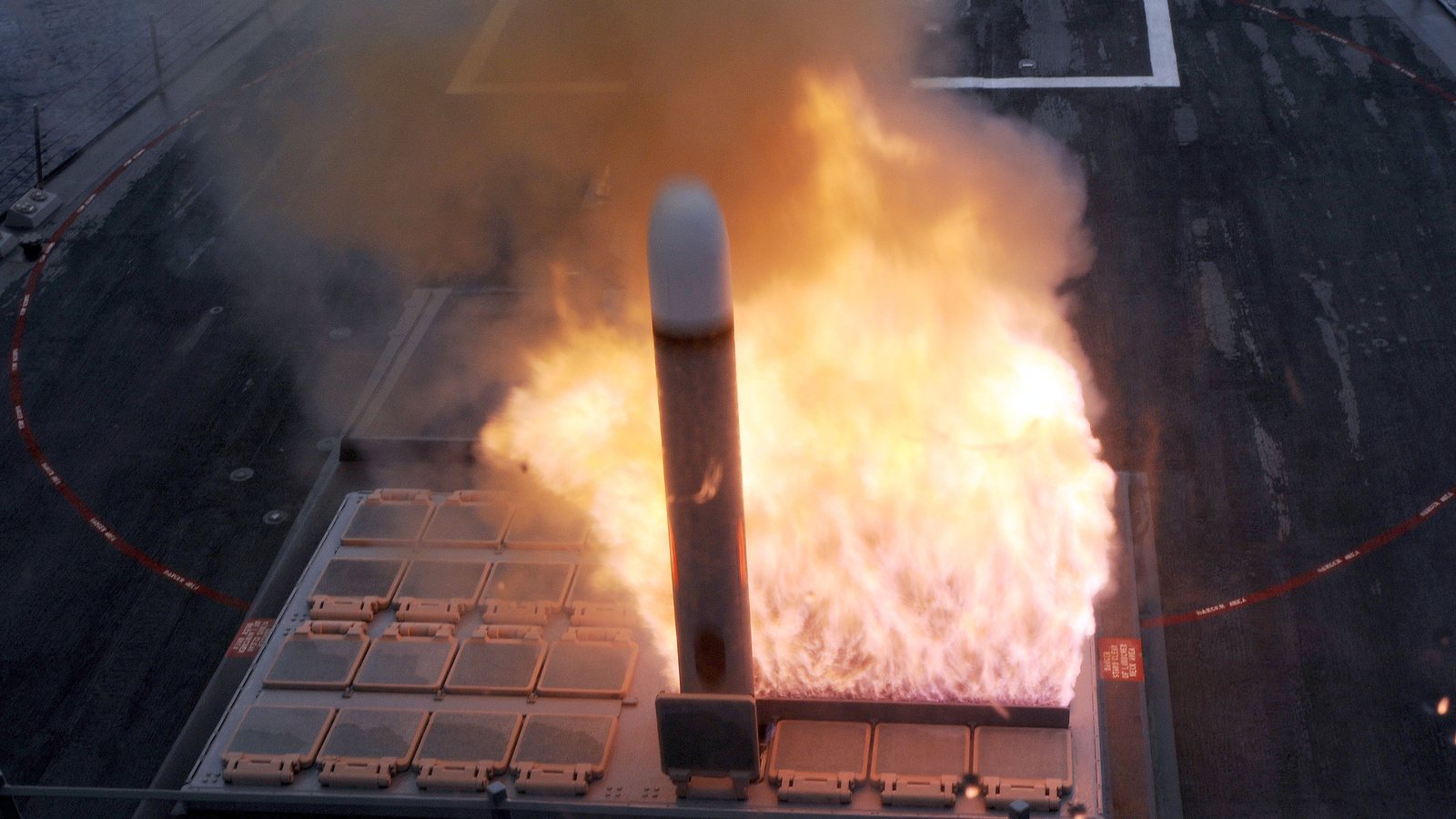
In May, the Center for Strategic and International Studies estimated it would take at least three years to rebuild three key weapons, NBC reported. The US had fired more than 1,000 Tomahawk cruise missiles. Industry makes fewer than 200 a year.
CSIS put Tomahawk recovery at late 2030, THAAD interceptors at the end of 2029 and Patriot interceptors at mid-2029. “The problem today isn’t money; it’s time,” CSIS wrote.
The administration disputes the shortage. In early September, President Donald Trump said “we have virtually unlimited amounts of Mid to High Grade Ammunition,” CBS reported. In May, Pentagon spokesman Sean Parnell said the military “has everything it needs,” according to NBC.
The bill depends on what happens after Nov. 3
The war entered its ninth month this week, and CBO’s monthly range assumes it keeps going. Trump has suggested he could restart major strikes after the midterms unless Iran agrees to a deal. “We may do another little Epic Fury, or they’ll agree,” he said at a Florida rally last week, CBS reported.
US officials have told Gulf allies to prepare for a short, intense campaign after Election Day, as we reported this week. A new round would draw on the same Tomahawk, Patriot and THAAD stocks. CSIS says those won’t recover until 2029 or later.
Meanwhile, the $87.6 billion request is still waiting in Congress. Democrats there have pressed Hegseth for a more detailed accounting of what the war has cost, CBS reported.