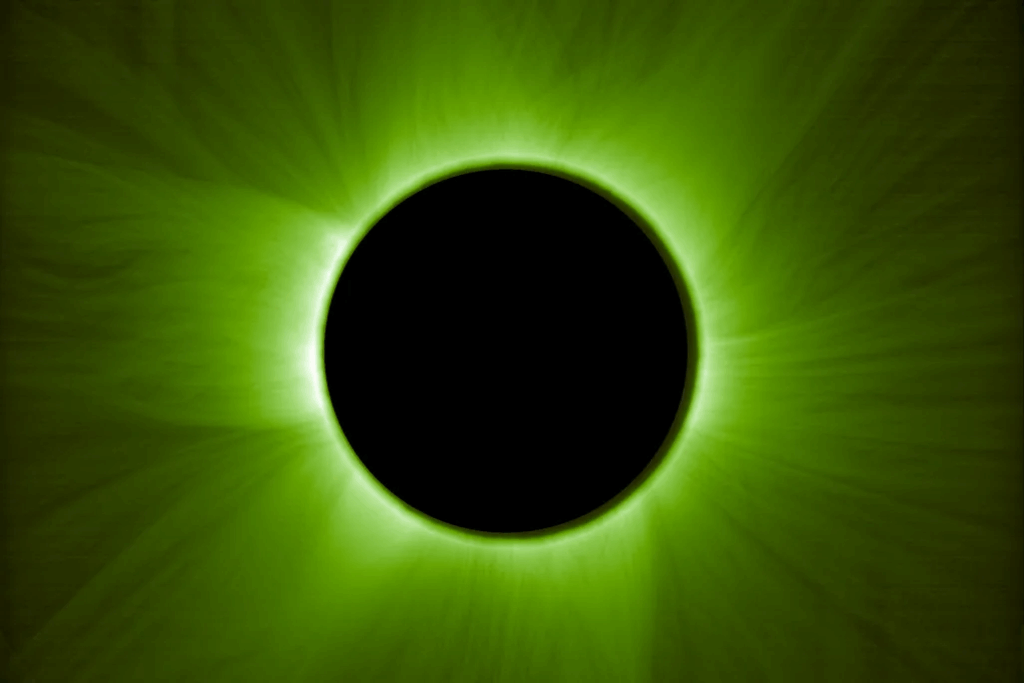
For the first time ever, a pair of European satellites successfully teamed up to create an “artificial total solar eclipse.” This groundbreaking achievement by the European Space Agency (ESA) offers a new way to study the sun’s elusive outer atmosphere, the solar corona, which is usually only visible for a few fleeting minutes during a natural eclipse.
How Did This “Artificial Eclipse” Happen?
Imagine two spacecraft, perfectly in sync, flying hundreds of feet apart. That’s essentially what ESA’s Proba-3 mission accomplished. On Monday, the Coronagraph and the Occulter satellites flew just 492 feet (150 meters) from each other for several hours, without any control from the ground. This precise formation allowed the Occulter to block out the sun’s bright disc, much like the moon does during a natural solar eclipse, creating a perfect shadow that revealed the sun’s outer corona to the Coronagraph’s optical instruments.
Why Study the Sun’s Corona?
The solar corona is more than just a beautiful halo around the sun; it’s a superheated, magnetized plasma that extends millions of miles into space. Understanding it is crucial for several reasons:
- Solar Wind: The corona is the source of the solar wind, a continuous stream of charged particles that flows throughout our solar system. This wind can affect everything from satellite operations to power grids on Earth.
- Coronal Mass Ejections (CMEs): These massive expulsions of plasma and magnetic field from the sun’s corona can trigger geomagnetic storms on Earth, potentially disrupting communication systems and power infrastructures.
- Space Weather: By studying the corona, scientists can better predict space weather events, helping us prepare for and mitigate their impacts.
Gaining a clearer picture of the corona’s behavior helps us protect our technology and even astronauts in space.
What Makes This Achievement So Significant?
The ability to create an artificial eclipse in space offers some significant advantages over relying on natural events:
- Extended Observation Time: As Andrei Zhukov, principal investigator for ASPIICS at the Royal Observatory of Belgium, pointed out, natural total solar eclipses are rare, happening only once or twice a year and lasting just a few minutes. Proba-3, however, can maintain its artificial eclipse for up to six hours during its 19.6-hour orbit. This provides scientists with an unprecedented amount of time to collect data.
- Repeatability: Proba-3 can create this artificial eclipse during every orbit, offering repeated opportunities for observation under varying solar conditions. This consistent access to the corona is a game-changer for solar physicists.
- Technological Validation: This mission is also a major win for the underlying technology. “It is exciting to see these stunning images validate our technologies in what is now the world’s first precision formation flying mission,” said Dietmar Pilz, ESA director of Technology, Engineering and Quality. This success paves the way for future missions requiring extremely precise satellite formation
The Technology Behind the Eclipse
The success of Proba-3 hinges on precision formation flying, a complex feat of engineering. The two satellites, essentially acting as one giant scientific instrument, must maintain their exact distance and alignment without any human intervention from the ground for extended periods. The development of these advanced technologies was supported by ESA’s General Support Technology Program.
A Collaborative Global Effort
The Proba-3 mission isn’t just an ESA triumph; it’s a testament to international collaboration. While led by ESA and managed by Spain’s Sener, the project involved more than 29 companies from 14 different countries. This widespread involvement highlights the global scientific community’s shared commitment to advancing our understanding of the cosmos.
What’s Next for Solar Observation?
The success of Proba-3 opens new doors for solar research. With the ability to observe the sun’s corona consistently and for extended periods, scientists can gather data that was previously impossible to obtain. This could lead to breakthroughs in understanding solar flares, predicting space weather with greater accuracy, and ultimately, safeguarding our increasingly technology-dependent world from the sun’s powerful influence. This mission also proves the viability of precision formation flying for future space science endeavors, beyond just solar observation.
TL;DR
European Space Agency’s Proba-3 mission successfully used two satellites to create the first “artificial total solar eclipse,” allowing unprecedented, extended observation of the sun’s outer atmosphere (corona). This breakthrough helps scientists better understand solar wind and coronal mass ejections, crucial for predicting space weather