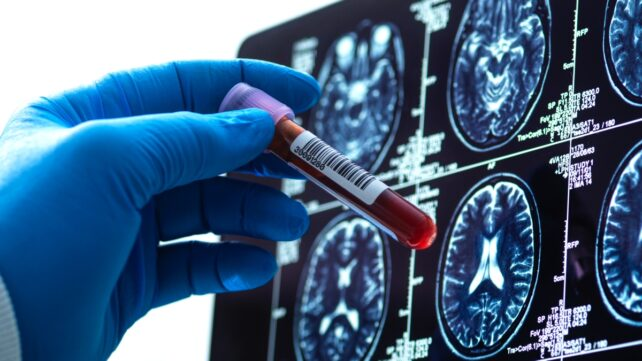
The race to understand the rarest blood group on Earth has taken a surprising turn. Scientists in Thailand have identified an exceptionally uncommon hybrid blood type, known as the B(A) phenotype, found in only three people worldwide. The discovery adds a new chapter to the evolving science of human blood variation and raises questions about transfusion safety, genetic diversity, and global donor databases.
The rarest blood group is more than a scientific novelty; it highlights why modern medicine depends on precise genetic mapping and why even the most advanced blood banks can struggle when a patient falls outside known categories.
This article breaks down what researchers found, how blood groups are determined, and why rare blood types matter more than most people realise.
What Makes This the World’s Rarest Blood Group?
Researchers in Thailand analysed more than 544,000 blood samples before identifying three individuals—one patient and two donors—with a mysterious antigen profile that didn’t match any typical ABO pattern. Further testing confirmed the presence of the B(A) hybrid blood group, a genetic anomaly occurring in roughly 0.00055 percent of the population based on available data.
Scientists identified four distinct variations of the ABO gene in these individuals. These variants subtly alter the enzyme that constructs antigens on red blood cells. As a result, people with this blood type display a normal B-antigen structure but also produce faint traces of A-antigen.
That biochemical contradiction makes the blood group incompatible with A, B, AB, or O transfusions. In transfusion medicine, even “trace” antigens can trigger an immune attack.
A researcher involved in the analysis explained in the study’s summary, “You’re looking at a blood type that behaves like B, but carries a molecular signature of A. That dual identity complicates compatibility in ways we are only beginning to understand.”
How Are Blood Groups Determined?
Most people know their blood type as A, B, O, or AB, plus the familiar Rh-positive or Rh-negative. But these labels are only the surface of a far more intricate biological system.
The role of antigens
Blood types are classified according to antigens—complex structures made of proteins, sugars, or lipids—that sit on the surface of red blood cells.
Here is the basic antigen landscape:
- A-antigen carries the sugar N-acetylgalactosamine
- B-antigen carries D-galactose
- AB has both A- and B-antigens
- O lacks both
- Rh(D) determines whether someone is positive or negative
These antigen patterns are encoded by the ABO gene on chromosome 9, which dictates which glycosyltransferase enzyme is produced. That enzyme shapes the antigen structure.
For transfusions, a mismatch is dangerous. The body’s immune system identifies foreign antigens as invaders and may launch a response that leads to clotting, fever, or organ failure.
This is why O-negative is the universal donor: it lacks the A, B, and Rh antigens that trigger reactions.
What Exactly Is the B(A) Hybrid Blood Type?
The newly documented B(A) blood group emerges from a rare mutation in the ABO gene. In technical terms, the mutation modifies how the enzyme builds the outer structure of red blood cells.
Key characteristics of B(A) blood
- Presents as B-type in routine laboratory testing
- Contains small, detectable traces of A-antigen
- Cannot safely receive blood from A, B, AB, or O donors
- Requires personalised transfusion matching
In practical terms, this means any patient with this blood group would need high-precision crossmatching before a transfusion, potentially requiring blood drawn from the same individual in advance of a medical procedure (autologous donation).
A hematologist quoted in similar research on hybrid phenotypes said, “Hybrid blood groups underscore how much of human genetics remains unmapped. The more we sequence, the more exceptions we find.”
What Other Extremely Rare Blood Groups Exist?
The B(A) variant joins a tiny but growing registry of rare and ultra-rare blood types worldwide.
Rh-null (The “Golden Blood”)
Often described as the rarest before this discovery, Rh-null blood lacks all 61 Rh antigens.
Only about 50 people worldwide are known to have it.
Because it can be accepted by anyone with Rh blood group deficiencies, it is medically invaluable—yet extremely hard to source.
CRIB blood group (India, 2025)
In 2025, doctors in Karnataka identified a 38-year-old woman with a CRIB phenotype, a newly observed antigen absence that required international consultation to classify.
Such discoveries signal that rare blood types may occur more often than recognized, especially in under-tested populations.
Gwada-negative (Europe, 2025)
A European patient diagnosed with Gwada-negative blood presented a challenge so severe that no compatible donor could be found anywhere globally.
Cases like these reveal the logistical and ethical complexities surrounding rare blood banking.
O-negative
While not ultra-rare globally, O-negative represents just 7 percent of the population and remains in constant shortage because it is the universal donor type.
Why Does the Discovery of the World’s Rarest Blood Group Matter?
Rare blood groups test the limits of modern transfusion medicine.
Implications for patient safety
Hospitals rely on blood banks that classify and store blood by known antigen patterns. A new blood type complicates emergency care and may require the creation of specialised donor registries.
Genetic diversity insights
Hybrid phenotypes like B(A) are windows into human evolutionary biology. They show how small genetic mutations can reshape entire blood systems.
Global donor challenges
Finding compatible donors for ultra-rare blood types may require cross-border coordination.
The International Rare Donor Panel (IRDP), for example, handles such cases—but only when a blood type is already known and catalogued.
For new types like B(A), researchers must first establish diagnostic criteria, storage standards, and safety protocols.
Future of precision transfusion
The discovery pushes medicine closer to a future where genome-based transfusion matching becomes mainstream.
Instead of typing blood solely by antigens, hospitals may soon rely on genetic decoding to predict compatibility.
TL;DR Summary
Scientists in Thailand have discovered what may be the world’s rarest blood group: the B(A) hybrid type, found in only three people. This ultra-rare variant shows a B-antigen profile with trace A-antigen expression, caused by mutations in the ABO gene. The discovery highlights gaps in global blood registries and underscores the need for precision medicine. It joins other rare groups such as Rh-null, CRIB, and Gwada-negative, each posing serious challenges for transfusion safety and donor availability.