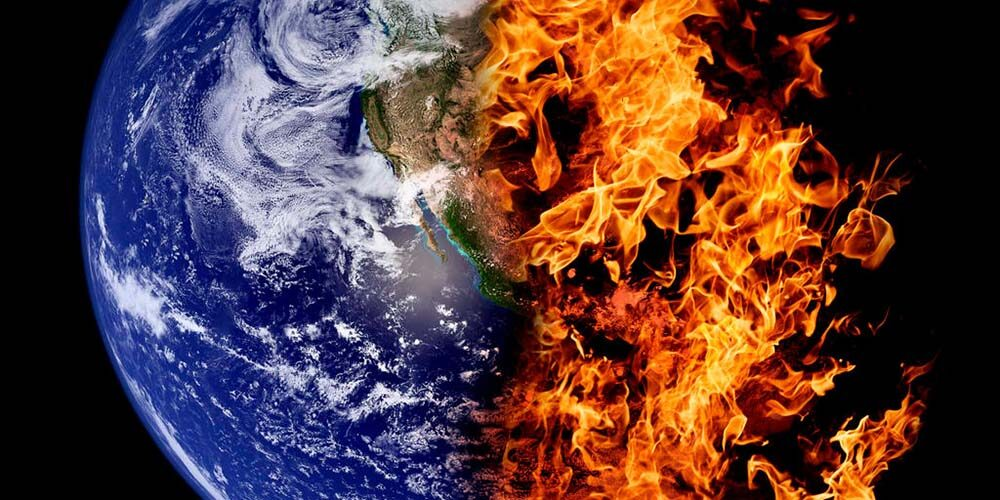
NASA and Japanese researchers say solar evolution will render Earth uninhabitable in the distant future
Earth’s end may be far more certain than previously thought — and now, scientists believe they know the exact year it will happen.
According to a groundbreaking new study conducted by NASA scientists in collaboration with researchers from Japan’s University of Toho, life on Earth will become impossible by the year 1,000,002,021.
While this doomsday timeline lies a billion years in the future, researchers warn that the process leading to Earth’s demise is already underway.
The Sun: both creator and destroyer
Using powerful supercomputers to simulate Earth’s long-term habitability, the study concludes that the Sun, the very star that made life possible on Earth, will eventually bring about its end. As the Sun continues to age, it will become significantly hotter, emitting more energy and radiation. This increased solar output will progressively scorch Earth’s surface, leading to atmospheric breakdown and ultimately making the planet inhospitable to even the most resilient forms of life.
“The extreme heat will make the surface conditions so extreme that even the most resilient organisms won’t be able to exist on Earth,” the researchers noted.
Early signs already visible
Though the billion-year countdown may seem distant, scientists say signs of a transforming Sun are already being detected. Over the past few months, the Sun has shown heightened activity, with more frequent Coronal Mass Ejections (CMEs), powerful solar flares, and increased sunspot activity — indicators that it is progressing along its stellar lifecycle.
These solar phenomena, combined with sophisticated climate and solar radiation modeling, suggest Earth’s atmosphere is already beginning to feel the pressure. The models predict a future of increasing temperatures, falling oxygen levels, and worsening air quality — all contributing factors that could eventually strip Earth of its habitability.
Climate change is accelerating the countdown
Human-induced climate change is expected to speed up this natural process. Rising global temperatures, melting polar ice, and rising sea levels are already destabilizing Earth’s delicate ecosystems. Scientists warn that while the sun may be Earth’s ultimate undoing, humanity’s environmental footprint is hastening the planet’s decline.
“A gradual and irreversible process of change will be set in motion, ultimately taking Earth to its deathbed,” the study explains.
A distant deadline, but urgent questions remain
While the year 1,000,002,021 is astronomically far off, the implications of the research are immediate. Efforts to mitigate climate change are more critical than ever — yet some scientists and visionaries believe Earth’s fate is sealed. This has spurred a parallel movement focused on colonizing other planets, like Mars, to ensure the survival of humanity beyond Earth.
“Mars is life insurance for life collectively,” SpaceX CEO Elon Musk said in a recent interview, underscoring the urgency some feel to make humanity a multi-planetary species.
For now, Earth remains our only home — but as science peers deeper into the cosmos and further into the future, the question becomes not just how we live here, but how long we can.