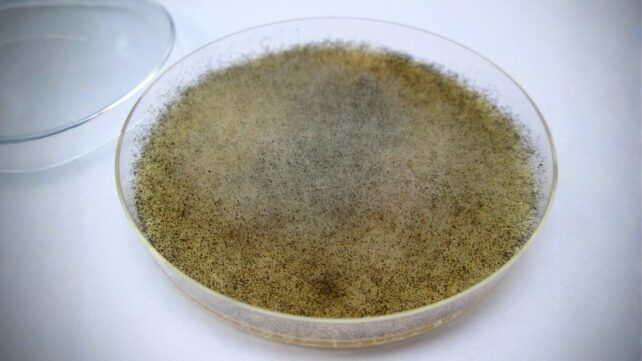
A fungus living in the human gut may have an unexpected role: helping the intestine withstand damage caused by radiation.
Chinese researchers have identified Mucor racemosus, a filamentous fungus that can live in the gut, as a potential source of radioprotection. In experiments involving mice, the fungus reduced radiation-related intestinal injury and appeared to work through both direct effects on gut cells and changes to the surrounding microbiome. The study was published in the Proceedings of the National Academy of Sciences.
The finding is still at the experimental stage. The researchers have not shown that taking M. racemosus can protect people from radiation, and there is currently no basis for recommending that people consume the fungus as a treatment.
How the fungus protected the gut
The researchers first examined mice given M. racemosus before exposure to radiation.
Compared with control animals, the treated mice experienced less weight loss, intestinal inflammation and oxidative stress. The researchers also found evidence that the fungus helped preserve the intestinal barrier, which is critical for keeping harmful substances from leaking through the gut wall.
The protective effect was also observed when the fungus was introduced into germ-free mice, suggesting that the organism itself can influence radiation responses rather than relying entirely on an already established microbial community.
Researchers found that adapting the fungus to conditions resembling the low-oxygen environment of the intestine strengthened its protective effect.
Three amino acids may help repair radiation damage
Scientists then investigated how M. racemosus produces this effect.
They identified three compounds produced by the fungus, L-glutamate, L-aspartate, and DL-lysine. According to the study, these metabolites are transferred to the host and help support DNA-damage repair in radiation-exposed intestinal epithelial cells.
Radiation can damage DNA and trigger oxidative stress and inflammation. The fungus therefore appears to provide the gut with metabolites that help cells respond to some of that damage.
But this does not mean the fungus shields the entire body from radiation. The experiments were focused particularly on radiation-induced intestinal injury.
The fungus also recruits a bacterial ally
The researchers identified a second pathway involving the gut bacterium Limosilactobacillus reuteri.
M. racemosus produces a compound called methylthioadenosine, or MTA. Rather than directly repairing radiation damage, MTA changes the intestinal bacterial community by promoting L. reuteri and altering its sulfur metabolism.
That process increases production of methionine, a molecule that the researchers linked to additional protection against radiation-induced injury.
The result is a striking example of different members of the gut microbiome interacting with one another to influence how the host responds to environmental stress.
Researchers tested fungus-fermented cheese
The team also explored whether the effect could be delivered through food.
Mice exposed to radiation were given cheese fermented with M. racemosus. The treatment was associated with reduced intestinal inflammation, stronger gut-barrier integrity and lower systemic markers of inflammation compared with control animals.
This result is particularly interesting because M. racemosus has already been used in the production of certain fermented foods. Previous studies have reported its use in products including sufu and fermented soybean products.
However, a food containing the fungus should not be confused with a clinically tested radioprotective treatment.
Does radiation exposure mean eating the fungus could help?
Not based on the evidence available today.
The new research involved laboratory experiments and mice, not human clinical trials. The scientists demonstrated a biological mechanism and a protective effect in animals, but that is an early step in developing any potential medical application.
Human safety, effective dosage, interactions with existing microbiomes and the ability to reproduce the same protective effect in people would all need to be established before such an approach could be considered as a therapy.
That distinction is especially important because fungi belonging to the Mucor group include species associated with human disease, even though M. racemosus itself has a history of use in food fermentation. Separate research on specific M. racemosus strains used for fermentation has reported favorable safety characteristics, but those findings cannot automatically be extended to every strain or to medical use.
Why the discovery matters for radiation medicine
Radiation can cause substantial injury to the gastrointestinal tract, particularly when exposure is high or when tissues receive radiation during cancer treatment.
A treatment that could reduce intestinal damage without weakening the intended effects of radiotherapy would therefore be valuable. The current study suggests that the gut microbiome may offer another route for protecting healthy tissue.
It also expands the way scientists think about the microbiome. Bacteria have received much of the attention in gut research, while filamentous fungi have been studied far less extensively. The researchers argue that fungi can act as active metabolic partners rather than simply being temporary organisms passing through the digestive tract.
A promising finding, not a human radiation shield
The study offers a new biological explanation for how a gut-resident fungus can influence the body’s response to radiation.
M. racemosus appears to combine two mechanisms: supplying metabolites that support DNA repair and reshaping bacterial metabolism to generate additional protective compounds. The researchers demonstrated these effects in animal experiments, including a test involving fungus-fermented cheese.
The next challenge is determining whether the same mechanism works safely and effectively in humans.
For now, the discovery is best understood as an intriguing preclinical finding rather than evidence of a naturally occurring radiation shield inside the human body.