

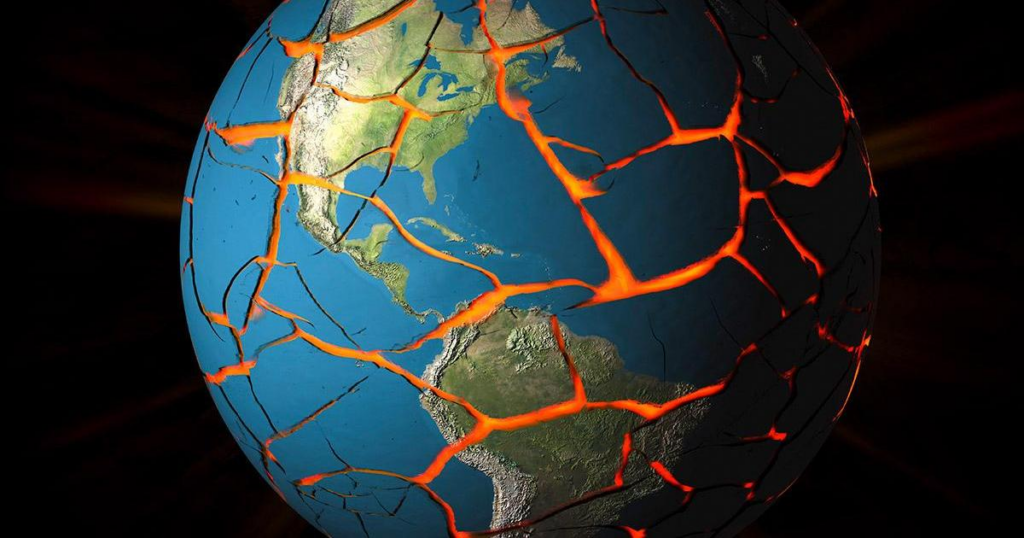
A viral social media claim has sparked widespread curiosity and concern by suggesting that Earth will temporarily lose gravity for seven seconds in August 2026. The claim alleges that NASA is secretly preparing for this event under a classified program called Project Anchor. The story has spread rapidly across platforms, raising fears about planetary safety, hidden space research, and global consequences.
Here is what science, physics, and official records actually say.
What Is NASA Project Anchor? Understanding the Viral Claim
The claim originated from a TikTok account named fiery_by_nature, which posted a video asserting that:
- Earth will lose gravity for seven seconds on August 12, 2026
- NASA is aware of this event
- A secret initiative called Project Anchor exists to prepare for it
- The project allegedly has a budget of $89 billion
The video did not provide documents, peer-reviewed research, or official sources. Despite this, the specificity of the date, project name, and budget helped the claim gain traction and fuel speculation.
Several reposts across TikTok and other platforms repeated the narrative, often framing it as a hidden truth being suppressed from the public.
Does Project Anchor Exist? NASA’s Official Position
There is no public or classified record of a NASA program called Project Anchor.
NASA publishes extensive documentation on its missions, budgets, and research priorities. None of its publicly available budget reports, mission logs, or congressional funding disclosures reference such a project. No other space agency has issued warnings or collaborated on a gravity-related emergency plan either.
NASA has also not released any alerts or statements warning of a future gravity disruption on Earth.
In short, Project Anchor has no verified existence.
Can Earth Lose Gravity Even for a Few Seconds?
From a scientific standpoint, the answer is no.
Gravity is not a switch that can be turned off. Earth’s gravity exists because of its mass. As long as Earth retains its mass, it will exert gravitational pull. For gravity to suddenly disappear, Earth would need to lose a massive portion of its mass instantly, something that is not possible under known physical laws.
No known natural or artificial process can disable gravity temporarily and then restore it moments later.
Physicists are clear on this point:
A short-term “gravity blackout” is not supported by physics.
What Would Happen If Gravity Did Stop? A Thought Experiment
Although gravity loss is impossible in reality, scientists sometimes discuss hypothetical scenarios as thought experiments.
If gravity were to vanish even briefly:
- Humans and objects would instantly experience weightlessness
- The planet would continue rotating
- Air and water would begin drifting away from Earth’s surface
- Loose objects could collide unpredictably
If gravity were suddenly restored, everything would fall back toward the surface simultaneously, potentially causing massive destruction.
However, experts stress that this is purely theoretical and not a prediction or possibility. Thought experiments are used to explore concepts, not to forecast real events.
Why the Gravity Blackout Claim Keeps Spreading Online
The claim gained attention because it combines several elements that perform well on social media:
- A specific future date
- A secretive government agency
- A large budget figure
- An existential planetary threat
Public reactions have ranged from fear and confusion to sarcasm and memes. Some users questioned how gravity could be switched off, while others linked the idea to black holes or cosmic anomalies, again without evidence.
Many scientists and fact-checkers have labeled the claim a conspiracy theory, but its emotional pull keeps it circulating.
Scientific Consensus on the Gravity Blackout Theory
The scientific community is unified on this issue:
- Earth cannot lose gravity temporarily
- No credible research supports such a scenario
- No space agency has issued warnings
- Project Anchor has no proof or documentation
Gravity is one of the most well-understood fundamental forces in physics. No mechanism allows it to shut down briefly and restart.
Final Verdict: Fact vs Fiction
The idea of a gravity blackout in 2026 is fiction, not science.
There is:
- No evidence of Project Anchor
- No NASA confirmation
- No physical mechanism for gravity loss
- No credible warning from scientists
The viral claim is based on speculation, not facts, and should be treated as misinformation rather than a hidden revelation.
FAQs
Q1: What is Project Anchor, and can a gravity blackout happen according to science?
Science says gravity cannot turn off without Earth losing mass. Project Anchor has no verified existence, and a gravity blackout is not supported by physics or NASA.
Q2: Is there any truth to the August 12, 2026, gravity blackout date?
No. The date comes entirely from social media and has not been confirmed by NASA, scientists, or any space agency.
Q3: Has NASA ever warned about Earth losing gravity?
No. NASA has never issued any warning or research indicating a future gravity loss scenario.