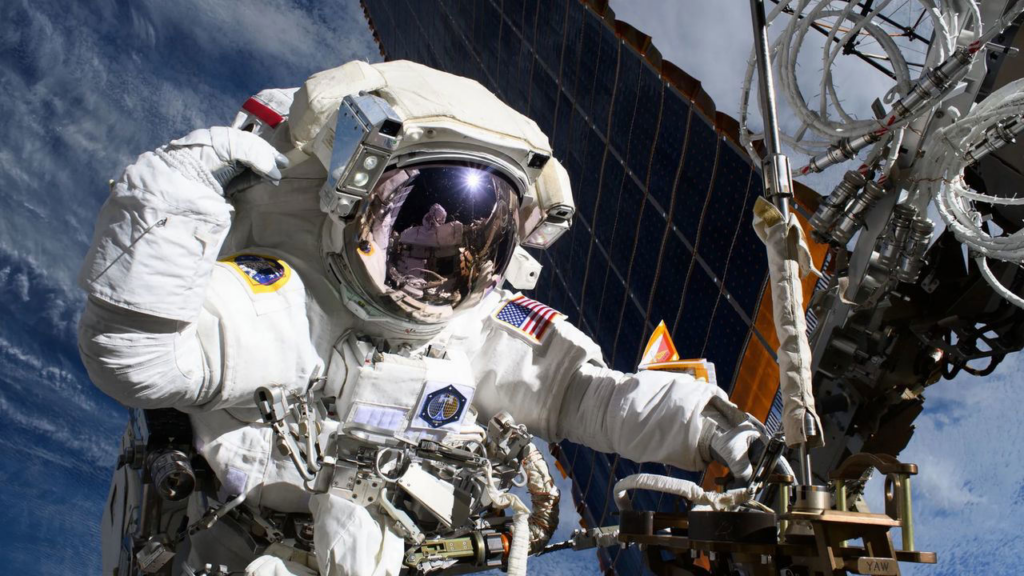
NASA has postponed the first spacewalk of 2026 after a medical issue involving one astronaut aboard the International Space Station (ISS), forcing the agency to halt what was expected to be a milestone operation early in the year. The decision underscores how tightly mission timelines are tied to crew health, even as the ISS enters the final decade of its operational life.
The spacewalk, scheduled for January 8, was intended to prepare critical power upgrades that will help keep the orbiting laboratory running until its planned retirement around 2030. Instead, NASA made a last-minute call to cancel, prioritizing crew safety over schedule.
What happened during the planned January 8 NASA spacewalk?
Two astronauts were set to exit the ISS through the station’s Quest airlock around 8 a.m. Eastern Time for a spacewalk lasting approximately six and a half hours. Their main task was technical but essential: installing a modification kit and routing cables to prepare the station’s power system for a future roll-out solar array.
According to NASA, a medical issue affecting one of the crew members emerged on Wednesday afternoon, less than 24 hours before the planned excursion. The agency has not disclosed the astronaut’s name or the nature of the medical concern, citing privacy and operational protocols.
In a brief blog post, NASA said the situation was stable and that more details, including a new date for the spacewalk, would be shared later.
This cautious approach is standard. Spacewalks, formally known as extravehicular activities (EVAs), are among the riskiest operations astronauts perform. Even minor health concerns can be magnified in microgravity, where balance, circulation, and physical endurance behave differently than on Earth.
Who was scheduled to perform the spacewalk?
The postponed EVA was to be conducted by ISS commander Mike Fincke and flight engineer Zena Cardman, both experienced astronauts but at very different stages of their EVA careers.
A milestone moment for two astronauts
- Zena Cardman: This would have been Cardman’s first spacewalk, a career-defining moment for any astronaut.
- Mike Fincke: The EVA would have been Fincke’s 10th spacewalk, tying him with veteran astronaut Peggy Whitson for the most spacewalks performed by a NASA astronaut.
That context made the postponement notable beyond the immediate schedule disruption. For Cardman, it delays a key professional milestone. For Fincke, it postpones a record-tying achievement.
Consider adding a timeline graphic here showing Fincke’s previous spacewalks and where this one would have ranked.
Why was this spacewalk important for the ISS?
The delayed spacewalk was not routine maintenance. It was part of a broader effort to extend the ISS’s operational viability during its final years in orbit.
Preparing for new solar power systems
The astronauts were set to work on the station’s 2A power channel, laying the groundwork for installing roll-out solar arrays in the future. These newer arrays are designed to supplement, not replace, the ISS’s aging power infrastructure.
The Roll-Out Solar Array (ROSA) and its ISS-specific version, known as iROSA, represent a shift in how spacecraft generate power:
- They are flexible and compact when stowed.
- They are lighter and more affordable than traditional rigid solar panels.
- They can be installed alongside existing arrays, boosting output without major structural changes.
This added power is crucial as the ISS continues to host experiments, visiting spacecraft, and international crews while components naturally degrade over time.
An infographic comparing traditional ISS solar arrays with iROSA would help readers visualize why these upgrades matter.
How does a medical issue derail a spacewalk so quickly?
From the outside, the decision may seem abrupt. In reality, NASA builds multiple layers of caution into EVA planning.
Spacewalks place extreme physical demands on astronauts. Wearing a pressurized spacesuit for hours can affect circulation, cause fatigue, and amplify minor health issues. If there is any uncertainty about an astronaut’s readiness, mission managers will pause or cancel.
Key factors NASA considers include:
- Cardiovascular stability and endurance.
- Hydration and nutrition levels.
- The ability to respond quickly to emergencies outside the station.
In this case, even though the astronaut was reported to be stable, NASA chose not to proceed. That reflects a long-standing agency philosophy shaped by hard lessons from past missions: if conditions are not optimal, you wait.
Could this delay affect future spacewalks?
Yes, and NASA has already acknowledged that possibility.
What happens to the January 15 spacewalk?
A second spacewalk is scheduled for January 15, during which two other astronauts are expected to:
- Replace a high-definition camera.
- Install a new docking aid for visiting spacecraft.
- Relocate several cooling hoses.
The astronauts for that EVA have not yet been named. However, NASA has indicated that postponing the January 8 spacewalk could have a ripple effect on the broader EVA schedule.
Spacewalks are planned as a sequence, with tasks often interdependent. Delays can create a backlog, forcing mission planners to reshuffle priorities based on crew availability, health, and station needs.
Is NASA considering ending Crew-11’s mission early?
In a separate but related development, NASA confirmed it is evaluating whether to bring Crew-11 home earlier than planned.
Crew-11 consists of:
- Zena Cardman and Mike Fincke (United States).
- Oleg Platonov (Russia).
- Kimiya Yu (Japan).
A NASA spokesperson emphasized that no decision has been made, but all options are being reviewed to ensure crew safety.
An early return would be a significant move, suggesting that the medical issue could have longer-term implications. At the same time, NASA has been careful not to speculate publicly, reinforcing that this is an evaluation, not a confirmation.
Consider linking here to your site’s explainer on how Crew Dragon or Soyuz missions handle early returns.
Why this postponement matters beyond one mission
At a glance, this may seem like a routine delay. In reality, it highlights several larger themes shaping human spaceflight in 2026 and beyond.
The ISS is in its final stretch
With de-orbit plans targeting around 2030, every upgrade now has outsized importance. Power systems, cooling hardware, and docking aids must work reliably as the station ages.
Human health remains the limiting factor
Despite advances in robotics and automation, astronauts are still central to maintaining the ISS. Their health can override even the most carefully planned schedules.
Transparency and trust
NASA’s decision not to disclose details about the medical issue reflects a balance between public accountability and crew privacy. For space agencies, maintaining trust means being open about delays without compromising individual astronauts.
What happens next?
NASA is expected to announce a new date for the postponed spacewalk once the medical situation is fully assessed. The agency will also clarify whether the January 15 EVA can proceed as planned.
Until then, the ISS continues operating normally, supported by ground teams and onboard crews who are trained to adapt when plans change.
For readers interested in the broader context, consider linking to NASA’s official ISS blog for updates or to a government source explaining how EVAs are approved and monitored.
TL;DR
- NASA postponed the first spacewalk of 2026 due to a medical issue involving one astronaut aboard the ISS.
- The astronaut is stable, but the agency has not shared details.
- The spacewalk was meant to prepare the ISS for future roll-out solar arrays.
- The delay could affect another spacewalk scheduled for January 15.
- NASA is also evaluating whether to return Crew-11 earlier than planned.